Endangered
Acropora hemprichii
Acropora hemprichii
Acropora hemprichii is a branching stony coral of shallow reefs in the Red Sea, the Gulf of Aden and the western Indian Ocean. The IUCN Red List moved it from Vulnerable (2008) to Endangered in 2024, as heat-driven bleaching, disease and coastal development took a growing toll on the reefs it builds.
How to recognise it
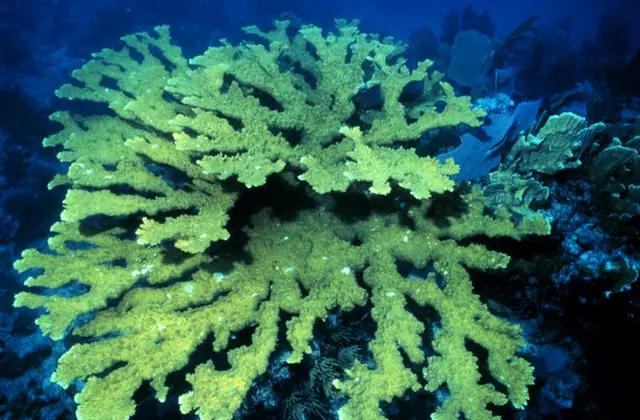
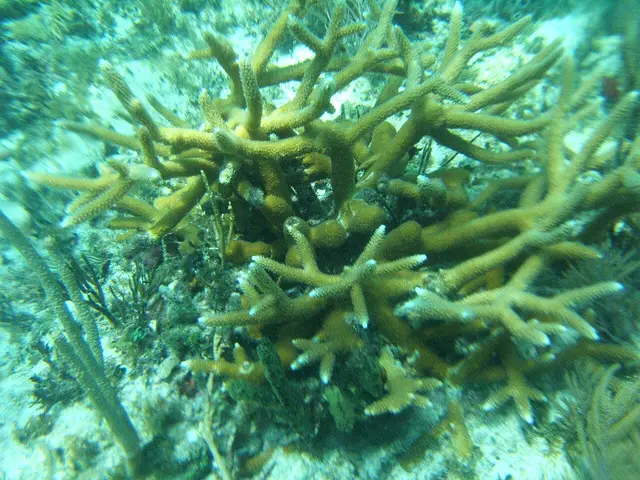
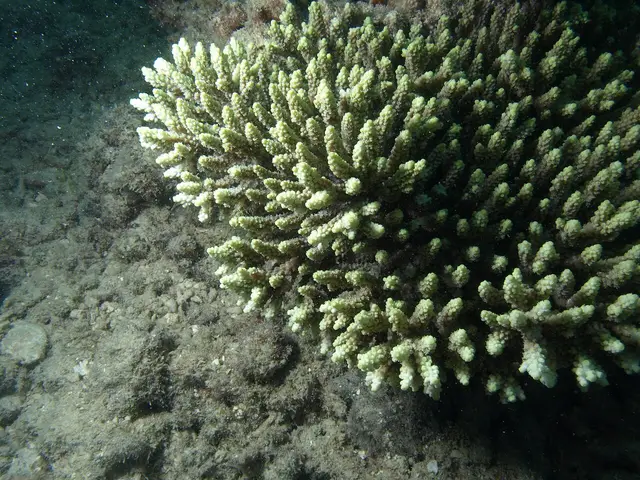
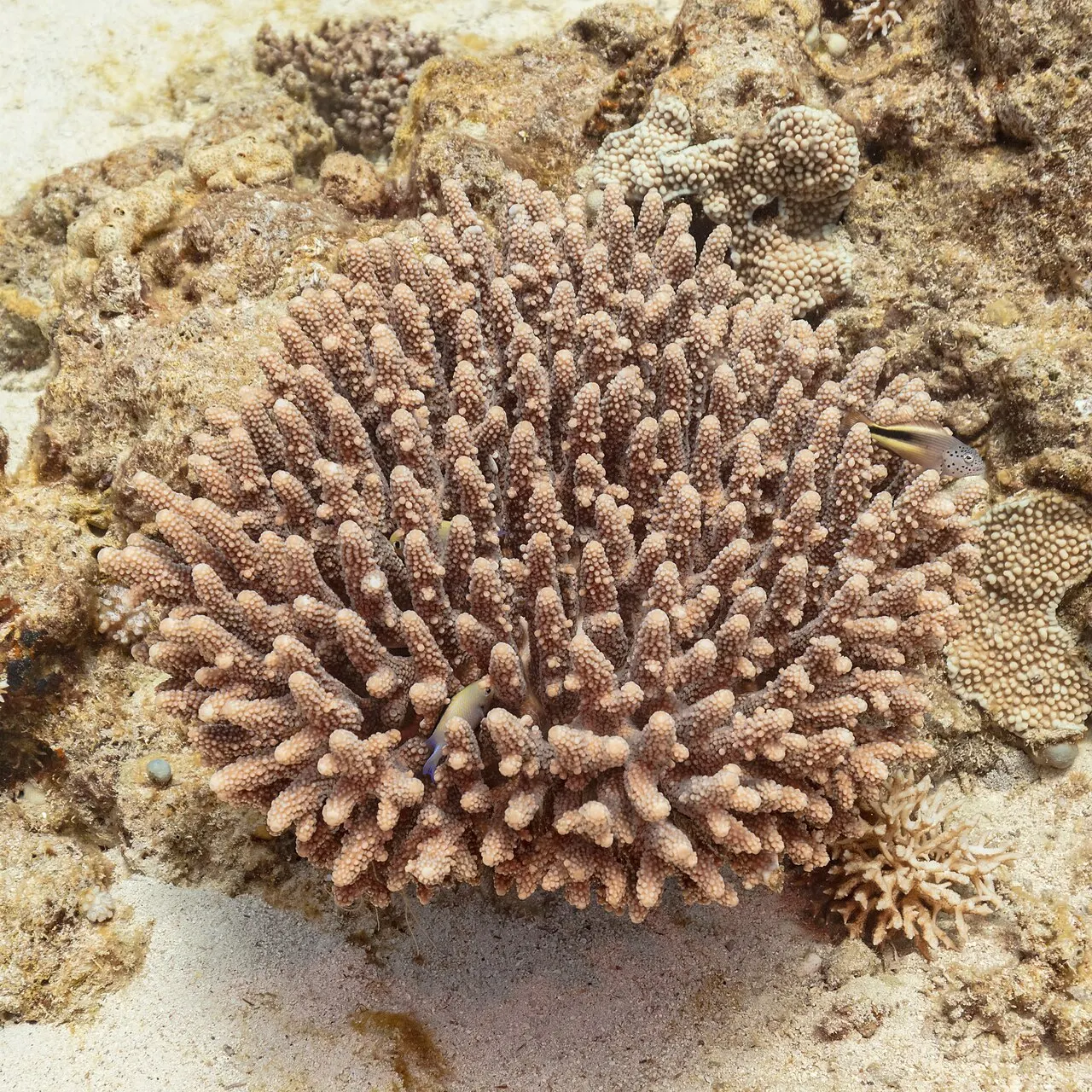
This is a staghorn-type coral. Colonies are dense thickets of branches that point upward or spread flat, and most are brown or pinkish brown. Colonies can grow wide, reportedly more than 2 m across.
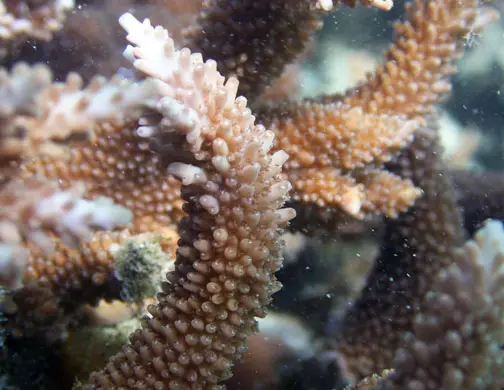
Up close, the tip of each branch carries a rounded, dome-shaped axial corallite, while the radial corallites along the sides are large, cone-shaped and unevenly spaced. The skeleton between them is smooth. Christian Ehrenberg described it in 1834 under the name Heteropora hemprichii, and it was later moved into Acropora.
Where it lives
The Red List records it around the Red Sea and Gulf of Aden coasts, including Egypt, Sudan, Eritrea, Djibouti, Yemen, Saudi Arabia, Israel and Jordan. It also reaches the western Indian Ocean, from Somalia, Kenya and Tanzania south to Mozambique and Madagascar, and out to Oman, India, Sri Lanka, the Maldives, Seychelles, Mauritius and the Comoros.
It grows on coral reefs and rocky subtidal reefs, mostly in shallow water. The Red List gives a depth range of about 2 to 20 m. A review of Red Sea reefs calls it an important and dominant branching coral there.
Pins are Wikidata “endemic to” fields. Orange dots, when present, are GBIF occurrence tiles — survey bias included.
Why it is in trouble
No one has a count of how many colonies exist. The assessment instead rests on the loss of reef. It projects a population reduction of about 58% (generation length is put at 10 years) and records reef area as still shrinking.
Heat is the biggest worry. Marine heat waves bleach corals, and a 2024 heat wave caused the first documented bleaching of some corals in the Gulf of Aqaba, in the northern Red Sea. The Red Sea review names bleaching, white band disease and heavy predation by Drupella snails as major causes of death for this species there. Crown-of-thorns starfish reportedly eat it too.
The assessment lists several other pressures: sediment washing onto reefs, storms, tourism and recreation sites, housing and industrial development on the coast, and shipping lanes. Unintentional harm from small-scale harvesting is also listed.
What is known about heat tolerance
The northern Red Sea has reportedly been kinder to this coral than the south. Most northern reefs avoided heavy bleaching until recently, while reefs in the south did worse.
A 2022 study in Coral Reefs ran short heat-stress tests on four reef corals, including this one, along about 2,100 km of Red Sea coast from the Gulf of Aqaba to Djibouti. For most of the species, corals from the warmer central and southern sites tolerated higher temperatures than those from the Gulf of Aqaba. Measured against each site's own summer maximum, though, their tolerance was lower, which leaves them less margin.
What is being done
The species is on Appendix II of CITES, which regulates international trade in stony corals. The assessment lists site protection and management, habitat restoration, propagation and a genome resource bank among the actions it records, but notes that it is unknown whether the species occurs in a protected area.
Sources
Written for this catalog in our own words from the sources below, checked against them on 12 November 2026. Population figures are estimates and carry the year they were made. Status and assessment year: IUCN. 2026. The IUCN Red List of Threatened Species. Version 2026-1. iucnredlist.org.