Endangered
Acropora globiceps
Acropora globiceps
Acropora globiceps is a staghorn coral of shallow, wave-swept reefs across the central and western Pacific and the Indo-Pacific. The IUCN Red List lists it as Endangered (2024 assessment, criterion A3ce), with a decreasing population. It is also listed as Threatened under the US Endangered Species Act and in CITES Appendix II.
How to recognise it
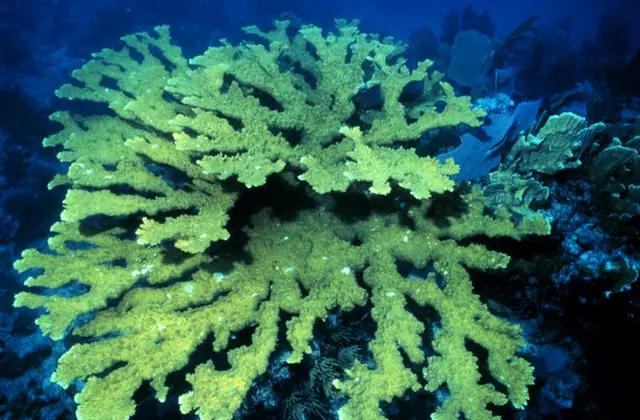
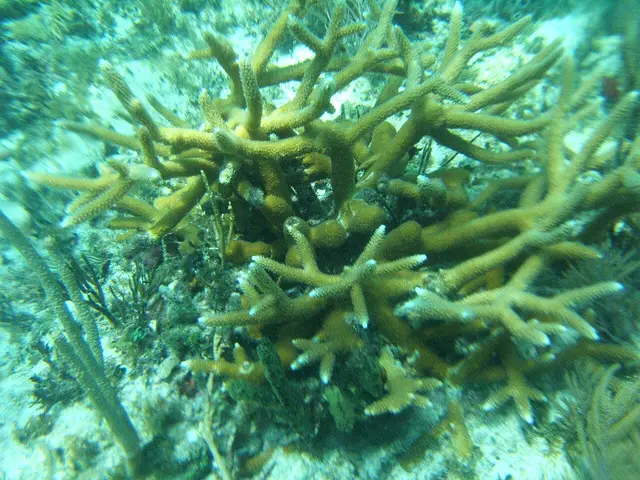
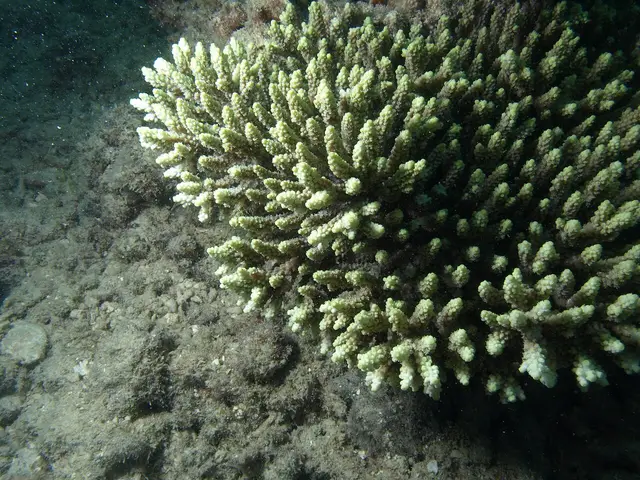
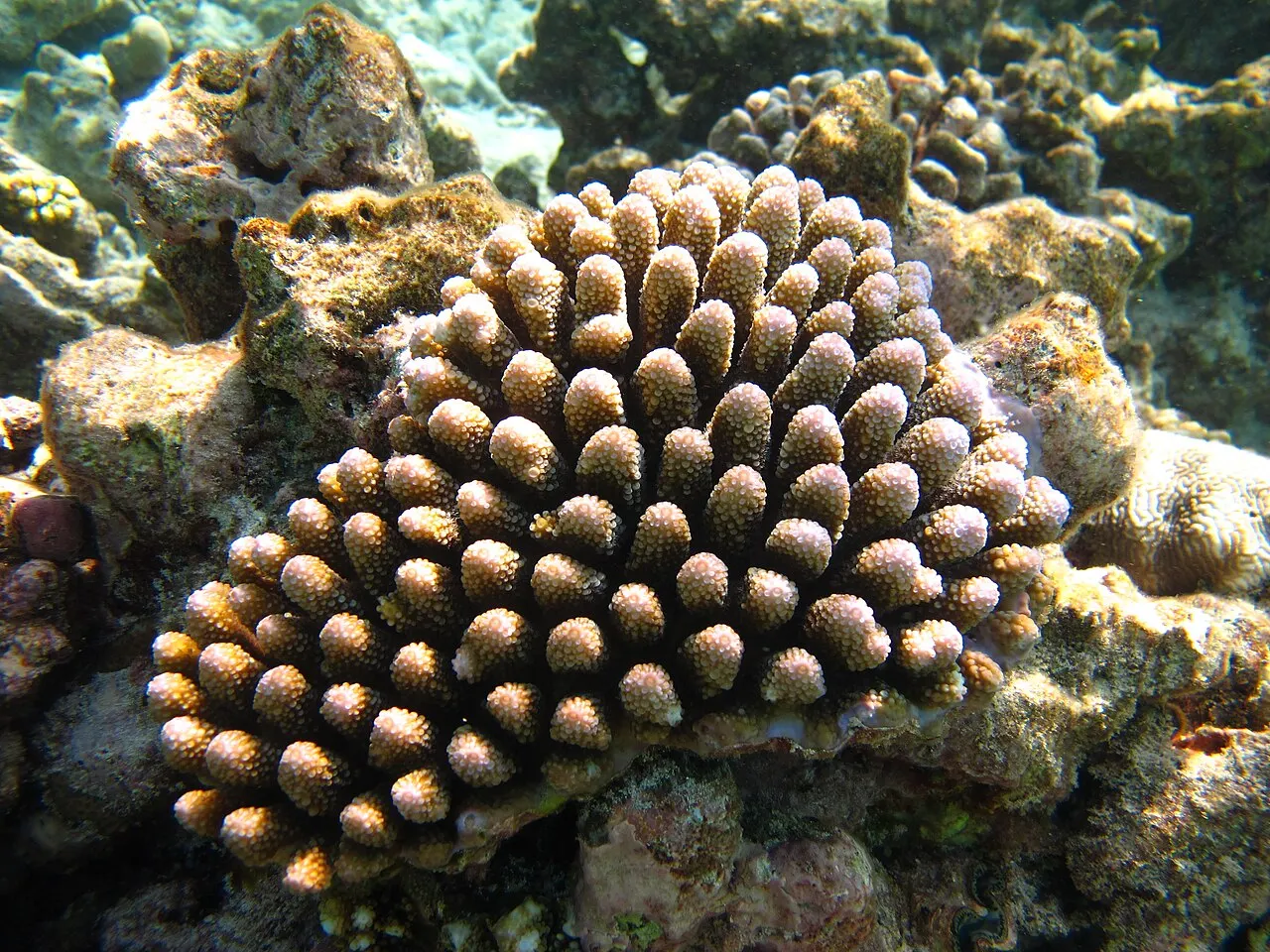
Colonies grow as compact clumps of thick, finger-like branches that sit close together. Colour is typically cream to brown, and bright green in some places. A typical colony is about 25 cm across, though large ones can reach roughly 1 m.
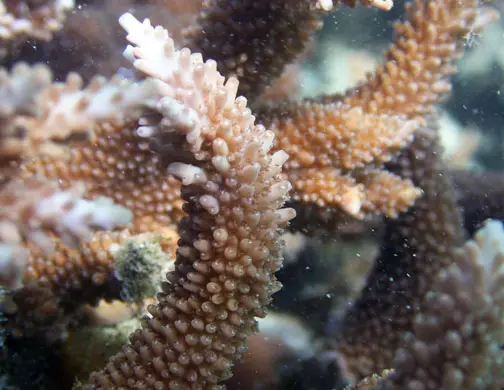
Reef-slope colonies reportedly have tube-shaped corallites, while reef-flat colonies have them sunk into the branches. The coral resembles several other Acropora, so identification in the field is tricky. James Dwight Dana described it in 1846, originally as Madrepora globiceps.
Where it lives
It has a very wide range. The IUCN lists it from Indonesia, the Philippines, Papua New Guinea, Australia and Japan through Micronesia and Polynesia, including Fiji, Samoa, Tonga, French Polynesia and the Pitcairn Islands. NOAA gives its range as the Maldives to French Polynesia, and in US waters Guam, the Northern Mariana Islands, American Samoa and the Pacific Remote Islands.
It favours shallow forereefs and also grows on back reefs, in pools and in lagoons where wave energy is high. The IUCN gives a depth range of 0 to 20 m.
Pins are Wikidata “endemic to” fields. Orange dots, when present, are GBIF occurrence tiles — survey bias included.
Why it is in trouble
Warming seas are the biggest worry. Marine heatwaves cause bleaching, and NOAA also lists ocean acidification, disease, fishing, habitat degradation and pollution from land. The IUCN adds storms, sediment from erosion, coastal building, tourism and shipping, and records that the reef area the species occupies is still shrinking. Crown-of-thorns starfish are reportedly a further threat.
No population size is known. The Endangered listing rests on projected decline: the assessment estimates a reduction of about 65 percent over three generations, with generation length put at 10 years.
What is being done
NOAA Fisheries listed the species as Threatened under the US Endangered Species Act in 2014. A recovery planning workshop was held in May 2021, a recovery status review followed in July 2023, and a recovery outline serves as interim guidance until a full plan exists. A 2024 five-year review of 15 Indo-Pacific corals recommended no change in listing status.
Critical habitat was finalised on 15 July 2025 for American Samoa, Guam, the Northern Mariana Islands, the Northwestern Hawaiian Islands and the Pacific Remote Islands Area. The IUCN lists site protection, habitat restoration, species recovery and propagation among relevant actions, but records protected-area coverage as unknown.
Sources
Written for this catalog in our own words from the sources below, checked against them on 12 November 2026. Population figures are estimates and carry the year they were made. Status and assessment year: IUCN. 2026. The IUCN Red List of Threatened Species. Version 2026-1. iucnredlist.org.