Endangered
Acropora cytherea
Acropora cytherea
Acropora cytherea is a table coral of the Indo-Pacific, building broad, flat plates that can pass 2 m across. It grows on shallow reef slopes and in lagoons from the Red Sea and East Africa to Hawaii. The IUCN Red List moved it to Endangered in 2024, from Least Concern in 2008, because of projected habitat loss and other pressures.
How to recognise it
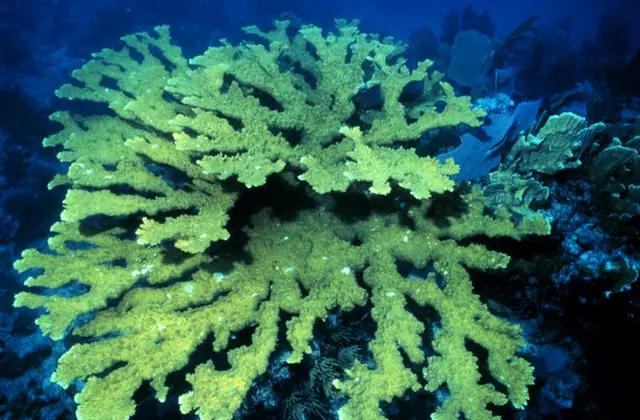
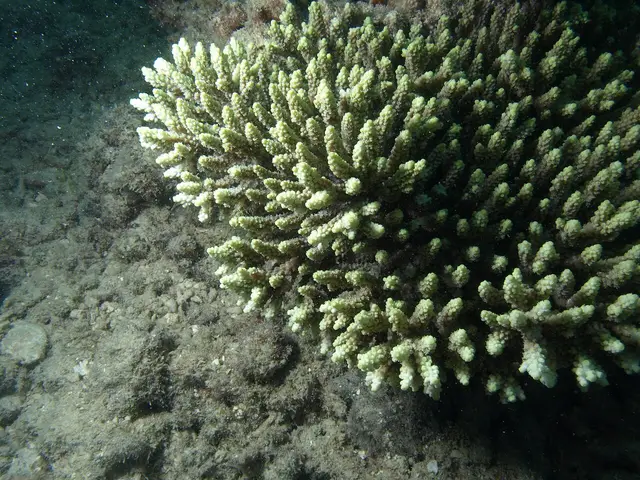
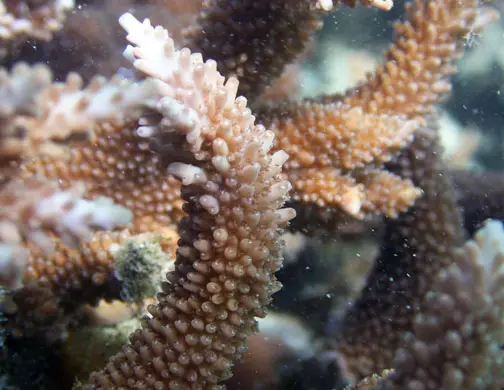
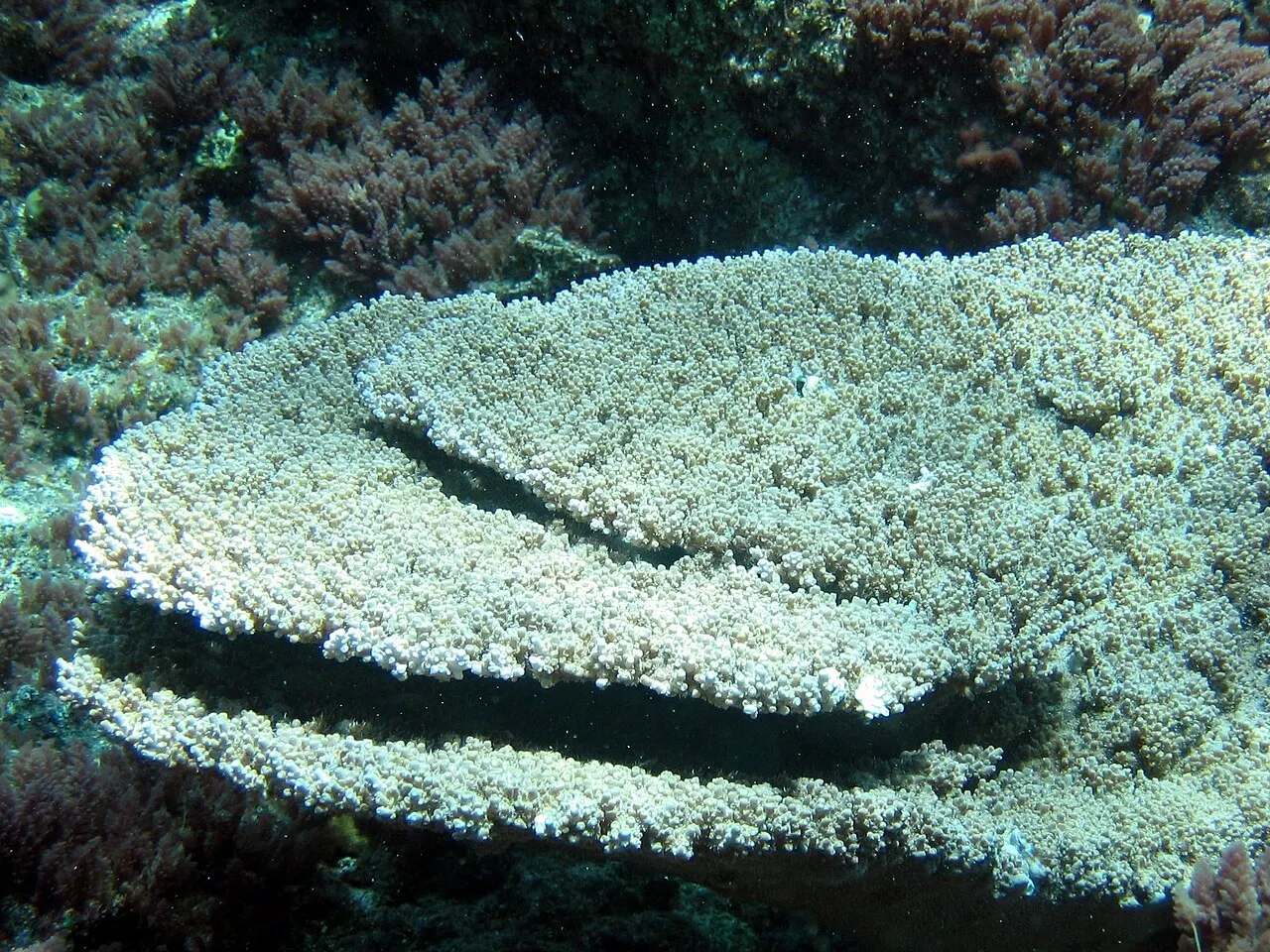
Colonies form large horizontal tables made of many fine, upright branchlets, some angled and some spreading sideways. The living tissue has a rough surface. Colour is uniform cream, pale brown, or sometimes pale blue.
In very large colonies, over 2 m wide, the regular pattern can break down near the centre and produce growth anomalies, which may be linked to stress such as warm water. In rougher water the tables can be thicker, but in calm water they are usually thin and delicate. The coral is listed as a species complex, and similar table corals such as Acropora hyacinthus and A. plana can be confused with it.
Where it lives
The Red List map covers the Indo-Pacific from the Red Sea and East African coast through India and South-East Asia to Japan, Australia and many Pacific islands including Hawaii. It lists 72 countries, territories and island groups, so it is spread very widely.
It prefers clear, shallow water with little wave action, in lagoons, back reef slopes and the upper reef slope. The Red List gives a depth range of 2 to 55 m, while descriptions elsewhere put most colonies at 3 to 20 m. It is described as common and conspicuous, and is one of the more plentiful Acropora.
Pins are Wikidata “endemic to” fields. Orange dots, when present, are GBIF occurrence tiles — survey bias included.
How it lives
Like other reef-building corals, it is a colony of tiny polyps that build a calcium carbonate skeleton and host symbiotic algae that give the colony its colour. Polyps extend their tentacles to catch food at night, and sometimes in the day. The Red List uses a generation length of 10 years.
Why it is in trouble
The Red List assessment of 2024 records a decreasing population under criterion A3ce and projects a future reduction of about 62 percent. It bases this on loss of habitat quality and the effects of pathogens, pollutants, competitors or parasites. Listed threats include temperature extremes, storms and flooding, sediment from soil erosion, coastal and urban development, shipping lanes, recreation and small-scale harvest.
In the Chagos Archipelago in 2010, more than 45 Cymo melanodactylus crabs were found on single heads of this coral that showed dead and dying tissue. These crabs are normally present in small numbers, and it is unclear whether they caused the damage or moved in afterward.
Some colonies are hanging on. Corals in Hawaii's Papahanaumokuakea monument went through a hurricane in 2018 and bleaching in 2019 and 2022. A NOAA assessment completed in 2024 confirmed that some large table colonies of this species survived at French Frigate Shoals, and it saw dense small colonies in the monument, which it called a good sign of recovery.
What is being done
The Red List lists site protection and management, habitat and natural process restoration, species recovery, captive breeding and a genome resource bank among the actions in place or needed. Like all stony corals, it is covered by CITES Appendix II, which means trade needs export permits.
Sources
Written for this catalog in our own words from the sources below, checked against them on 12 November 2026. Population figures are estimates and carry the year they were made. Status and assessment year: IUCN. 2026. The IUCN Red List of Threatened Species. Version 2026-1. iucnredlist.org.