Endangered
Striped bitterling
Acheilognathus cyanostigma
The striped bitterling is a small freshwater fish of central Japan, native to the Lake Biwa region and its connected waters. The IUCN Red List classed it as Endangered in 2019. Like other bitterlings, it lays its eggs inside living freshwater mussels, so its survival is tied to both clean water and healthy mussel beds.
How to recognise it
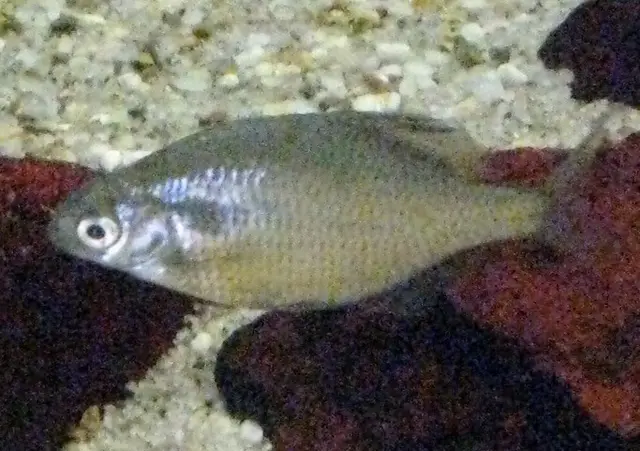
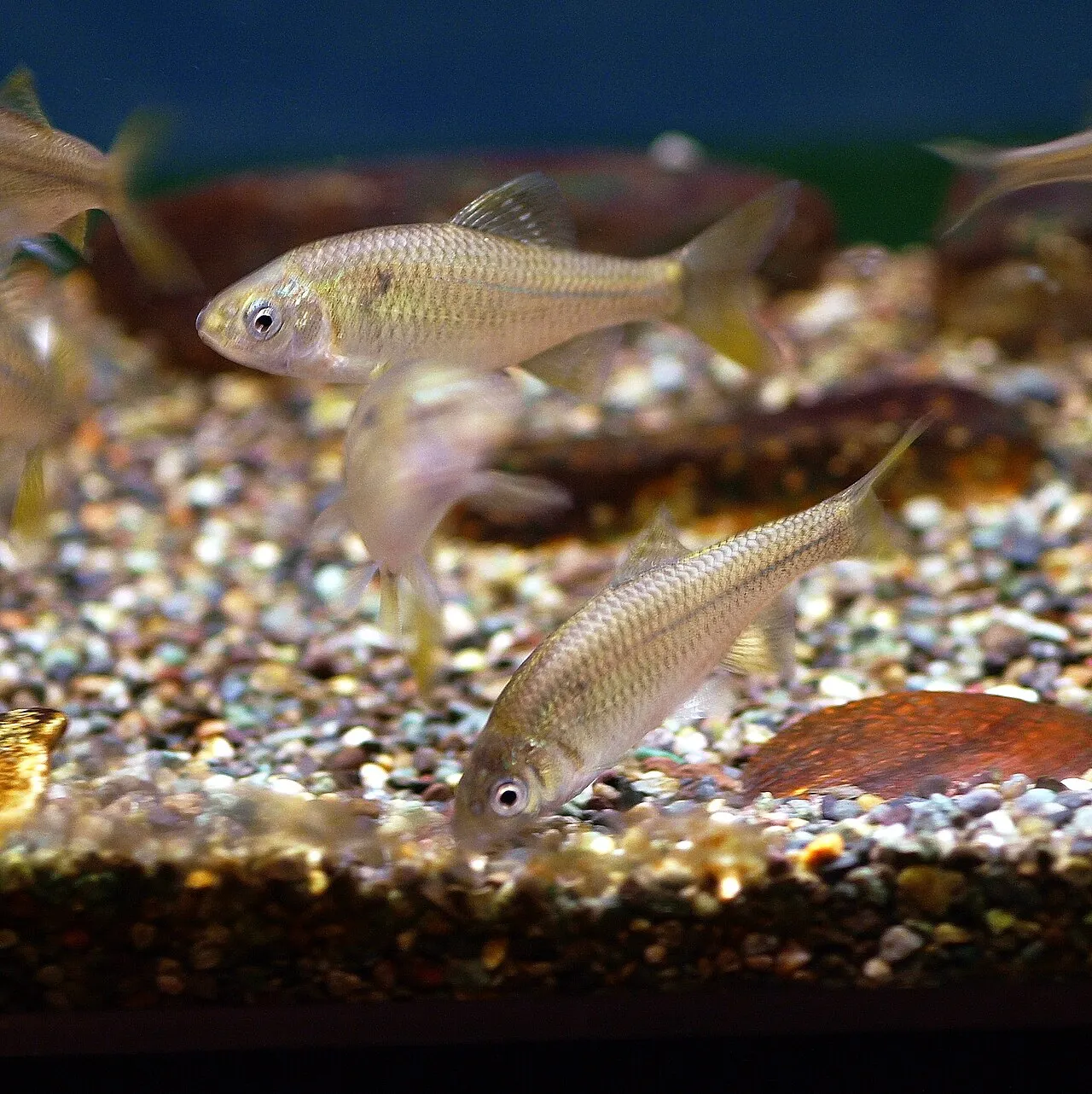
Acheilognathus cyanostigma is a small freshwater fish that reaches about 6 centimetres in total length. Females have an ovipositor, a tube used to place eggs inside a mussel.
Where it lives
Its native range is central Japan: the Lake Biwa and Yodo River system, the Kino River system, Lake Mikata and the Nobi Plain. It lives in shallow lakes, ponds, slow streams and the irrigation canals that thread through lowland farmland.
The Red List counts only five locations, with an estimated area of occupancy of about 32 square kilometres inside a wider range of roughly 10,400 square kilometres (2019).
Pins are Wikidata “endemic to” fields. Orange dots, when present, are GBIF occurrence tiles — survey bias included.
How it lives
Bitterlings are famous for their partnership with freshwater mussels. The female uses her ovipositor to deposit eggs inside a mussel, and the young stay sheltered in the shell until they can swim.
That reliance means a bitterling can only breed where suitable mussels survive. The sources opened give no details of its diet or of which mussel species it uses.
Why it is in trouble
The Red List describes a decreasing population, with continuing declines in its range, area occupied and number of locations (2019). The threats it lists include nutrient pollution, sewage, other changes to freshwater ecosystems, small-scale harvest, and competition or predation from introduced fish: the rosy bitterling, bluegill and black bass (Micropterus).
The species has also spread beyond its home waters. Fish from Lake Biwa have turned up in Toyama, Okayama and Kumamoto prefectures and on Shikoku, according to Japan's invasive species database, which says they travel with released juvenile ayu and compete with native bitterlings for mussels to spawn in. A 2026 paper in the journal Aquatic Animals confirmed three specimens from rivers in Kochi Prefecture, where the fish had been presumed introduced, as this species.
What is being done
The assessment records invasive species control and ex-situ conservation (captive holding) as in place. It lists site protection and management, awareness work, captive breeding and species recovery among the actions needed. Japan's invasive species database, by contrast, says no control or eradication measures were in place against this species as an introduced fish.
Sources
Written for this catalog in our own words from the sources below, checked against them on 12 November 2026. Population figures are estimates and carry the year they were made. Status and assessment year: IUCN. 2026. The IUCN Red List of Threatened Species. Version 2026-1. iucnredlist.org.