Critically Endangered
Abrau sprat
Clupeonella abrau
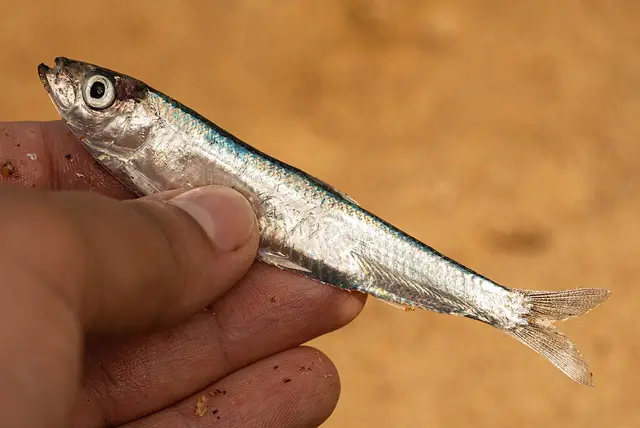
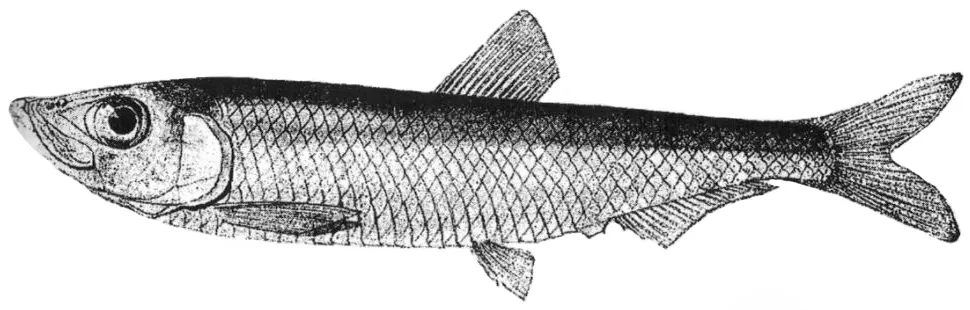
The Abrau sprat (Clupeonella abrau) is a small freshwater herring found nowhere except Lake Abrau, a karst lake near Novorossiysk in southern Russia. The IUCN Red List rated it Critically Endangered in 2008. Researchers feared it was gone until a 2019 sampling trip netted several of the fish.
How to recognise it
It's a small member of the herring family (Clupeidae), about 9.5 cm long. Its closest relative is the Black Sea and Caspian sprat (Clupeonella cultriventris), and it is told apart mainly by body proportions and some biological features rather than any dramatic look.
A Turkish sprat from Lake Apolyont was once treated as a subspecies of this fish. It is now regarded as a separate species, Clupeonella muhlisi.
Where it lives
Lake Abrau lies about 14 km from the Black Sea port of Novorossiysk, in Krasnodar Territory. It is a karst lake roughly 2.6 km long and 600 m wide, at about 70 m above sea level, and it is a protected natural monument. The IUCN assessment lists Russia as the only country and permanent freshwater lakes as the habitat.
The sprat feeds mainly on small crustaceans. Local names include tyulka and sardelka.
Pins are Wikidata “endemic to” fields. Orange dots, when present, are GBIF occurrence tiles — survey bias included.
Why it is in trouble
The lake originally held five native fish species. Since the early 2000s, 18 introduced species have reportedly arrived, and water is also drawn from the lake. One of the arrivals was the zander (Sander lucioperca), a predatory fish. The sprat was reportedly still abundant until 1996 and fell sharply after the zander appeared.
A 2006 survey is reported to have found very few sprat. The 2008 Red List assessment records a decreasing trend and lists invasive species and groundwater abstraction as ongoing threats. The Red Book of the Russian Federation (2021) noted a lack of data on the fish in recent decades.
Rediscovery in 2019
In 2019, scientists studying the lake's zooplankton found several small fish in a plankton net, and one account puts the catch at nine in October. A DNA barcode comparison with a 1938 museum specimen held by the Zoological Institute of the Russian Academy of Sciences found a difference of 0.92 percent in the COX1 gene.
A team led by Alexei Kotov published the full mitochondrial genome in Doklady Biological Sciences in 2024. It runs to 16,650 base pairs and is about 98.8 percent similar to that of the Black Sea and Caspian sprat. The team concluded that the species is still part of the lake's fish community and can breed there, and it set out several possible routes by which the fish first reached the lake.
The rediscovery says nothing about how many remain. No population estimate appears in the 2008 assessment, which records that the species occurs in a protected area and lists site and area management as a conservation action.
Sources
Written for this catalog in our own words from the sources below, checked against them on 12 November 2026. Population figures are estimates and carry the year they were made. Status and assessment year: IUCN. 2026. The IUCN Red List of Threatened Species. Version 2026-1. iucnredlist.org.