Iraq
1 catalog pin
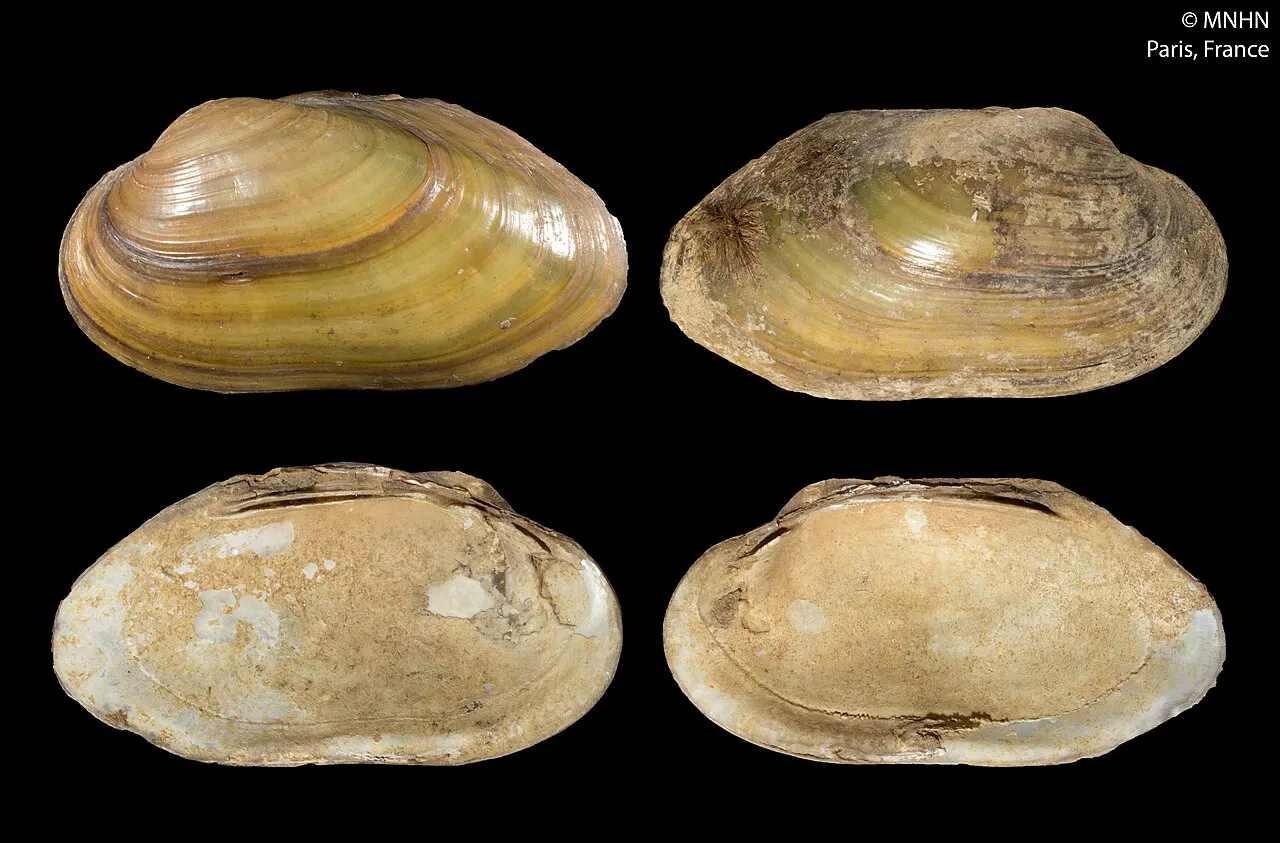
1 animals in this catalog carry a structured country pin for Iraq. That is a filing fact, not a claim that the crisis is only here.
The photograph is one of those animals: Dolphin Freshwater Mussel. Open a dossier for the text, the status, and the map. Use the world map to jump to another country. Confirm official distributions on the Red List.
Iraq is mostly dry, with desert and semi-arid land in the west and mountains in the north. Its great natural feature is the Mesopotamian Marshes in the south, once the largest wetland ecosystem in western Eurasia. They spread across southern Iraq, southwestern Iran and northern Kuwait, and sources give their original area as anywhere from about 20,000 to about 35,600 square kilometres.
Iraq's biodiversity profile cites a preliminary checklist of 417 bird species and a draft plant list of over 4,500 species, with about 195 endemic species on a secondary list. About 81% of the Tigris and Euphrates alluvial salt marsh ecoregion lies inside Iraq, which gives the country responsibility for most of it.
Where the pressure comes from
Drainage began in the 1950s and accelerated in the 1980s and early 1990s, when large canals were built. By 2003 the marshes had shrunk to about a tenth of their original size by one commonly cited figure. After 2003 residents breached dikes, and one figure puts recovery at around 75% in 2008. By spring 2015 the wetlands had dropped to about 58% of their pre-drainage average as salinity rose. Sources conflict on some of these numbers.
The country's CBD profile also names pollution, overgrazing, salinization, drought, desertification, and unsustainable fishing and hunting. Dams in Turkey, Syria and Iran have reduced water flow, and Iraqi authorities said in 2020 that Turkey's Ilisu Dam had cut Tigris inflows.
What is being done
The marshes were listed as a UNESCO World Heritage Site in 2016. Iraq became a party to the Convention on Biological Diversity in 2009, and the profile reports 12 environmental laws and 15 related laws enacted between 2007 and 2010. Officially protected areas covered only 0.3% of the country at the time of the profile. An updated list proposes 88 Key Biodiversity Area sites, and a draft management plan exists for a first national park in the central marshes.
Reading the catalog for Iraq
Iraq has one record in the catalog, a bivalve (Unio delphinus, family Unionidae) with Endangered status. One pin is a narrow view, and it should not be read as the full list of Iraqi animals in trouble. The marsh story above is better context for the wildlife of the country's rivers and wetlands.
Sources for this section
- Iraq country profile, CBD: checklists, salt marsh ecoregion share, threats, protected area share, laws, accession 2009, KBA list, national park plan
- Mesopotamian Marshes, Wikipedia: original size, drainage, 2003 and 2008 and 2015 extent, UNESCO 2016, dams
- Tigris-Euphrates river system, Wikipedia: Ilisu Dam complaint 2020
- Wildlife of Iraq, Wikipedia: desert, semi-arid west, mountains north
- Unio delphinus, Wikipedia: bivalve in family Unionidae
What the catalog records for Iraq
The catalog has 1 animals with a country pin for Iraq: 1 Endangered. By GBIF class the largest groups are Bivalvia (1). The families with the most records are Unionidae (1). A pin means a structured source (Wikidata or a GBIF match) places the animal in Iraq; it does not say the animal lives only there.
Total pins: 1.
Quick answers
- Do all these animals live only in Iraq?
- No. A pin means a Wikidata place field resolved here. Official ranges can be wider.
- Is this a government list?
- No. It is a slice of this catalog.