MMO byelaw
What the October 2026 MMO western English Channel skate closure does t
Updated 22 October 2026
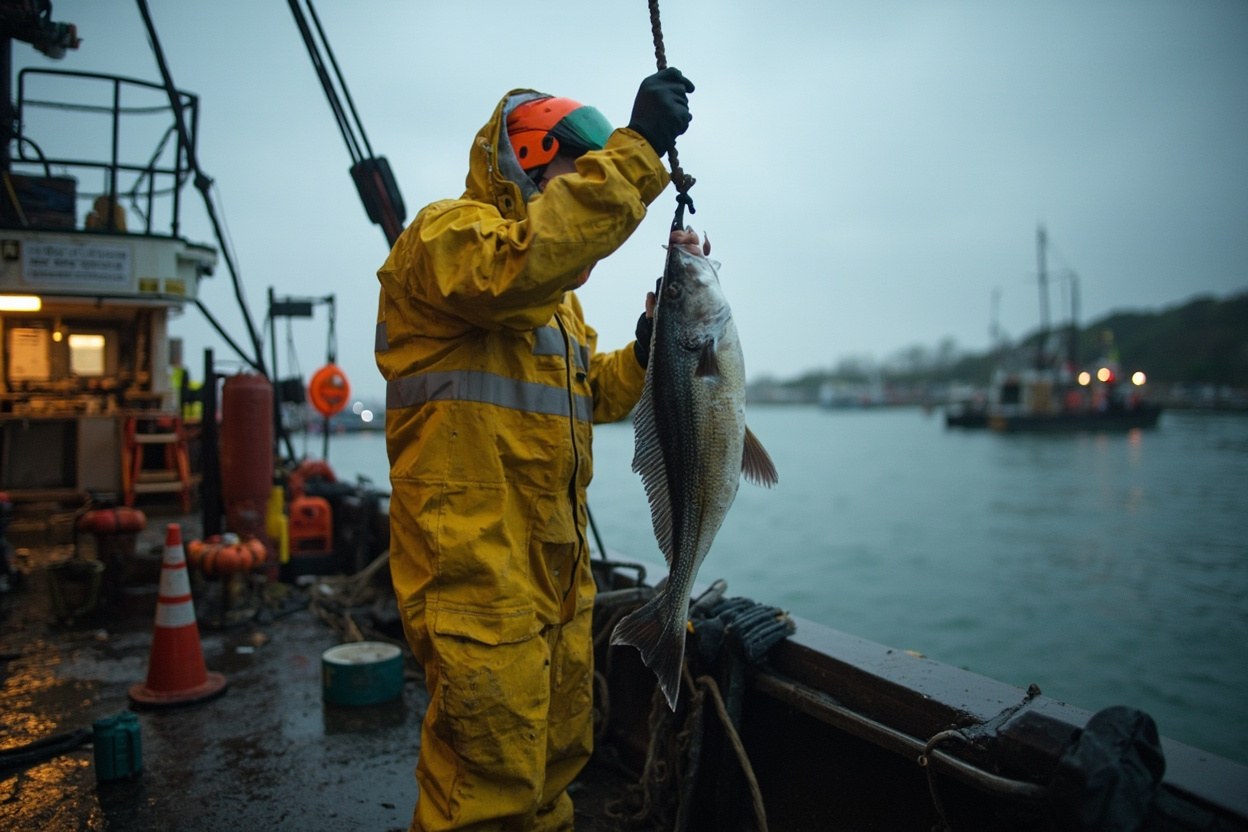
The Marine Management Organisation on 29 September 2026 signed the Sea Fish (Conservation) (Skates and Rays) (Emergency Byelaw) Instrument 2026, citing section 5 of the Sea Fish (Conservation) Act 1967 and ICES advice issued in June 2026, and the instrument was laid before Parliament on 30 September 2026 with effect from 1 October 2026. The byelaw closes specified rectangles of ICES divisions 7e and 7j to the retention of skates and rays taken by vessels operating under English and Welsh fishing licences, with a return-to-sea obligation recorded in the e-logbook and a separate disc-width entry. The text is at pages 4 to 9 of the printed instrument and is published on the MMO register as byelaw 1428 with chartlet MMO 2026-SK-03. The byelaw expressly references the 2019 CITES Appendix II listing of the undulate skate (Raja undulata) in the recital block and the 2025 IUCN Red List assessment, and the impact assessment at annex 2 quantifies the expected reduction in observed discards for ICES rectangle 30E7 over the first six months of operation. The byelaw expires on 30 September 2027 unless renewed.
What does the instrument say, and who signed it?
The instrument is the Sea Fish (Conservation) (Skates and Rays) (Emergency Byelaw) Instrument 2026, numbered as MMO Byelaw 1428, signed on 29 September 2026 by the Chief Executive of the Marine Management Organisation under delegated authority from the Secretary of State for Environment, Food and Rural Affairs, and laid before Parliament on 30 September 2026 under the negative resolution procedure. The byelaw is made under section 5 of the Sea Fish (Conservation) Act 1967, which permits the MMO to make emergency byelaws regulating the catching, taking, landing, transhipment and carriage of sea fish where urgent action is required to conserve a stock or to implement an international obligation. The instrument recites the ICES advice issued in June 2026 recommending zero catch in 2027 for thornback ray (Raja clavata), spotted ray (Raja montagui) and undulate ray (Raja undulata) in the western English Channel and Celtic Sea, and it states that the obligation to give effect to that advice arises under the United Kingdom's continued application of the Common Fisheries Policy quota framework and under the Convention on International Trade in Endangered Species of Wild Fauna and Flora in respect of the undulate skate.
The operative provision at regulation 3 prohibits the master of any relevant vessel from retaining on board, transhipping or landing any skate or ray taken as bycatch in the closed rectangles, and requires that any such animal be returned to the sea whole, with disc width and species recorded in the electronic logbook entry for the relevant tow. Regulation 4 defines the relevant vessels as those holding an English or Welsh fishing licence with a category A or A1 entitlement for demersal gear, and regulation 5 carves out a narrow scientific monitoring exemption for vessels under contract to the Centre for Environment, Fisheries and Aquaculture Science (Cefas) operating under a valid special permit. The text references the Wildlife and Countryside Act 1981 schedule 5 protections for the undulate skate in English and Welsh waters, although that schedule has not been amended as part of this instrument.
Where exactly does the closure sit, and what rectangles are closed?
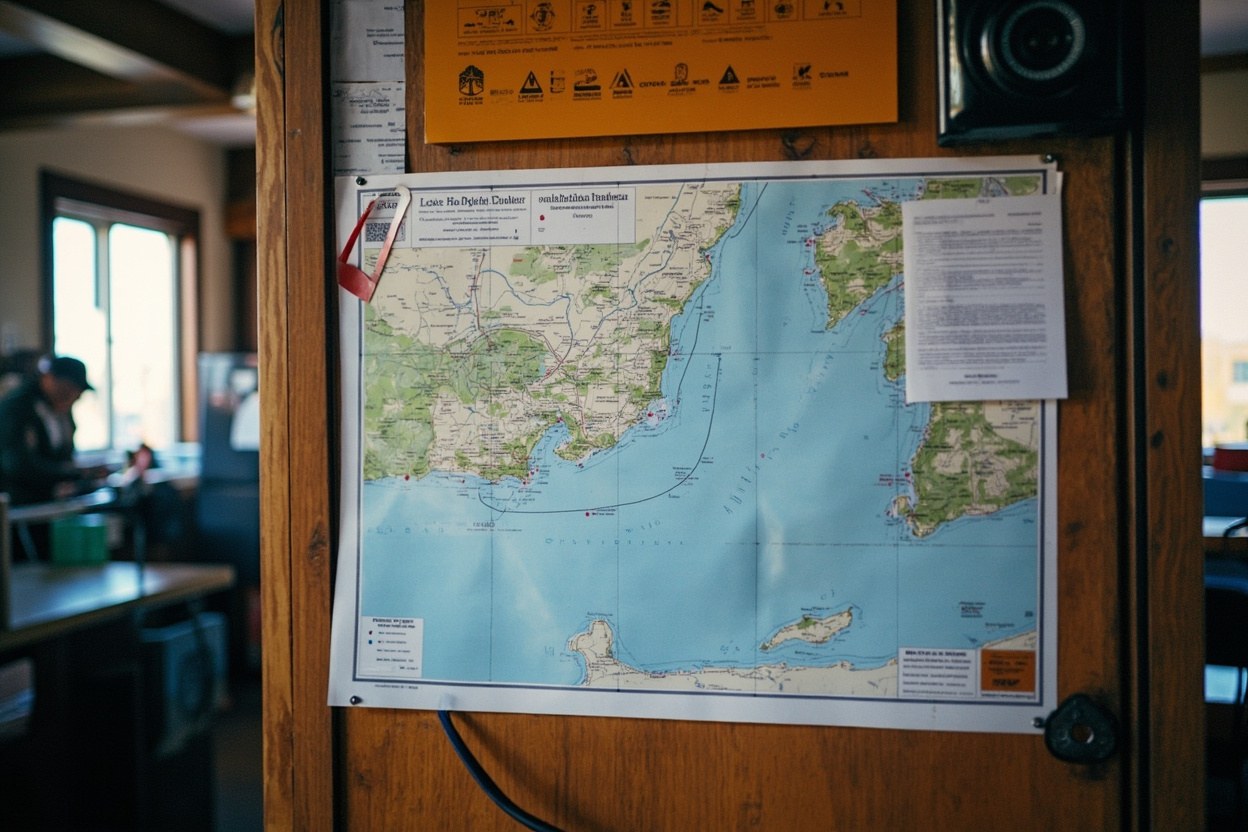
Annex 1 of the byelaw sets out the closed rectangles as those within the bounded area drawn from the chartlet MMO 2026-SK-03, comprising ICES statistical rectangles 30E7, 31E7, 32E7, 33E7, 30E8, 31E8, 32E8, 30E9 and 31E9, falling within ICES divisions 7e and 7j. The chartlet plots the closure as contiguous rectangles between Start Point in Devon and the Isles of Scilly, extending seawards to the 12 nautical mile limit, and within Cardigan Bay off the Welsh coast from Aberystwyth to Pwllheli, where the byelaw text draws the inner boundary along the median line of the bay. The closure therefore overlaps with the existing Lyme Bay Special Protection Area, the Pembrokeshire Marine Special Area of Conservation and the Cardigan Bay Special Site of Scientific Interest, all of which are referenced in the impact assessment at annex 2 for the purposes of the habitats regulations assessment required by regulation 7 of the Conservation of Habitats and Species Regulations 2017.
The byelaw at regulation 6 enables the MMO to issue a closure notice to the master of any vessel that the MMO reasonably believes to be operating in a closed rectangle, and to require the master to return to port to demonstrate compliance with the logbook requirements. Failure to comply is an offence under section 9 of the Sea Fish (Conservation) Act 1967, with a maximum fine on summary conviction of level 4 on the standard scale and a possible forfeiture of catch and gear. The text requires that any gear deployed in a closed rectangle must be hauled and the catch released within thirty minutes of retrieval, a provision drafted in response to the discard mortality data published by Cefas in 2024 and 2025.
Why is the undulate skate the headline species, and what about the other rays?
The undulate skate (Raja undulata) is the headline species because the recital block of the byelaw expressly refers to its listing on Appendix II of the Convention on International Trade in Endangered Fauna and Flora since the nineteenth meeting of the Conference of the Parties in Geneva in 2019, and to the Critically Endangered (Europe) assessment on the International Union for the Conservation of Nature Red List of Threatened Species published in 2025. The instrument explains that, although the byelaw applies to all skates and rays rather than to a single species, the obligation under the Convention to ensure that trade in specimens of the undulate skate is legal and sustainable, combined with the zero-catch advice from the International Council for the Exploration of the Sea for that stock, requires a closure that is geographically targeted rather than species targeted. The undulate skate is present in the western English Channel as a discrete stock that is genetically distinct from the populations in the Bay of Biscay and off the coast of Galicia, and the 2025 stock assessment identified recruitment failure in three of the previous five years.
Thornback ray and spotted ray are caught in the same rectangles as bycatch in otter trawl and beam trawl fisheries, and the ICES advice treats the three species together for the purposes of the zero-catch recommendation. The byelaw does not create a separate regime for the cuckoo ray (Leucoraja naevus), which is assessed as Near Threatened (Europe) and is not the subject of zero-catch advice, although it is caught in the same rectangles and is therefore incidentally protected by the closure. The blue skate (Dipturus batis) complex is referenced in the explanatory memorandum at annex 3 as a future candidate for separate management, but the byelaw itself does not list it as a controlled species because the complex is not a target of the relevant fisheries and the existing North-West Waters closures cover its principal range.
What does this change for skippers and for the port state?
For skippers operating under English and Welsh licences, the practical effect is that any skate or ray caught in a closed rectangle must be returned to the sea whole before the gear is reset, with the disc width and species recorded in the e-logbook entry for the relevant tow and the gear retrieval time recorded in the same entry. The byelaw makes no provision for a tolerance margin in disc width for juveniles, and the explanatory memorandum explains that the MMO considered and rejected a tolerance in light of the 2025 Cefas discard survival study, which found that survival on return to the sea was lower for juveniles than for adults and that a tolerance would therefore undermine the conservation objective. The MMO will publish guidance on the e-logbook schema by 1 November 2026, and the byelaw at regulation 7 requires masters to keep the relevant data in a form that is machine readable and capable of being transmitted to the MMO on request.
For the port state, the byelaw increases the data available to the MMO and to Cefas on the spatial distribution of skate bycatch in the closed rectangles, and it provides a baseline against which the agency can assess the case for a permanent closure in the 2027 review of the Western English Channel and Celtic Sea demersal management plan. The impact assessment at annex 2 estimates that the closure will reduce observed discards of the three named species in rectangle 30E7 by between 60 and 80 per cent over the first six months of operation, on the basis of the observed distribution of discards in that rectangle in 2024 and 2025. The byelaw does not include compensation for vessel operators, and the MMO has stated in the explanatory memorandum that it considers the closure to be proportionate to the conservation objective and to be within the limits of the existing financial support arrangements for the demersal sector.
What are the open questions, and what is the timetable?
Three questions stand out from the text. First, whether the byelaw will be renewed in September 2027, and whether the renewal will be in the same form or whether the MMO will propose a permanent restriction in the 2028 fisheries management plan. Second, whether the Welsh Government will make a parallel instrument for the parts of the closed rectangles that fall within Welsh waters, since the byelaw applies only to vessels operating under English and Welsh licences and does not extend to vessels operating under licences issued by the Welsh Government, which has competence over a band of inshore waters in Cardigan Bay. Third, whether the Convention on International Trade in Endangered Species of Wild Fauna and Flora Standing Committee, at its seventy-fifth meeting in Geneva in November 2026, will adopt a recommendation on trade in the undulate skate that requires the parties to take additional measures beyond the closure.
On timetable, the byelaw takes effect on 1 October 2026, and the MMO will publish a compliance report on the first six months of operation by 30 June 2027. The Cefas stock survey for the western English Channel is scheduled to take place in November 2026, and the MMO has stated that the results of that survey will be used to inform the 2027 review. The byelaw will be considered by the Environment, Food and Rural Affairs Committee in November 2026 as part of its scrutiny of secondary legislation made under the 1967 Act, and the transcript of that evidence session will be published on the committee's website.
Quick answers
- Does the byelaw ban skate fishing outright?
- No, the byelaw bans the retention, transhipment and landing of skates and rays caught as bycatch in the closed rectangles, but it does not ban the catching of skates as target species in those rectangles because no such fishery is currently authorised under English or Welsh licences.
- Does the byelaw apply to recreational anglers?
- No, the byelaw at regulation 4 defines the relevant vessels as those holding an English or Welsh commercial fishing licence, and recreational shore anglers and small craft are not subject to the closure, although the Wildlife and Countryside Act 1981 schedule 5 protections for the undulate skate continue to apply in any event.
- What is the penalty for non-compliance?
- Non-compliance is an offence under section 9 of the Sea Fish (Conservation) Act 1967, with a maximum fine on summary conviction of level 4 on the standard scale and a possible forfeiture of catch and gear.