IUCN Red List
Deep-sea mining now threatens 62% of vent molluscs
Updated 30 September 2026
The IUCN Red List of Threatened Species, version 2026-1, published on 9 July 2026 by the International Union for Conservation of Nature in Gland, Switzerland, found that 62% of endemic hydrothermal vent molluscs (125 out of 201 species) are at risk of extinction due to deep-sea mining for valuable minerals. The update added 17 new species to the over 180 vent-endemic molluscs already assessed, and was coordinated by the Senckenberg Ocean Species Alliance at the Senckenberg Forschungsinstitut und Naturmuseum Frankfurt. The release coincided with the Legal and Technical Commission meeting of the International Seabed Authority in Kingston, Jamaica, which was held from 29 June to 10 July 2026 as part of the second part of the ISA's 31st Session.
What did the IUCN Red List 2026-1 update say about hydrothermal vent molluscs?
The IUCN Red List of Threatened Species is the world's most comprehensive inventory of the global conservation status of biological species. It is published by the International Union for Conservation of Nature, headquartered in Gland, Switzerland, and uses a set of nine categories from Least Concern through Near Threatened, Vulnerable, Endangered, Critically Endangered, Extinct in the Wild, Extinct, Data Deficient, and Not Evaluated to describe extinction risk.
The IUCN Red List now includes 175,909 species, of which 49,505 are threatened with extinction. Version 2026-1, released on 9 July 2026, is the first update of 2026. It found that 62% of endemic hydrothermal vent molluscs (125 out of 201 species) known worldwide are at risk of extinction due to deep-sea mining for valuable minerals. The assessment added 17 species to the over 180 vent-endemic molluscs already on the list.
For hydrothermal vents specifically, the IUCN press release said the update reveals that molluscs endemic to deep-sea hydrothermal vents are one of the most highly threatened of all animal groups, at a critical moment for their future.
Why does a vent at four thousand metres need its own IUCN assessment?
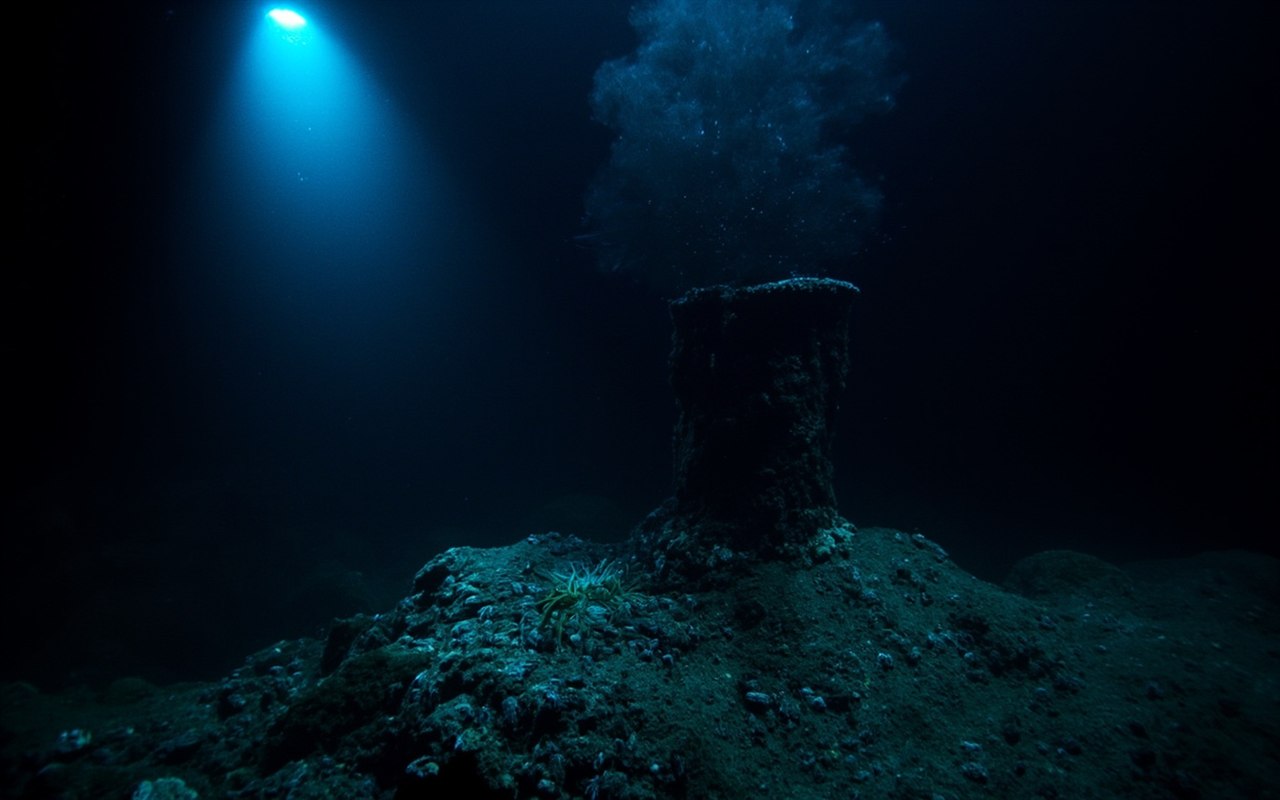
Hydrothermal vents are fissures in the seabed where seawater meets magma or hot rock and comes back out as superheated fluid. They are found at mid-ocean ridges, in back-arc basins, and at submarine volcanoes. The vents the IUCN Red List has been assessing sit at depths up to 5,000 metres below sea level, and the fluid coming out of them can be over 400 degrees Celsius.
Life around these vents does not run on sunlight. It runs on chemosynthesis. Bacteria and archaea oxidise the hydrogen sulfide, methane, and other reduced compounds in the vent fluid, and they form the base of a food web that includes snails, limpets, mussels, clams, and chitons. Many vent species are endemic to a single vent system, which means that if the system is destroyed, the species has nowhere else to go.
That narrow geography is what makes a vent-specific Red List assessment different from a generic marine one. A species that lives on one chimney stack cannot survive the loss of that single site, and the IUCN categories are written to capture exactly that kind of range restriction.
What is deep-sea mining and which minerals are at stake?
Deep-sea mining is the extraction of mineral deposits from the seabed at depths typically below 200 metres. It removes material directly from the seafloor surface or near it. There are three targets, and each one supports a different community of animals.
Seafloor massive sulfides at hydrothermal vents. These are mineral deposits rich in copper, gold, and silver that form around active and inactive vent sites. They are the target relevant to the IUCN 2026-1 update.
Polymetallic nodules. Potato-sized mineral deposits that lie on vast abyssal plains, typically at depths of 4,000 to 6,500 metres. They are the main source of nickel, cobalt, manganese, and copper for proposed commercial operations.
Cobalt-rich crusts. Mineral layers that form over millions of years on the flanks of underwater seamounts. Cobalt-rich crusts are targeted for cobalt, manganese, and rare earth elements.
Which vent molluscs entered the IUCN Red List in 2026-1?
The 2026-1 update added 17 new species to the list of vent-endemic molluscs already assessed. The Senckenberg press release lists all 17 with their categories.
Critically Endangered (3): Astyris thermophila, Neolepetopsis ardua, and Lirapex felix.
Vulnerable (8): Cocculina aurora, Eulepetopsis crystallina, Neolepetopsis gordensis, Thermomya sulcata, Neolepetopsis prismatica, Sinepecten segonzaci, Provanna beebei, and Solemya calypso.
Least Concern (6): Admete verenae, Benthomodiolus erebus, Cocculina enigmadonta, Lepetodrilus concentricus, Lepetodrilus guaymasensis, and Provanna exquisita.
Of the 17, 11 are at risk of extinction due to deep-sea mining for valuable minerals. That is nearly 65% of the new batch, which is consistent with the overall 62% figure across all 201 vent-endemic molluscs assessed so far.
The genus Astyris has small marine snails; Thermomya is a small vent mussel; Cocculina is a limpet genus; Lepetodrilus is a limpet that has been central to vent biology since the discovery of vents in the late 1970s. These genera cover different feeding strategies within the vent food web, which is why the threatened list is not dominated by a single kind of mollusc.
Why was Lirapex felix listed as Critically Endangered?
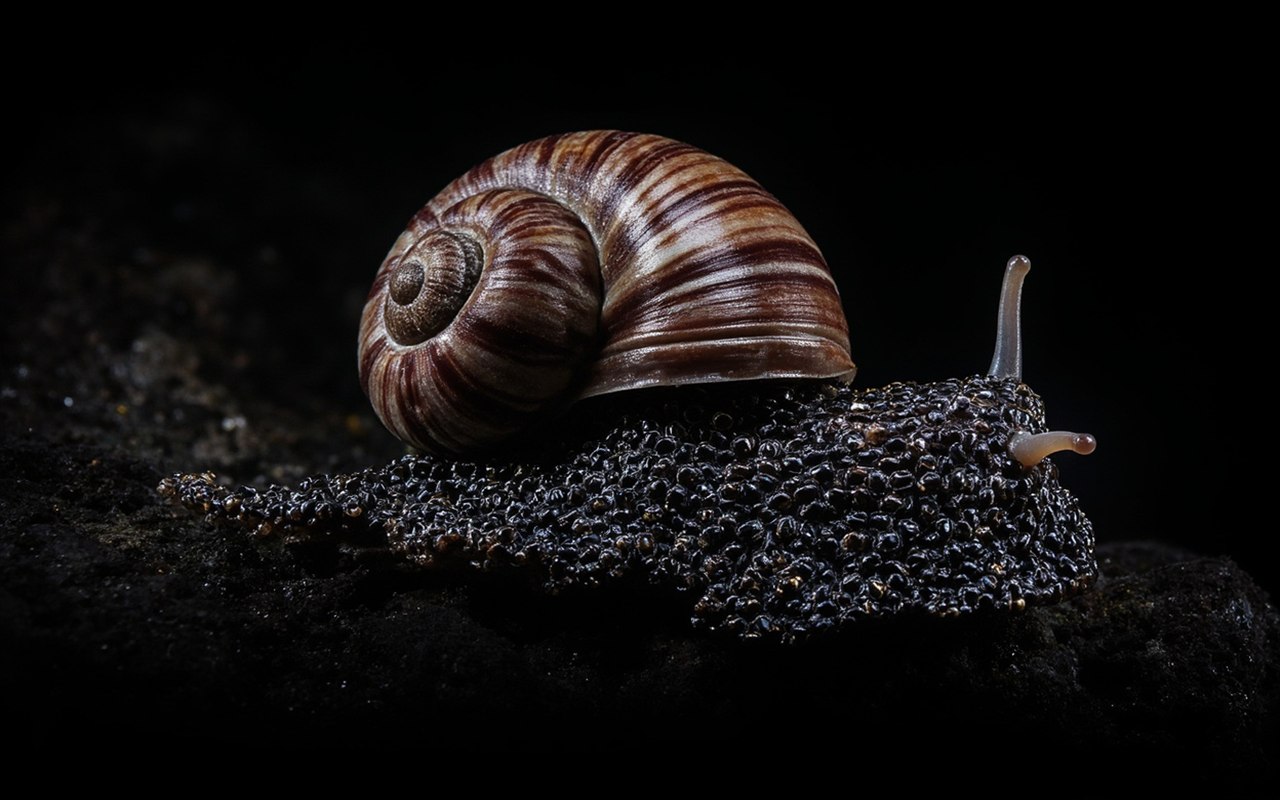
Lirapex felix is a small deep-sea snail named for the luck of the researchers who found it. The Senckenberg release adds the practical context: just one specimen was found on each of two separate expeditions. Two specimens across two expeditions is the entire known record of the species, and both came from sites in the Indian Ocean where mining exploration is ongoing.
Critically Endangered under IUCN criterion B means the species has a very restricted geographic range and that range is in decline, or that the number of mature individuals is very low and continuing to drop. For a vent species, restricted range can mean a single vent system. If mining exploration at that system is active, the case for Critically Endangered is straightforward.
The Indian Ocean sites where Lirapex felix was found sit inside the Area, the international seabed beyond national jurisdiction, which is administered by the International Seabed Authority. Exploration contracts in the Indian Ocean have been granted to several countries, including India, Germany, and the Cook Islands.
What about the other two Critically Endangered vent molluscs?
Astyris thermophila and Neolepetopsis ardua were both listed as Critically Endangered at 2026-1 alongside Lirapex felix.
Astyris thermophila is a small snail from the family Columbellidae. The Neolepetopsis genus is a vent limpet found at sites across the Pacific. Neolepetopsis ardua specifically is one of the larger limpets in the genus and has been recorded from a small number of sites in the western Pacific.
The pattern in the Critically Endangered list is that all three species have very small known ranges and that the vent systems they live on sit inside, or close to, areas with active exploration contracts. The Senckenberg team has argued that the most likely future for these species is that their vent will be either mined or damaged by exploration.
Which species were assessed as Vulnerable in this update?
Eight vent-endemic molluscs entered the list as Vulnerable at 2026-1. They are Cocculina aurora, Eulepetopsis crystallina, Neolepetopsis gordensis, Thermomya sulcata, Neolepetopsis prismatica, Sinepecten segonzaci, Provanna beebei, and Solemya calypso.
Vulnerable is the category below Endangered on the IUCN scale. It means the species faces a high risk of extinction in the wild in the medium-term future. The threshold for Vulnerable under criterion B is fewer than ten locations, continued decline, and either an extent of occurrence under 20,000 square kilometres or an area of occupancy under 2,000 square kilometres.
Cocculina is a limpet genus with a long history at vents. Eulepetopsis is another vent limpet. Thermomya is a vent mussel, and Solemya is a genus of bivalves that host chemosynthetic bacteria in their gills, an unusual biology that has made Solemya a model for the study of symbioses.
What the Vulnerable list tells you is that the threat to vent molluscs is not concentrated on a single family or a single ocean basin.
Why is Provanna exquisita Least Concern while Lirapex felix is Critically Endangered?
Provanna exquisita is an ornate snail that lives only in the Mariana Arc of Fire National Wildlife Refuge in the Pacific Ocean. The IUCN press release says it is Least Concern because the refuge is protected from mining.
The Mariana Arc of Fire National Wildlife Refuge is a United States federal refuge managed by the National Oceanic and Atmospheric Administration. It was designated in 2009 and expanded in 2016, and it covers a series of submarine volcanoes in the Mariana Trench area, including several active hydrothermal vent fields. Mining is prohibited within the refuge.
The contrast between Provanna exquisita and Lirapex felix is the simplest argument for protected areas at vent sites. Both are small snails endemic to single vent provinces, but one lives inside a no-mining zone and the other lives in the Indian Ocean under exploration contracts.
What do Marine Protected Areas mean for hydrothermal vents?
Over 30 vent species worldwide are now assessed as Least Concern on the IUCN Red List because they live inside Marine Protected Areas, according to the IUCN press release. The IUCN 2026-1 update added more species to that list, including Provanna exquisita in the Mariana Arc of Fire National Wildlife Refuge.
Marine Protected Areas, or MPAs, are zones in the ocean where human activity is regulated or prohibited. Some restrict specific activities such as mining or seabed disturbance. The IUCN Red List recognises a species as benefiting from an MPA if the protected area covers all known sites for the species and the activities restricted in the MPA include the threats the species faces.
For hydrothermal vents, the relevant threat is sediment plumes from mining, which smother vent animals and clog the bacteria they depend on for food. A protected area that excludes mining is enough to remove the most serious threat to a vent-endemic mollusc, and the IUCN criteria treat that as grounds for a Least Concern assessment.
What is the International Seabed Authority and what did it meet about in July 2026?
The International Seabed Authority, or ISA, is the intergovernmental body that regulates all mineral-related activities in the Area, the international seabed beyond national jurisdiction. It was established under the United Nations Convention on the Law of the Sea, which entered into force in 1994. The ISA is based in Kingston, Jamaica.
The ISA holds an annual session. Its 31st Session was held in two parts in 2026. Part I ran from 9 to 19 March 2026. Part II ran from 29 June to 31 July 2026. The Legal and Technical Commission met during Part II from 29 June to 10 July 2026. The Council Part II ran from 13 to 24 July 2026.
The Legal and Technical Commission is the body that reviews applications for exploration contracts and is responsible for drafting the mining code, the set of rules that would govern any future commercial extraction. The Council is the executive organ of the ISA and decides on policy questions referred to it by the Commission or by member States.
How does mining sediment smother vent fauna?
Deep-sea mining, whether at hydrothermal vents, on abyssal plains, or on seamounts, removes material from the seabed. The equipment used to do that creates sediment plumes in the water column. Plumes can come from the cutter head of the mining machine, from the riser pipe that brings material to a surface vessel, and from dewatering the material on the vessel before discharge.
For hydrothermal vent fauna, sediment plumes are the most immediate physical threat. Vent animals have evolved in water that is normally clear, because their bacterial symbionts need access to the vent fluid and the dissolved compounds it carries. A sediment plume at a vent site can smother the animals and clog the bacteria, blocking both feeding and the gas exchange the symbionts need to function. The IUCN press release says plumes impact the animals' ability to breathe and absorb nutrients from the surrounding water.
The Senckenberg release notes that sediment plumes are not the only threat. The noise and light from a mining operation, which would run continuously for decades at an industrial scale, are not part of any vent animal's evolutionary history. The deep sea is dark and quiet, and animals that have evolved under those conditions can be disrupted by constant light and vibration. The full ecological cost of operating a mine on a vent site has not been measured.
What is the IUCN position on deep-sea mining?
IUCN's position on deep-sea mining has been on the record since 2021. The IUCN Members voted at the IUCN World Conservation Congress in Marseille in September 2021 to support a moratorium on deep-sea mining unless and until all risks are understood and the marine environment is effectively protected. The motion was Resolution 122 from the 2021 Congress.
The IUCN press release for 2026-1 references this 2021 position directly. Prof Julia Sigwart's quote ends with: IUCN's position is clear: in 2021, the Union voted for a moratorium on deep-sea mining unless all risks are understood and the marine environment is effectively protected.
The IUCN is not a regulator and cannot impose a moratorium on its own. It is a scientific and conservation union with over 1,400 member organisations, including both government agencies and non-governmental organisations. Its Red List assessments provide the scientific basis that national regulators, the ISA, and other international bodies use to make decisions. The moratorium position is therefore a piece of scientific advice to the bodies that do have regulatory power, including the ISA Council in Kingston.
Whether the ISA adopts a moratorium or rules that allow mining to proceed is a separate question. The ISA's mining code has been under negotiation for years, and no commercial extraction has yet been authorised. The 2026 Council meeting in July was the latest in a long series of sessions at which the code's text has been debated.
Why are hydrothermal vents only being assessed now?
Most vent-endemic molluscs have been described only in the past 10 to 15 years, according to the IUCN press release. The reason is that vents were effectively unknown to science until 1977, when the first hydrothermal vent community was observed from the submersible Alvin at the Galapagos Rift. Before that, the deep sea was assumed to be a desert.
The number of vent species known to science has roughly doubled since the early 2000s as new vent fields have been explored. The Senckenberg release notes that 17 new vent mollusc species were added to the Red List at 2026-1, which is on top of more than 180 already on the list, but the total of 201 species assessed is still a fraction of the species believed to exist at vents worldwide.
The Marine Invertebrates Red List Authority, or MIRLA, a group led by the Senckenberg Ocean Species Alliance that aims to dramatically increase marine invertebrate representation on the IUCN Red List, has convened a special volunteer Vent Red List group. The group has 15 members and has already embarked on ambitious plans to assess over 500 vent-endemic species. Their work will expand far beyond molluscs to evaluate other highly vulnerable, specialised vent animals, including deep-sea worms and crustacea.
What does the Senckenberg Ocean Species Alliance want to do next?
The Senckenberg Ocean Species Alliance, or SOSA, is an initiative within the Senckenberg Forschungsinstitut und Naturmuseum Frankfurt dedicated to accelerating the discovery, protection, and public awareness of marine invertebrate species before they go extinct. It was co-founded by Prof Dr Julia Sigwart.
For the next phase of the vent assessment, SOSA is targeting over 500 vent-endemic species. That is more than double the current total of 201 molluscs already on the Red List, and it would expand the assessment to deep-sea worms, crustacea, and other vent animals beyond molluscs.
The 2026-1 release is part of a broader scientific initiative to catalogue global extinction risks at vents. SOSA's argument, set out in the Senckenberg press release, is that you cannot safely regulate or monitor an industry when the baseline data required to prevent extinction does not exist. The vent molluscs are the first fully assessed group at vents, and they are the proof that the threat is real and quantified.
For the policy timeline, the data is intended to feed directly into the ISA negotiations. SOSA has been at the table at ISA meetings, including the July 2026 Council session in Kingston. The same approach is being used at the United Nations Biodiversity Conference and at national-level decisions on whether to allow mining within a country's own waters.
How does this connect to species in this catalog?
The Creatures in Crisis catalog covers a small number of hydrothermal vent species already, and the IUCN 2026-1 update is relevant to each of them.
The scaly-foot gastropod (Chrysomallon squamiferum) is in the catalog as Endangered. It is the only animal known to incorporate iron sulfide into its skeleton, with mineralised scales covering its foot. The species was first listed by IUCN in 2019 as Endangered due to deep-sea mining activity at the three hydrothermal vent fields it lives on, in the Indian Ocean. The 2026-1 update confirms the direction of travel for vent species as a whole and provides the broader context for the scaly-foot snail's situation.
The catalog also includes ventsia tricarinata, a vent-endemic species from the western Pacific. The 2026-1 update illustrates the threat to single-site vent endemics in general, and ventsia tricarinata is one of the species the broader 500-species SOSA assessment is designed to capture.
For the broader catalog, the IUCN 2026-1 update reinforces a pattern that has been visible since 2019, when the scaly-foot snail was first listed. Vent species are unusually vulnerable to extinction because they live in small ranges at specific sites, and the threats at those sites have moved from theoretical to active over the past five years. The 2026-1 update is the moment the data stopped being early warnings and started being a quantified baseline.
Quick answers
Quick answers
- Did the IUCN Red List really say deep-sea mining threatens 62% of vent molluscs?
- Yes. The IUCN Red List version 2026-1, published on 9 July 2026, found that 62% of endemic hydrothermal vent molluscs (125 out of 201 species) are at risk of extinction due to deep-sea mining for valuable minerals. The assessment added 17 new species, of which three entered as Critically Endangered, eight as Vulnerable, and six as Least Concern.
- Which vent molluscs were listed as Critically Endangered in 2026-1?
- Three species: Astyris thermophila, Neolepetopsis ardua, and Lirapex felix. Lirapex felix was named for the luck of the researchers who found just one specimen on each of two separate expeditions, both in the Indian Ocean at sites where mining exploration is ongoing.
- Why is Provanna exquisita Least Concern while other vent snails are Critically Endangered?
- Provanna exquisita lives only in the Mariana Arc of Fire National Wildlife Refuge in the Pacific Ocean, a United States federal refuge where mining is prohibited. The other snails live in the Indian Ocean and elsewhere under active exploration contracts with no protected-area status.
- What is the International Seabed Authority?
- The International Seabed Authority, based in Kingston, Jamaica, is the intergovernmental body that regulates all mineral-related activities in the international seabed beyond national jurisdiction. It was established under the United Nations Convention on the Law of the Sea. Its 31st Session in 2026 ran in two parts, with Part II from 29 June to 31 July 2026.
- What is the IUCN position on deep-sea mining?
- IUCN Members voted at the 2021 World Conservation Congress in Marseille to support a moratorium on deep-sea mining unless and until all risks are understood and the marine environment is effectively protected. The IUCN 2026-1 update restated this position.
- How are sediment plumes from deep-sea mining dangerous to vent animals?
- Sediment plumes smother vent animals and clog the chemosynthetic bacteria they depend on for food, blocking feeding and gas exchange. Vent animals have evolved in clear water, and a plume is a physical change their biology is not adapted to handle.
- How many vent species are still to be assessed?
- The Senckenberg Ocean Species Alliance has convened a Vent Red List group of 15 members with plans to assess over 500 vent-endemic species across molluscs, deep-sea worms, and crustacea. The 201 assessed so far are a fraction of the total.
Field reporting on species in decline. Sourced, not sponsored.