Ostracoda in crisis
1 records. Red List version 2026-1
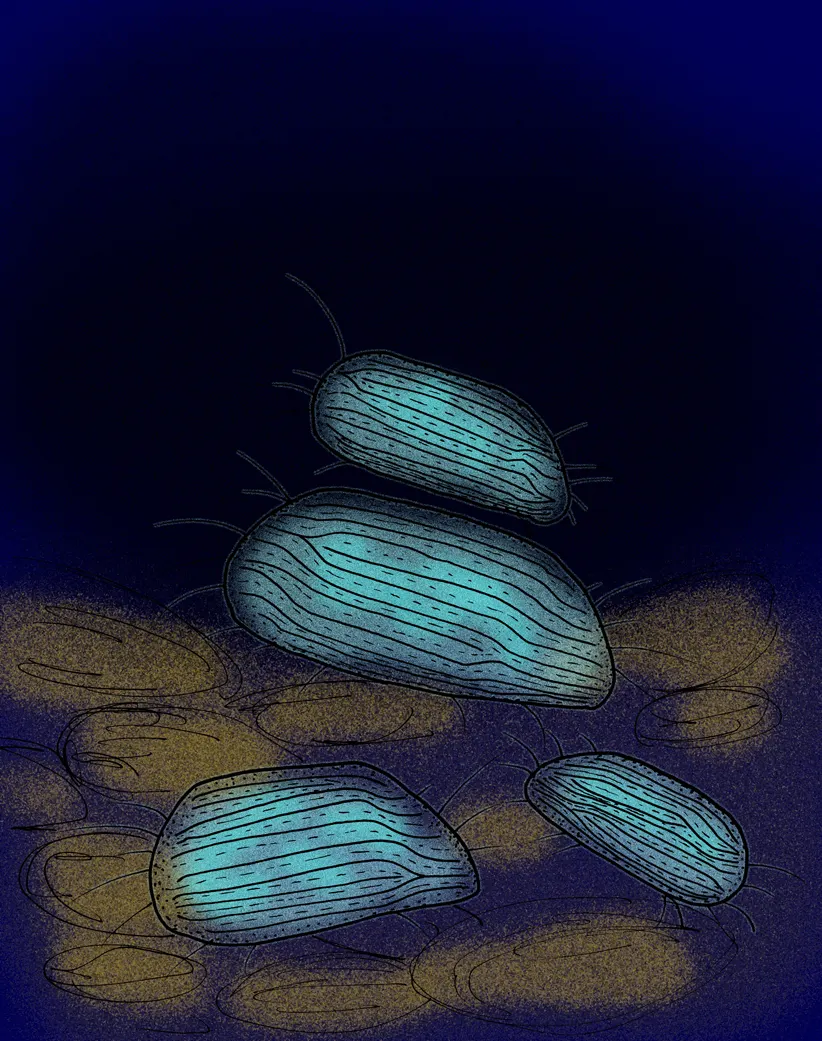
In this catalog, Ostracoda stands for seed shrimps, tiny crustaceans with a two-part shell. We list 1 ostracods that the IUCN Red List records as threatened enough to be Critically Endangered, Endangered or Extinct in the Wild: 1 Critically Endangered.
This is the only member of the group in the catalog, so the whole shelf is one record.
A class is a filing shelf, not a measure of risk: it says nothing about how fast any one species is declining. Status and assessment years come from the IUCN Red List (version 2026-1); how to read an IUCN assessment explains what the categories and criteria mean, and each record links to its own assessment.
Ostracods, or seed shrimps, are tiny crustaceans whose whole body sits inside a two-part shell that looks like a miniature clam. Most are about 1 mm long, though the range runs from 0.2 mm up to 32 mm in the largest marine species.
Counts vary by source. One encyclopedia gives about 33,000 species described, living and fossil, of which about 13,000 are alive today. A university reference gives about 8,000 living species. Most marine ostracods live on or in the upper seabed, and most freshwater ones crawl or burrow in sediments at the bottom of lakes. Others occur in odd places: moist land habitats such as moss, caves, pools of water held by bromeliad plants, and hot springs.
What they do in nature
Diets are varied. Most species are deposit feeders, living on dead organic material and particles, while some filter water, scavenge, graze on microscopic plants or prey on other animals.
Ostracods also have the most complete fossil record of any crustacean group. Their shells survive well, so scientists use them to date rock layers and to estimate past water temperatures and conditions.
Why these animals are threatened
Non-marine ostracods are poorly known. Around 2,000 were known as of 2008, and many remain undescribed, so there is little data on how most of them are doing.
The animal in the catalog's list shows how thin the record can be. Namibcypris costata, the only species in its genus, was described by K. Martens in 1992 from a spring in northern Namibia and is possibly endemic to the southern Kaokoveld. A 2025 Red List assessment by Martens and Cox lists it as Critically Endangered.
What the catalog lists
The catalog holds a single record from this class, in the order Podocopida and the family Candonidae. Given the size of the class, that is a tiny sample. Most ostracods have never been assessed, so absence from the list should not be read as safety.
Sources for this section
- Ostracod: 33,000 species described, 13,000 living, size range, habitats, about 2,000 non-marine species as of 2008, diet, fossil record, paleoenvironment uses
- UCMP Ostracoda: About 8,000 living species, size, benthic habitats, moist land habitats, most complete crustacean fossil record
- Namibcypris: Described by Martens 1992 from a spring in northern Namibia, only species in genus, possibly endemic to southern Kaokoveld, 2025 Critically Endangered assessment
Status breakdown
1 records: Critically Endangered 1.
All species
Podocopida (1)
The A to Z index lists the species with a full account; the catalog search finds any record by name.
Quick answers
- How many ostracods are in this catalog?
- 1, listed by the IUCN Red List as 1 Critically Endangered.
- What is Ostracoda?
- Here, Ostracoda means seed shrimps, tiny crustaceans with a two-part shell. It is a taxonomic class used to group the catalog.
- Where do the statuses come from?
- From the IUCN Red List (version 2026-1), with a link to each species' assessment on iucnredlist.org.