State rules
Tegu state rules in 2026
Updated 1 October 2026
On 16 April 2026, the Arkansas Game and Fish Commission added the genus Tegu, alongside nine related New World lizard genera, to its Prohibited Captive Wildlife Species List under Addendum R1.03. From that date forward, no new tegu could be brought into Arkansas, bought, sold, traded, or released in the state, and any person who already owned a tegu before 16 April 2026 had until 30 June 2027 to register that animal with the Commission. The change was the most recent step in a multi-year, multi-state push that has moved tegus from a freely kept pet in much of the United States to a regulated or banned species in an increasing number of states.
What changed for tegus in 2026?
Two state-level changes in 2026 altered the legal landscape for keeping tegus in the United States. Arkansas moved first, on 16 April 2026, when the Arkansas Game and Fish Commission added the tegu group to its Prohibited Captive Wildlife Species List. Rhode Island followed later in the year, after a wild tegu was found in a driveway in January 2026, by adopting a new permit requirement for any person who keeps a tegu in the state.
The Arkansas change is the more sweeping of the two. The Commission's Addendum R1.03 now lists Tegus and nine related genera as prohibited captive wildlife. Legal possession is now restricted to persons who owned the animal before 16 April 2026, and each such animal must be registered with the Commission by 30 June 2027. After that deadline, any unregistered tegu in Arkansas is illegal to keep.
The Rhode Island change is narrower. Rather than an outright ban, Rhode Island introduced a permit requirement that applies to any tegu kept in the state. The change is reported by the United States Association of Reptile Keepers (USARK) to have been prompted by the January 2026 discovery of a tegu alive in a driveway, the first confirmed wild tegu in Rhode Island.
Other states had already tightened their rules before 2026. Florida placed Argentine black and white tegus on its Prohibited Species List in 2021. North Carolina made it illegal to buy, sell, or release the species on 1 August 2022. Georgia requires a Wild Animal License for Argentine tegus. The 2026 changes extend the same logic to states further north, where wild survival had until recently been assumed to be unlikely.
Why are states singling out tegus in particular?
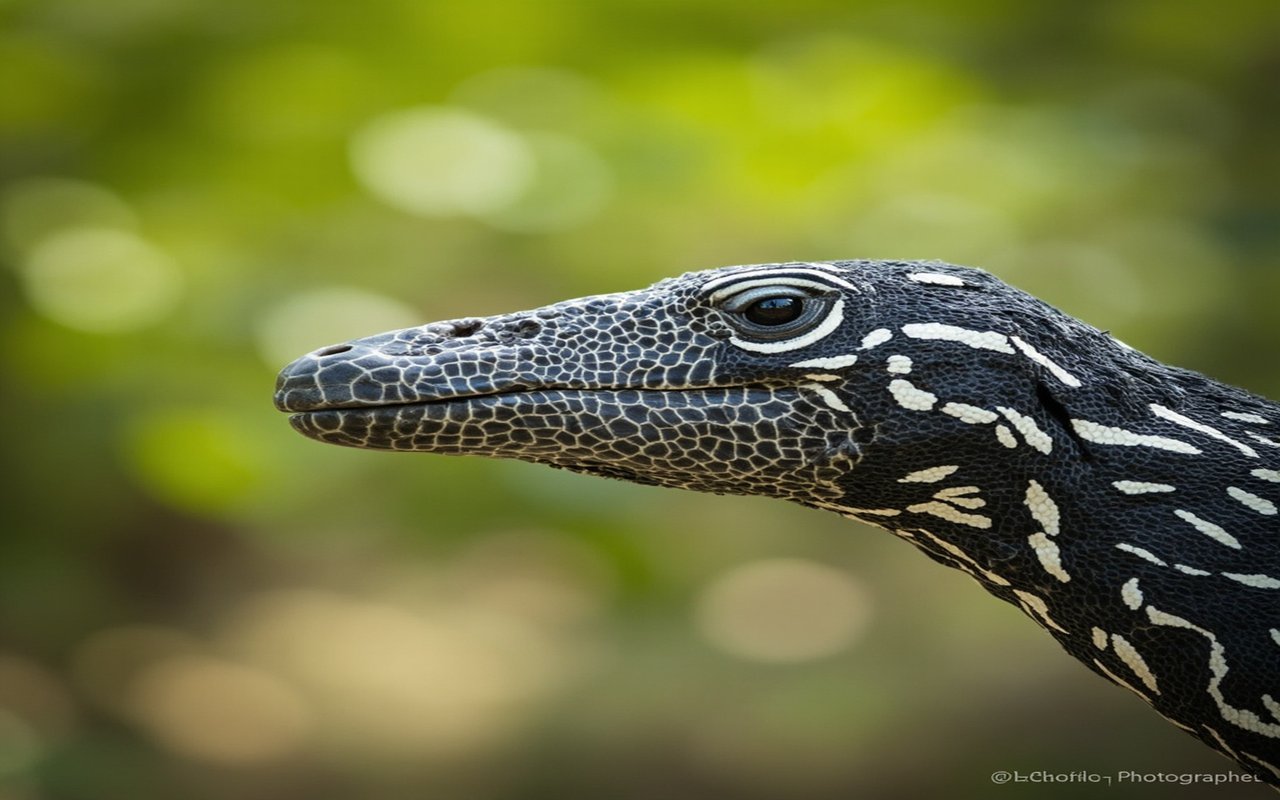
Tegus are large, omnivorous lizards native to South America. The species most commonly kept and most often regulated is the Argentine black and white tegu, Salvator merianae, a lizard that can reach four feet in length as an adult and live for fifteen to twenty years in captivity. Tegus are intelligent, they tolerate handling well, and they have become popular in the reptile-keeping hobby because they show more complex behaviour than many other large lizards.
Those same traits make them a problem when they get into the wild. Tegus eat fruit, eggs, insects, small animals, and carrion. In Florida, where the Argentine tegu has established breeding populations in Hillsborough, Miami-Dade, Polk, and other counties, the lizards are documented raiding the nests of the American alligator and of ground-nesting birds, including the threatened gopher tortoise. The University of Florida Institute of Food and Agricultural Sciences published a fact sheet on the species in 2020 that warned of the breadth of the diet and the speed of the spread.
Tegus also tolerate cold better than most tropical lizards. They brumate in burrows during cold snaps, and have survived freezes in Georgia and South Carolina. The same hardiness that lets a captive tegu thrive in a backyard in Maine is what lets it survive a mild winter outdoors in Atlanta or Tallahassee. Once a population of a large omnivorous lizard is breeding in the wild, the cost of removing it is high, and the cost of failing to remove it is paid by the native species that the lizard eats.
What did Arkansas actually do on 16 April 2026?
Arkansas added the entire tegu group, defined as the genus Tegu plus nine related genera, to its Prohibited Captive Wildlife Species List under Code 09.00 and Addendum R1.03. For anyone who did not own a tegu in Arkansas before 16 April 2026, the answer is straightforward: it is now illegal to import, transport, possess, buy, sell, trade, or release a tegu in the state. The animal is on the same prohibited list as big cats, bears, primates, and crocodilians.
For anyone who already owned a tegu before 16 April 2026, the Commission has set up a grandfather clause. Such a person may keep the specific animal they already owned, but only if they register that animal with the Commission by 30 June 2027. After 30 June 2027, any unregistered tegu is illegal to possess in Arkansas, including tegu that the owner had before 16 April 2026.
The grandfather clause is not open-ended, and it does not allow breeding, sale, or transfer of the registered animal. The Commission explained the change in terms of the same logic that drove Florida and North Carolina. Arkansas has not yet documented a wild tegu population, and the Commission is acting to keep it that way.
What is the registration process for grandfathered tegus in Arkansas?
The Arkansas Game and Fish Commission has set the registration deadline at 30 June 2027. The Commission treats each registered animal individually, and the owner must demonstrate that they possessed the tegu before 16 April 2026. Acceptable evidence includes veterinary records dated before that date, dated receipts from a breeder or retailer, dated photographs, and other records that place the animal in the owner's possession before the rule took effect.
The registration is filed with the Commission's captive wildlife programme. The owner declares the species, the sex if known, any identifying features, the address where the animal is kept, and the date the animal was acquired. The Commission keeps the registration on file and uses it to track the grandfathered population. There is no fee for the registration itself, although the Commission may require the owner to comply with caging and identification rules that apply to other captive wildlife in the state.
An owner who registers a grandfathered tegu cannot transfer the animal to another person in Arkansas, cannot sell it, cannot breed it, and cannot release it. The grandfather clause is a possession-only arrangement: the animal stays with the registrant until the animal dies, and the registrant must notify the Commission of the animal's death. Anyone who is unsure whether they need to register should treat the deadline as firm, as after 30 June 2027, an unregistered tegu in Arkansas is a prohibited animal.
What is the difference between Appendix I and Appendix II?
The CITES Convention lists species in three Appendices that govern international trade. Appendix I covers species threatened with extinction and prohibits international commercial trade in wild specimens. Appendix II covers species that may become threatened if trade is not controlled, and regulates trade through a permitting system. Appendix III covers species that a single Party has asked other Parties to help regulate.
No tegu species is currently listed on CITES Appendix I. The Argentine black and white tegu is listed on Appendix II, alongside most other commercially traded reptile species. The Appendix II listing means that any international shipment of live tegus or tegu parts needs an export permit from the country of origin and an import permit from the country of destination, with a finding that the trade will not be detrimental to the survival of the species.
US state-level rules operate on a different axis from CITES. CITES regulates cross-border trade; state wildlife rules regulate possession, breeding, sale, and release within a single state's borders. A tegu that is legally imported under CITES Appendix II can still be illegal to keep in Arkansas, Florida, or North Carolina, and the state prohibition applies regardless of the CITES permit. State rules are the more relevant question for a US keeper.
How does the Florida ban work and why is it the model other states follow?
Florida has the most developed regulatory response to tegus of any US state, in part because Florida is the only state with an established, breeding wild tegu population. The Florida Fish and Wildlife Conservation Commission listed seven species of tegus on its Prohibited Species List in 2021, including the Argentine black and white tegu, the gold tegu, and several Tupinambis species. Possession of these species is illegal in Florida without a permit, and the Commission runs a removal programme for wild animals.
The Commission's reasoning, set out in its rule-development materials, is that early action is cheaper than late action. Once a tegu population is established, removal is labour-intensive and the population continues to grow between removal events. Tegus are now documented in at least 35 Florida counties, and the documented range has expanded steadily, particularly in central and southern Florida.
Other states have followed the Florida model, placing tegus on their own prohibited or restricted lists before a wild population has become established. Georgia, Alabama, South Carolina, North Carolina, and Arkansas have all adopted some version of this approach. The Arkansas rule in 2026 reflects a compromise, in that the prohibition on new ownership is paired with a grandfather clause that allows existing owners to keep their animals through registration rather than immediate confiscation.
What is the North Carolina rule and how does it differ from Arkansas?
North Carolina's Wildlife Resources Commission voted in February 2022 to add the Argentine black and white tegu to the state's restricted species list, and the new rule took effect on 1 August 2022. Under the rule, it is illegal to buy, sell, or release an Argentine black and white tegu in North Carolina. Existing owners must apply for a permit with the Wildlife Resources Commission to keep the animals legally.
The North Carolina rule is narrower than the Arkansas rule in two ways. First, North Carolina's rule singles out the Argentine black and white tegu, while Arkansas's rule covers the whole Tegu group and nine related genera. Second, North Carolina's rule does not impose a hard registration deadline, while Arkansas's rule cuts off grandfathered possession on 30 June 2027.
Both rules share the same underlying rationale: preventing the establishment of a wild tegu population in the state. The North Carolina Wildlife Resources Commission cited the established Florida population and the documented northward spread as reasons to act preventively, rather than waiting for a wild animal to be found in the state. Other species are restricted in North Carolina alongside the Argentine tegu, including the African clawed frog, the brown anole, the Cuban treefrog, and the red-eared slider.
What about Georgia and South Carolina?
Georgia lists Argentine tegus and Nile monitors as conditional species. Under Georgia's rules, an Argentine tegu may be held as a pet without a licence or permit only if the owner possessed the animal before 4 December 2023. New ownership, breeding, and sale are prohibited. Georgia Department of Natural Resources publishes a tegu sightings map that the public can use to report wild animals, and the agency actively removes tegus from the wild where they are found.
South Carolina lists tegus as a Class B invasive species. The Class B designation triggers permitting requirements for possession, breeding, and sale, and it gives the Department of Natural Resources authority to remove wild animals. South Carolina has documented tegu sightings in several counties, particularly in the coastal plain, and the Department treats the species as an active eradication target rather than a future risk.
Both Georgia and South Carolina have cooler winters than central Florida but warmer winters than Arkansas or North Carolina. The threshold for tegu survival in the wild is roughly the same as for armadillos, and armadillos have expanded their range northward through both states over the last forty years. Tegus are following the same expansion pattern, and the state wildlife agencies are acting before the animals establish breeding populations in the same way they did with armadillos.
What does Rhode Island's January 2026 tegu discovery mean?
A wild Argentine black and white tegu was found alive in a residential driveway in Rhode Island in January 2026. The discovery was reported by USARK as the trigger for a new state-level permit requirement for anyone keeping a tegu in Rhode Island. The state Department of Environmental Management has not, as of this writing, listed the tegu as an established species, and the single animal was likely a released or escaped pet. The response is precautionary.
Rhode Island is the northernmost state to record a wild tegu. A wild tegu in Rhode Island in January, when ambient temperatures are below freezing across the state, is a stronger signal about the captive population than about any established wild population. The state appears to be treating the discovery as evidence that the captive population is large enough that escapes are happening, and that the precautionary response is to require permits for the captive population rather than to wait for breeding evidence in the wild.
For keepers in Rhode Island, the permit requirement means that any tegu kept in the state as of 2026 needs to be registered with the Department of Environmental Management. The exact terms of the permit, including caging, identification, and reporting requirements, are set by the Department's captive wildlife rules. Other New England states have not yet adopted tegu-specific rules, and the Rhode Island permit requirement may prompt other states in the region to consider similar measures.
Are tegus legal to keep as pets anywhere in the US in 2026?
Yes, tegus remain legal to keep as pets in a number of US states, although the list is shorter than it was in 2020. The states with no tegu-specific restrictions at the time of writing include most of the Pacific Northwest, the Mountain West outside of Arizona, large parts of the Midwest, and several New England states outside of Rhode Island. The states that restrict or ban tegus include Florida, Georgia, Alabama, South Carolina, North Carolina, Arkansas, and increasingly states further north as cold-climate survival becomes better documented.
The USARK reptile ownership laws by state page sets out the position for each state, though keepers should confirm the rules with their state's wildlife agency before acquiring a tegu. State rules can change between USARK updates, and the 2026 changes in Arkansas and Rhode Island are recent enough that not every reference source has caught up.
The pattern across the country is one of progressive restriction rather than uniform ban. Even in states that have not adopted tegu-specific rules, general invasive species laws and exotic animal possession laws can apply, and a keeper who releases a tegu into the wild can face state-level penalties for releasing a non-native species regardless of whether tegus are specifically named in the rule. Federal laws, including the Lacey Act, can apply to the interstate transport of illegally possessed animals.
What does the conservation science say about tegu invasiveness?
The peer-reviewed literature on tegu invasiveness in the United States is concentrated on Florida, where the established population has been the subject of study since the mid-2010s. Researchers at the University of Florida, the US Geological Survey, and the Florida Fish and Wildlife Conservation Commission have published work on the species' range expansion, diet, reproduction, and response to control efforts.
The Argentine black and white tegu reaches sexual maturity at around two to three years of age, produces clutches of 20 to 50 eggs per year, and can live for fifteen to twenty years in captivity and a shorter period in the wild. The combination of high fecundity, broad diet, tolerance of cold, and adaptability to human-modified habitats is the same combination that has made other invasive reptiles successful in the southeastern United States, including the Burmese python in the Everglades and the brown anole across the southeast.
Diet studies of wild Florida tegus have documented consumption of eggs, fruits, insects, small vertebrates, and carrion. Climate-match models suggest that suitable habitat for Argentine tegus extends well beyond the current Florida range, including the coastal plain of Georgia, South Carolina, Alabama, Mississippi, Louisiana, and parts of eastern Texas.
What does the US pet trade look like for tegus in 2026?
The Argentine black and white tegu was, until the late 2010s, one of the most commonly kept large lizards in the US reptile hobby. Captive-bred tegus from USARK-member breeders were widely available through online retailers and reptile shows, and the species was a regular feature of reptile expos in the southeast and the mid-Atlantic. The animal is large, docile, and tractable, and it has a following among keepers who want a lizard that is more interactive than the typical pet reptile.
The state-level restrictions that began in 2021 and accelerated through 2026 have changed the economics of the trade. Breeders in restricted states have moved their operations, and the legal market has shifted toward states without restrictions. USARK has argued that the shift has the perverse effect of pushing the captive population into states with weaker invasive-species enforcement. The conservation community has argued that restricting the trade is the only practical way to prevent new releases.
Outside the United States, the Argentine black and white tegu remains a common captive animal in Europe, Japan, and other parts of the reptile-keeping world, where state-level bans of the kind adopted in Arkansas do not exist. The international trade in tegus is governed by CITES Appendix II, which requires export and import permits but does not prohibit trade. The combination of CITES permitting for international trade and state-level prohibitions for in-state possession is the regulatory environment that any keeper needs to navigate in 2026.
How can a tegu keeper stay compliant as rules change?
For a keeper who already owns a tegu in 2026, the practical steps depend on the state of residence. In Arkansas, the keeper should register the animal with the Arkansas Game and Fish Commission by 30 June 2027. In Rhode Island, the keeper should apply for the new state permit through the Department of Environmental Management. In Florida, Georgia, North Carolina, and South Carolina, the keeper should hold the relevant state permit and should be prepared for the rule to tighten further.
Beyond registration, the keeper should keep documentation of the animal's acquisition, including dated receipts, breeder records, and veterinary records. Documentation of the animal's presence in the owner's possession before any cutoff date is the primary evidence that the animal qualifies for grandfather treatment, and the keeper is unlikely to have a second chance to assemble that evidence after the rule has taken effect.
The keeper should also be aware that rules can change without notice. A state agency that adopts a tegu restriction typically gives existing owners a registration window, but the window can be shortened by emergency rulemaking, and the keeper who does not register during the window may lose the chance to register at all.
Quick answers
Quick answers
- Did Arkansas ban tegus in 2026?
- Yes. The Arkansas Game and Fish Commission added Tegus and nine related lizard genera to its Prohibited Captive Wildlife Species List under Addendum R1.03 on 16 April 2026. New possession, sale, breeding, and release are illegal. Owners who already had a tegu before that date may keep the animal if they register it with the Commission by 30 June 2027.
- What did Rhode Island do about tegus in 2026?
- Rhode Island adopted a new permit requirement for keeping tegus after a wild Argentine black and white tegu was found in a driveway in January 2026. The state Department of Environmental Management now requires a permit for any tegu kept in the state.
- Why are states banning tegus?
- Tegus are an established invasive species in Florida and have been documented in the wild in Georgia, South Carolina, and now Rhode Island. They eat native wildlife including eggs and ground-nesting birds, tolerate cold better than most tropical lizards, and breed quickly once established. State wildlife agencies are acting preventively to keep populations from becoming established.
- Is it legal to own a tegu in the United States in 2026?
- It depends on the state. Tegus are prohibited or restricted in Florida, Georgia, Alabama, South Carolina, North Carolina, Arkansas, and Rhode Island. They remain legal with no specific restriction in many other states, although federal Lacey Act rules apply to interstate transport.
- What happens to existing tegu owners in Arkansas after 30 June 2027?
- After 30 June 2027, any unregistered tegu in Arkansas is treated as prohibited captive wildlife. Registered animals may remain with their registered owner for the life of the animal, but they may not be sold, transferred, bred, or released.
Field reporting on species in decline. Sourced, not sponsored.