Endangered
Zoogoneticus tequila
Zoogoneticus tequila
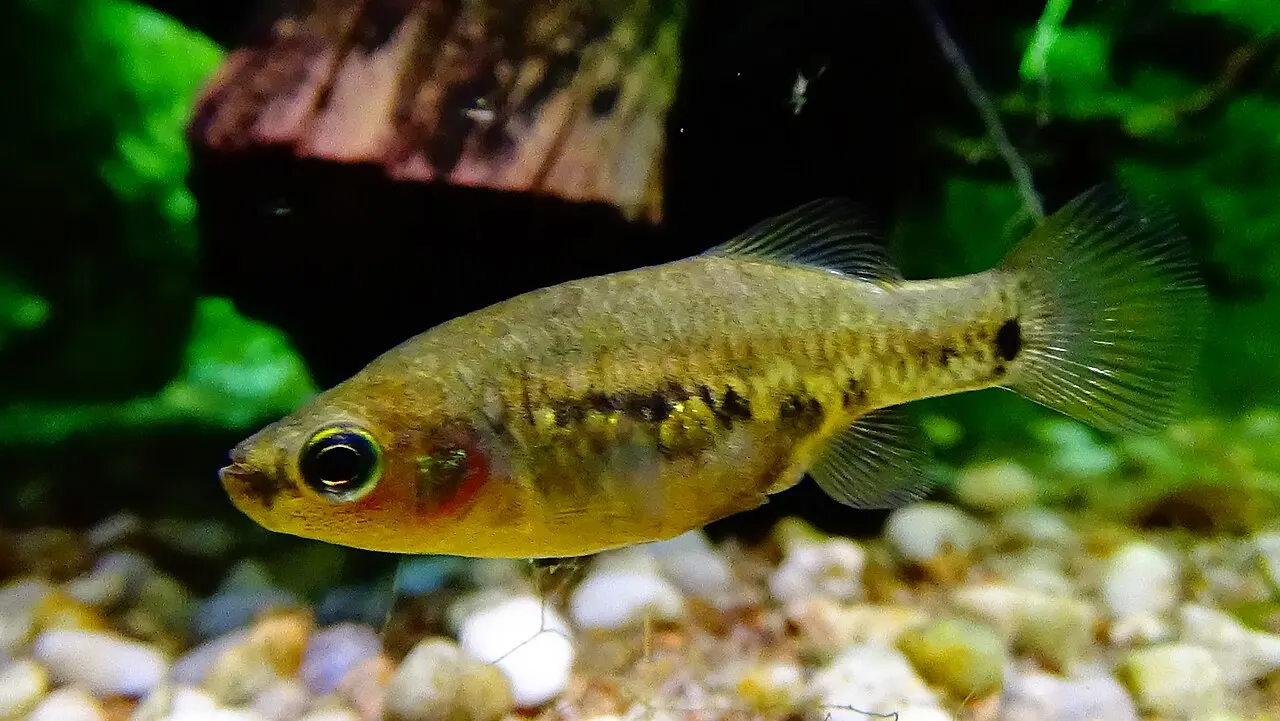
Zoogoneticus tequila is a splitfin in the family Goodeidae (order Cyprinodontiformes), recorded as Endangered.
Appearance
The sexes can also be distinguished by colouration. Adult males have cream-colored terminal bands on the anal and dorsal fin. The caudal fin of adult males has crescent-shaped band of red-orange, orange, or yellow.
Males are smaller than females, with standard length up to 4.1 cm (1.6 in) in males and up to 5.8 cm (2.3 in) in females.
Range and habitat
Zoogoneticus tequila is endemic to the Ameca River basin in west-central Mexico. Its current distribution is restricted to a single spring pool in Teuchitlán, only 4 metres (13 ft) in diameter, where a population consisting of less than 50 adult fish found in the early 2000s. Before the discovery of the pool population in 2000/2001, Z. Tequila was generally thought to inhabit rivers. Even so, no fish could be found in the original habitat and the species was considered extinct in the wild.
After a few successful reintroductions of Z. Tequila in the wild became established, the International Union for Conservation of Nature declared this species endangered.
Pins are Wikidata “endemic to” fields. Orange dots, when present, are GBIF occurrence tiles — survey bias included.
Diet
Much of the wild diet and eating patterns of Z. Tequila are inferred from congeners such as Z. Quitzeoensis, that consists of amphipods, insects, ostracods, and detritus. In their existing location in the spring pool, Z. Tequila fish typically eat various zooplankton and insect larvae, with chironomid larvae being most popular.
In crisis
Z. Tequila, one of these 36 species, has a very limited population endemic to Mexico. DNA analysis of natural populations of Z. Tequila have shown that because the populations are extremely small, there is a large amount of inbreeding that could be contributing to the precipitous decline in populations in the wild. Since the wild population was declared extinct nearly twenty years ago, this opportunity is nonexistent.
Instead of using species from the wild, recent efforts by scientists beginning in 1998 have been able to replenish the declining population within the river through breeding the fish in labs. Beyond simply reintroducing the species and allowing a larger population to reach replenishment, it is also important to consider the causes behind the endangered species to begin with.
Zoogoneticus tequila is Endangered on the IUCN Red List (assessed 2019, criteria D). Confirm the official criteria and any later count on the assessment page.
Sources
Adapted from the English Wikipedia article on Zoogoneticus tequila (CC BY-SA 4.0; authors are listed in the article history; changes were made), Wikidata item Q5492268. Family and order context is original field-guide writing about the group, not a copied assessment of this one species. Not an IUCN assessment. Counts, when quoted, can change — confirm them on the recovery programme and on iucnredlist.org. Status and assessment year: IUCN. 2026. The IUCN Red List of Threatened Species. Version 2026-1. iucnredlist.org.




