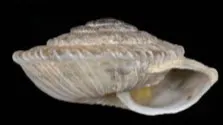
Endangered
Xeroplexa setubalensis
Xeroplexa setubalensis
Xeroplexa setubalensis is a small land snail found only in Portugal, on the limestone hills of the Setúbal peninsula south of Lisbon. The IUCN Red List assessed it as Endangered in 2025. It is the type species of its genus, which was brought back into use after a 2018 DNA study.
Where it lives
The snail is endemic to the central coast of Portugal. Only a few populations are known, in the Serra da Arrábida and the Serra do São Luís, around Setúbal. A 2024 paper in the journal Iberus by Calado and colleagues extended the known range about 20 km westward, but it is still a narrow strip tied to south-facing limestone.
The Red List assessment records it from sea level up to about 500 m, in temperate shrubland, temperate forest and rocky ground. It counts two to six locations, an extent of occurrence of about 180 square km and an occupied area of about 24 square km. The assessment says the whole population lies inside protected areas.
Pins are Wikidata “endemic to” fields. Orange dots, when present, are GBIF occurrence tiles — survey bias included.
A name that changed
Ludwig Pfeiffer described the species in 1850 as Candidula setubalensis, and for a long time it sat in the genus Candidula. A 2018 study by Chueca and colleagues in Molecular Phylogenetics and Evolution found that Candidula was not a single natural group. That led to the revival of the older genus Xeroplexa (named by Monterosato in 1892), and setubalensis is its type species.
It belongs to the family Geomitridae, a large group of Mediterranean and Atlantic land snails. In the Arrábida hills it lives alongside a close relative, Xeroplexa arrabidensis, a pairing a 2017 PeerJ study of Portuguese Candidula snails described as occurring together.
Why it is in trouble
The 2024 Iberus paper reassessed the snail as Endangered, citing a severely fragmented extent of occurrence, a reduced area of occupancy and an inferred continuing decline. The Red List assessment records a continuing decline in habitat area, but gives the population trend as unknown and offers no population size.
The threats it lists are modest. Housing and urban development and tourism and recreation areas are ongoing pressures on a minority of the range, each rated as causing negligible decline. Road building and some recreational activities are recorded as past impacts unlikely to return. The concern is less any single threat than how little ground the snail occupies.
What is being done
Every known site lies inside a protected area, and the assessment identifies conservation sites over the snail's entire range. The trend itself is still listed as unknown.
Sources
Written for this catalog in our own words from the sources below, checked against them on 12 November 2026. Population figures are estimates and carry the year they were made. Status and assessment year: IUCN. 2026. The IUCN Red List of Threatened Species. Version 2026-1. iucnredlist.org.




