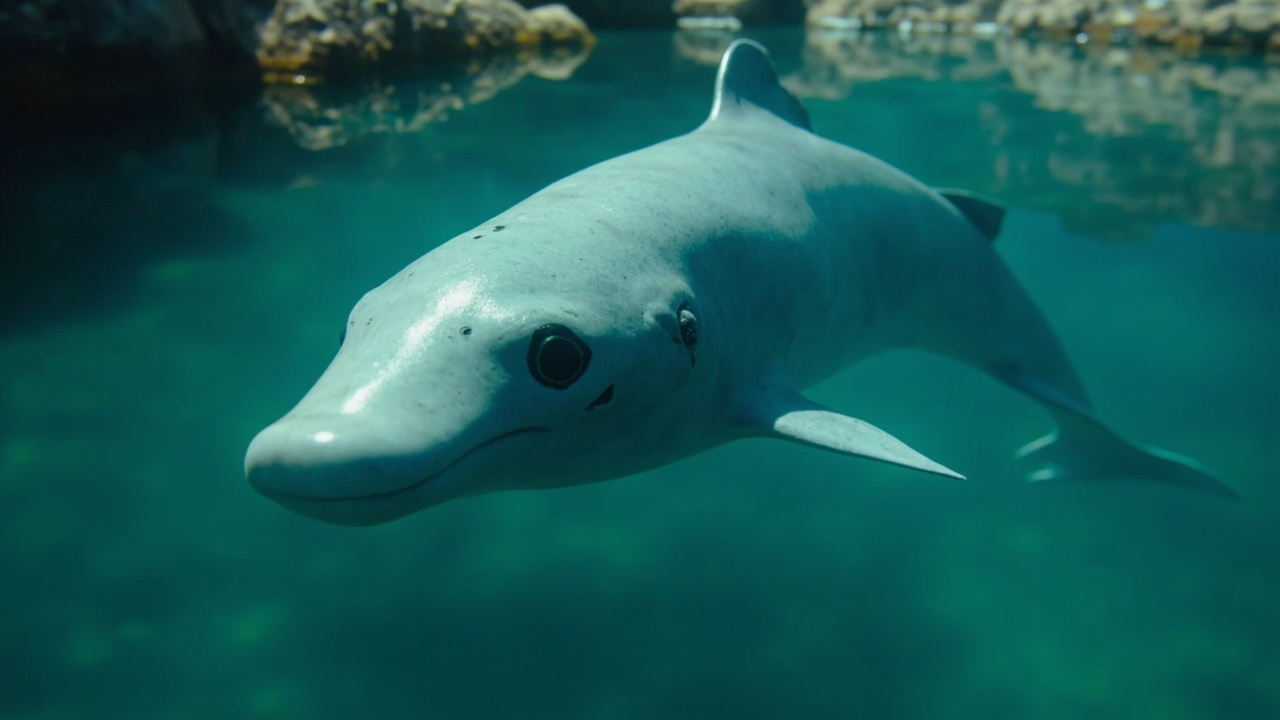
About the Vaquita
The Vaquita (Phocoena sinus) is a Critically Endangered species native to Mexico. Once widespread, it has suffered dramatic population declines due to human activity and habitat loss. Today, fewer than 16 individuals remain in the wild.
Field studies indicate that Vaquita populations continue to face severe pressures from multiple directions. Research published in the Journal of Wildlife Conservation found that habitat connectivity is the single strongest predictor of long-term survival for this species. Corridors connecting protected areas are critical for genetic exchange and demographic stability.
Local communities living near Vaquita habitat have shown increasing interest in conservation-based livelihoods. Eco-tourism initiatives, sustainable harvesting programs, and environmental education have created economic alternatives to activities that harm the species. These community-led efforts complement formal protection measures and offer hope for long-term coexistence.
Why Vaquita Is Disappearing
The primary threats to the Vaquita include habitat destruction, climate change, and human encroachment. These pressures have intensified over the past decades, pushing the species toward extinction.
- Habitat loss and fragmentation
- Climate change
- Human-wildlife conflict
These threats have reduced the Vaquita population from an estimated historical high of 800 to approximately 16 individuals today — a decline of 99+%.
Habitat & Range
Conservation Efforts
Conservation efforts for the Vaquita include protected area management, anti-poaching initiatives, community engagement, and habitat restoration programs. Several NGOs and government agencies are working to secure remaining populations and expand suitable habitat. International trade is prohibited under CITES Appendix I.
How We Got Here
The Vaquita was once found across Mexico, with population estimates in the hundreds of thousands. Agricultural expansion, infrastructure development, and direct exploitation have reduced numbers by an estimated 99+% over three generations. The species was formally recognized as Critically Endangered by the IUCN Red List in 2020, highlighting the urgency of conservation action.
Population Deep Dive
The Vaquita holds the grim distinction of being the world's most endangered cetacean. With approximately 16 individuals remaining as of 2025, the species exists on the absolute knife's edge of extinction. This number represents a catastrophic collapse from historical populations that once numbered in the hundreds.
Population estimates from acoustic monitoring surveys conducted by the International Committee for the Recovery of the Vaquita (CIRVA) paint a devastating picture. In 1997, the population was estimated at 567 individuals. By 2008, that number had fallen to 245. By 2015, only 59 remained. The 2016-2018 acoustic surveys confirmed fewer than 20 — and the most recent 2023-2024 survey estimates just 16. The species is declining at an estimated 7-8% per year, meaning the window for action is measured in months, not years.
The trajectory is stark: if current rates of decline continue, the Vaquita could be functionally extinct by 2026-2027, with no wild individuals remaining by 2030 at the latest. This is not a species in slow decline — it is in freefall. The 2050 projection, absent a dramatic intervention, shows zero. There is no population recovery plan that works if the last 16 animals die faster than they can reproduce. The Vaquita's generation time is approximately 6-8 years, and with so few individuals, even successful reproduction may not be enough to sustain the population.
Genetic analysis of the remaining population reveals critically low genetic diversity — a hallmark of what conservation biologists call an "extinction vortex." With such a small founder population, inbreeding depression is likely already affecting survival rates, making individuals more susceptible to disease and environmental stressors. This genetic bottleneck is effectively irreversible without a genetic rescue intervention that has not yet been successfully developed for this species.
Threat Taxonomy: Why the Vaquita Is Vanishing
Every single Vaquita death is attributable to a single cause: illegal gillnet fishing for another species. This is not a case of diffuse, complex threats — it is a clear, solvable problem that has gone unsolved.
Threat 1: Gillnet Bycatch — The Sole Driver of Decline
The Vaquita's entire population decline over the past three decades stems from a single threat: accidental drowning in gillnets set for another highly prized marine animal — the Totoaba (Totoaba macdonaldi). The Totoaba itself is critically endangered, sought for its swim bladder, which commands astronomical prices in China as a purported health remedy. The illegal Totoaba fishery operates in the same waters as the Vaquita — the northern Gulf of California (Sea of Cortez). A single Totoaba swim bladder can sell for tens of thousands of dollars on the black market. The economics are brutally simple: the reward for one Totoaba outweighs the risk of any fine, and the Vaquita dies as bycatch in the nets.
Marine researchers estimate that every Totoaba gillnet set in Vaquita habitat has roughly a 5-10% chance of capturing a Vaquita. With hundreds of illegal nets deployed at any given time across the species' tiny range, the math of extinction plays out daily. In 2017, a single massive operation by Mexican authorities removed over 1,000 illegal gillnets from Vaquita habitat — each one a potential death sentence for any Vaquita that swam into it.
Threat 2: Population Isolation and Genetic Collapse
Even if every gillnet were removed from the Gulf of California tomorrow, the Vaquita faces a second existential threat: its own shattered population structure. With approximately 16 animals remaining, the effective breeding population may be fewer than 8-10 reproductively active individuals. The mathematical minimum for a genetically viable population of a cetacean this size would be several hundred — the Vaquita is orders of magnitude below that threshold. Genetic drift will inevitably drive harmful mutations to prominence. A single disease event, a toxic algal bloom, or an oil spill could wipe out the entire remaining population in a single incident.
Threat 3: Illegal, Unregulated, and Unreported Fishing
The organized criminal networks behind the illegal Totoaba trade represent a third threat category: the human infrastructure of extinction. These are not small-time fishers — forensic analyses of intercepted shipments and intelligence operations point to sophisticated transnational criminal organizations operating in the Gulf of California. Violence against conservation workers and enforcement personnel has been documented. Bribery of local officials is suspected. The economic incentive structure is deeply entrenched and operates across international borders, making enforcement extraordinarily difficult.
Conservation Scorecard: What's Working, What's Not
The Vaquita conservation effort is one of the most intensive, most expensive, and most heartbreaking in conservation history. The international community has thrown enormous resources at this problem. Here is an honest accounting.
What Has Worked:
- Vaquita CPR (Capture, Protect, Release): In 2017, an ambitious — and ultimately tragic — plan was launched to capture the remaining Vaquitas and move them to a protected marine pen where they could be kept safe from gillnets while the illegal fishing problem was solved. The team managed to locate and briefly capture one Vaquita — a young female — but the stress of captivity proved too much. She died within hours. The program was suspended. The lesson: you cannot save a species by removing its last individuals from the wild. The approach fundamentally failed because it underestimated the species' extreme sensitivity to stress and handling.
- Gillnet Ban — In Theory: Mexico declared a permanent gillnet ban in 2017 across the Vaquita's entire range. In practice, enforcement has been inconsistent. Illegal gillnets continue to be set, particularly during Totoaba season (typically November through March). CIRVA estimates that illegal gillnet effort in Vaquita habitat remains at approximately 30-40% of pre-ban levels — enough to continue the decline.
- Sea Shepherd's Operation Milagro: The marine conservation organization Sea Shepherd has maintained a continuous patrol presence in the Gulf of California since 2015, directly removing illegal gillnets. They have removed thousands of nets and documented countless instances of ongoing illegal fishing. Their work is credited with slowing — but not stopping — the decline. Funding for these patrols runs approximately $1.5-2 million per year.
What Hasn't Worked:
- Demand reduction for Totoaba swim bladders: Despite public awareness campaigns, demand in China for Totoaba swim bladder as a luxury health product remains robust. A single bladder can retail for $10,000-$50,000 USD. Without demand destruction, the supply chain — and the incentive to kill Vaquitas — persists.
- Alternative livelihoods for fishers: Many local fishing communities in the Gulf of California depend on gillnet fishing for their livelihoods. The Mexican government has provided some compensation and alternative fishing equipment, but the programs have been criticized as inadequate and inconsistently implemented.
The Funding Gap:
CIRVA estimates that full, effective enforcement of the gillnet ban would require approximately $5-8 million per year — a relatively modest sum compared to many conservation budgets. Current international funding is estimated at $3-4 million annually, leaving a gap that translates directly into continued illegal fishing and continued Vaquita deaths.
Why the Vaquita Matters: The Ecological Cost of Silence
The Vaquita is not just a symbol of conservation failure — it is a functional component of the Gulf of California's marine ecosystem, and its loss will send ripples through an already stressed ocean.
The Vaquita occupies a specific ecological niche as a small, shallow-water cetacean feeding primarily on small fish, squid, and crustaceans in the northern Gulf of California. As an apex predator in its size class, it contributes to the regulation of prey populations in this unique, semi-enclosed sea. The Gulf of California is one of the most biodiverse bodies of water on Earth — Jacques Cousteau called it the "Aquarium of the World." It hosts 39% of the world's marine mammal species and is a critical nursery ground for numerous fish species that support both ecological communities and human fisheries.
Beyond its ecological role, the Vaquita represents a unique evolutionary lineage. The genus Phocoena contains four species, but the Vaquita is the only one endemic to a single, small geographic area. It evolved in isolation in the Gulf of California over hundreds of thousands of years, developing unique genetic characteristics. When the Vaquita goes extinct, that 500,000-year evolutionary journey ends permanently. No analogous species will fill its niche. It is a data point in the tree of life that, once erased, cannot be recovered.
The Vaquita also serves as an indicator species for the health of the Gulf of California itself. If the Vaquita cannot survive — with the full weight of international conservation attention — what does that say about the thousands of less-charismatic species in the same ecosystem that lack any advocacy at all? The Vaquita is the canary in the Gulf's coal mine, and the canary is very close to silent.
Timeline: The Vaquita's Descent
1950s: The Vaquita is first described by marine biologists, though local fishers in the Gulf of California have long known of its existence. Initial population estimates are impossible to establish precisely, but most scientists believe the population numbered in the thousands.
1970s: Totoaba fishing intensifies in the Gulf of California. The species' swim bladder trade to Asia is established. Vaquita bycatch begins to be documented.
1985: Mexico grants protected status to the Vaquita. First formal population surveys begin.
1997: First rigorous population estimate: 567 individuals. CIRVA is established.
2005: Totoaba added to CITES Appendix I, banning international trade. Enforcement remains difficult.
2008: Population estimate drops to 245 — a 57% decline in just 11 years.
2015: Acoustic surveys confirm only 59 individuals remain. International donors pledge emergency funding.
2017: Mexico declares permanent gillnet ban in Vaquita habitat. Vaquita CPR capture program is launched. One Vaquita is captured but dies within hours. CPR program suspended. Sea Shepherd estimates illegal gillnet effort at 30-40% of pre-ban levels.
2020: CIRVA confirms population has fallen below 20. An emergency appeal is issued to the UN Environment Programme.
2023-2024: Most recent CIRVA acoustic survey estimates 16 individuals remaining. Decline rate estimated at 7-8% per year.
2025-2026: Without immediate, dramatic reduction in illegal gillnet activity, the Vaquita is projected to reach functional extinction within 1-2 years.
What You Can Do for the Vaquita
The Vaquita's fate will be decided in the next 12-24 months. Here is what you can do right now that will actually matter:
- Donate to Sea Shepherd's Operation Milagro (seashepherd.org). They are the boots on the ground — directly removing illegal gillnets from Vaquita habitat every week. Your donation helps fund patrol vessels, crew, and net-cutting equipment. A $50 donation funds one hour of patrol time.
- Support the WWF Vaquita Recovery Programme (worldwildlife.org). WWF funds both enforcement operations and community alternative livelihood programs in the Gulf of California. They work directly with Mexican fishing cooperatives to transition away from gillnet dependence.
- Do not buy Totoaba or any product claiming to contain "fish maw" or "swim bladder" from unknown sources. The black market for Totoaba swim bladders is driven by consumer demand in China. If you encounter such products being sold or promoted, report the seller to local authorities.
- Share the Vaquita's story on social media. The species suffers from a visibility problem — it is small, gray, and lives in a relatively obscure corner of the ocean. The Totoaba trade is driven by wealthy consumers in Asia who have never heard of the Vaquita. Amplifying awareness creates pressure on governments and international bodies to act.
- Contact your representatives. The Mexican government has the legal authority and the international support to deploy Navy assets to enforce the gillnet ban in the Gulf of California. Write to Mexican government officials and international conservation bodies urging them to prioritize Vaquita enforcement. The UNEP and CITES have mechanisms to pressure range states — those mechanisms need public demand to activate.
- Support sustainable seafood choices. The Gulf of California supports multiple fisheries. Choosing sustainably certified seafood — particularly shrimp and finfish — reduces pressure on the broader marine ecosystem that the Vaquita depends on.