Endangered
Typhlocaris ayyaloni
Typhlocaris ayyaloni
Typhlocaris ayyaloni is a blind cave shrimp known only from Ayyalon Cave in central Israel, where it lives in a warm, brackish, sulphide-rich pool. Described in 2008, it is listed as Endangered (assessed 2012, published 2013) because the groundwater it depends on is being drawn down.
How to recognise it
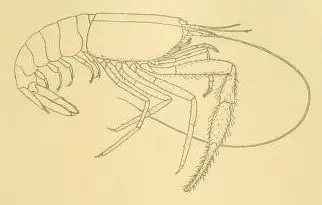
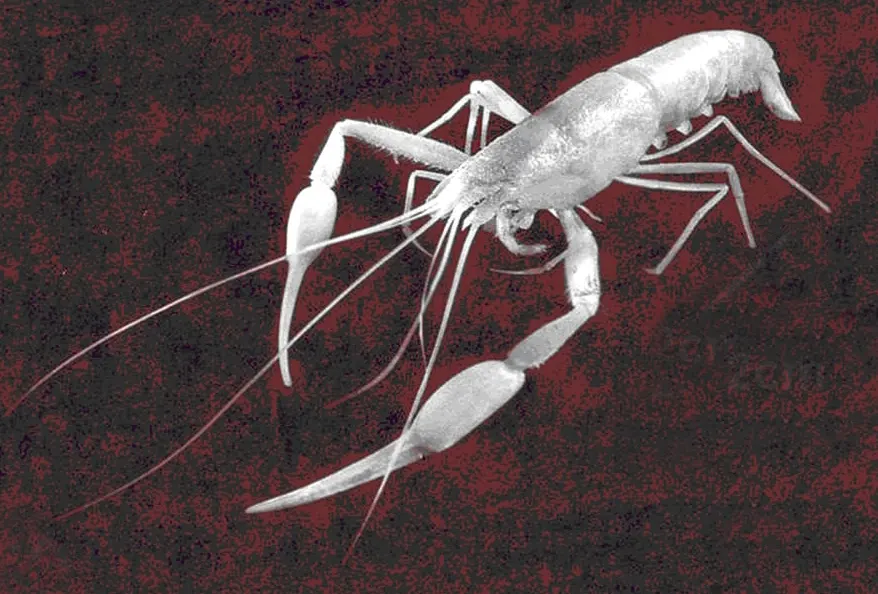
This is a pale, eyeless cave shrimp, reportedly about 4 to 5 centimetres long. It belongs to a small group of blind cave prawns in the genus Typhlocaris. When Moshe Tsurnamal described it in the journal Crustaceana in 2008, it was the fourth species known in the genus.
Where it lives
The shrimp was described from 18 specimens collected in Ayyalon Cave, a karst system that was only recently discovered. The cave reportedly has no natural opening to the surface, and the pool the shrimp lives in lies about 100 metres underground. The Red List records the species from Israel alone, and it is tied to subterranean water, not to any surface stream or pond. One source adds that the water comes from the Yarkon-Taninim Aquifer, which is losing water.
Its closest known relative is Typhlocaris salentina from Italy. A 2018 study in PeerJ estimated the two split from a shared ancestor about 5.7 to 5.8 million years ago, after a rise in sea level separated them. The same study found the genus evolves unusually slowly, perhaps because its underground homes are so stable and isolated.
Pins are Wikidata “endemic to” fields. Orange dots, when present, are GBIF occurrence tiles — survey bias included.
How it lives
Very little is known. Tsurnamal's description reported that no egg-carrying females were seen in the cave over a whole year. He suggested the warm, sulphide-rich pool is mainly a feeding area, and that breeding happens elsewhere, in underground cavities nobody has found. The Red List lists the population trend as unknown.
Why it is in trouble
The Red List assessment names one threat: pumping of groundwater for farming, commercial and household use. Falling water levels endanger the cave habitat. With a single known site, one change in the aquifer could affect the whole species.
Site protection and site management are the only conservation actions the assessment lists, and it records none as in place.
Sources
Written for this catalog in our own words from the sources below, checked against them on 12 November 2026. Population figures are estimates and carry the year they were made. Status and assessment year: IUCN. 2026. The IUCN Red List of Threatened Species. Version 2026-1. iucnredlist.org.