Endangered
Typhleotris madagascariensis
Typhleotris madagascariensis
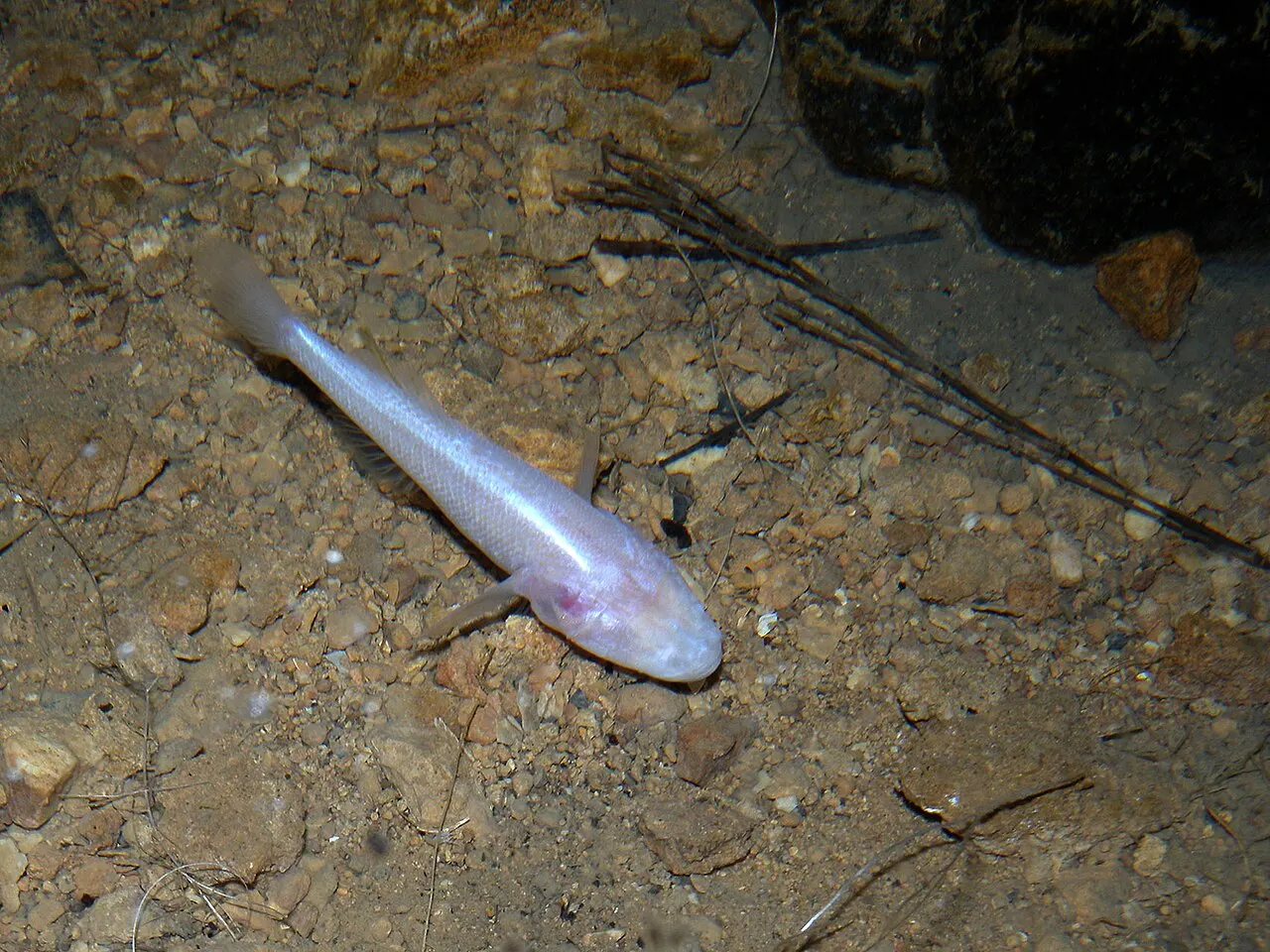
Typhleotris madagascariensis is a small, blind, colourless cavefish that lives only in underground pools on the Mahafaly Plateau in south-western Madagascar. The IUCN Red List rated it Endangered in 2016 because of its tiny range. Surveys have since found it abundant in some caves.
How to recognise it
This is a blind sleeper goby, a slender, pale fish with no eyesight and no body pigment. It reaches a standard length of about 8 cm. The genus Typhleotris is restricted to limestone groundwater in arid coastal south-western Madagascar, and this species shares part of its range with a close relative, Typhleotris mararybe, which is rarer and has a smaller range.
Where it lives
The Mahafaly Plateau is a dry limestone tableland that stretches about 150 km between the Onilahy and Menarandra rivers. Rainfall is low and erratic, around 150 to 300 mm a year on the coastal plain and 500 to 700 mm on the plateau. Caves and sinkholes there open onto underground lakes, and the fish lives in those. The IUCN lists a single habitat type, subterranean karst waters, and puts the extent of occurrence at about 300 km2.
In a 2012 and 2013 survey, researchers checked 15 caves and sinkholes and found this species in every one of the 11 they studied in detail. Known sites run from wells near Ambilailalike in the north to the Nikotsy sinkhole near Itampolo in the south. The water in those sites measured about 26 to 29 degrees C, with a pH just above neutral. Some of the caves reportedly lie inside Tsimanampetsotsa National Park, including Mitoho.
Pins are Wikidata “endemic to” fields. Orange dots, when present, are GBIF occurrence tiles — survey bias included.
How it lives
Little is known about its biology. It is thought to eat small invertebrates, possibly cave crustaceans and insects, and sinkholes open to daylight offer extra food in the form of surface-dwelling insect larvae and other small animals.
Numbers can be large locally. Netting for 12 hours at each site, the 2012 and 2013 survey caught between 1 and 571 fish per site in the dry season and between 0 and 645 in the wet season, with the highest counts in Andranoilove cave both times. Abundance did not change significantly between seasons. Other caves where it is very common include Andriamaniloke and Lalia. The two cavefish did not seem to compete: where the rarer species was present, the larger species was no less abundant or in worse condition.
Why it is in trouble
The fish depends on a small, isolated groundwater system, and that is what makes it vulnerable. The IUCN lists small-holder grazing, ranching and farming as the main ongoing threat, scored as medium impact, with recreation as a lower one, and warns of ecosystem degradation and disturbance. Its population trend is unknown, and the habitat is recorded as declining.
The 2016 survey paper pointed to water quality. Ammonia and nitrite in the sampled water were above the levels usually recommended for freshwater fish, partly from bat guano in some caves, and using sinkholes to water cattle adds to the nitrogen load. The fish's abundance was also lower where iron levels were higher.
Its rating has moved over time: Vulnerable in 1996, Endangered in 2004 and again in 2016. The IUCN has reportedly noted that populations in unconnected cave systems might turn out to be separate species, and if so the status of each could worsen.
What is being done
The IUCN lists site protection, policies and regulations, and awareness work as conservation actions. Part of the range reportedly falls inside Tsimanampetsotsa National Park. Basic knowledge is still thin: the researchers behind the 2016 survey noted that most earlier work on the plateau's cavefish was limited to the places where they were first described, and their survey widened the known range of both species.
Sources
Written for this catalog in our own words from the sources below, checked against them on 12 November 2026. Population figures are estimates and carry the year they were made. Status and assessment year: IUCN. 2026. The IUCN Red List of Threatened Species. Version 2026-1. iucnredlist.org.