Endangered
Trochomorpha apia
Trochomorpha apia
Trochomorpha apia is a small land snail known from the Samoan islands, with museum records from further afield in the Pacific. The IUCN Red List lists it as Endangered, but that assessment dates from 1996 and gives few details. Very little has been published about the species itself.
What it is
It's an air-breathing land snail in the family Trochomorphidae. It was first published as Helix apia by Hombron and Jacquinot in 1847, and MolluscaBase now accepts it as Trochomorpha apia. The IUCN's 1996 record uses an older arrangement and files it under Zonitidae.
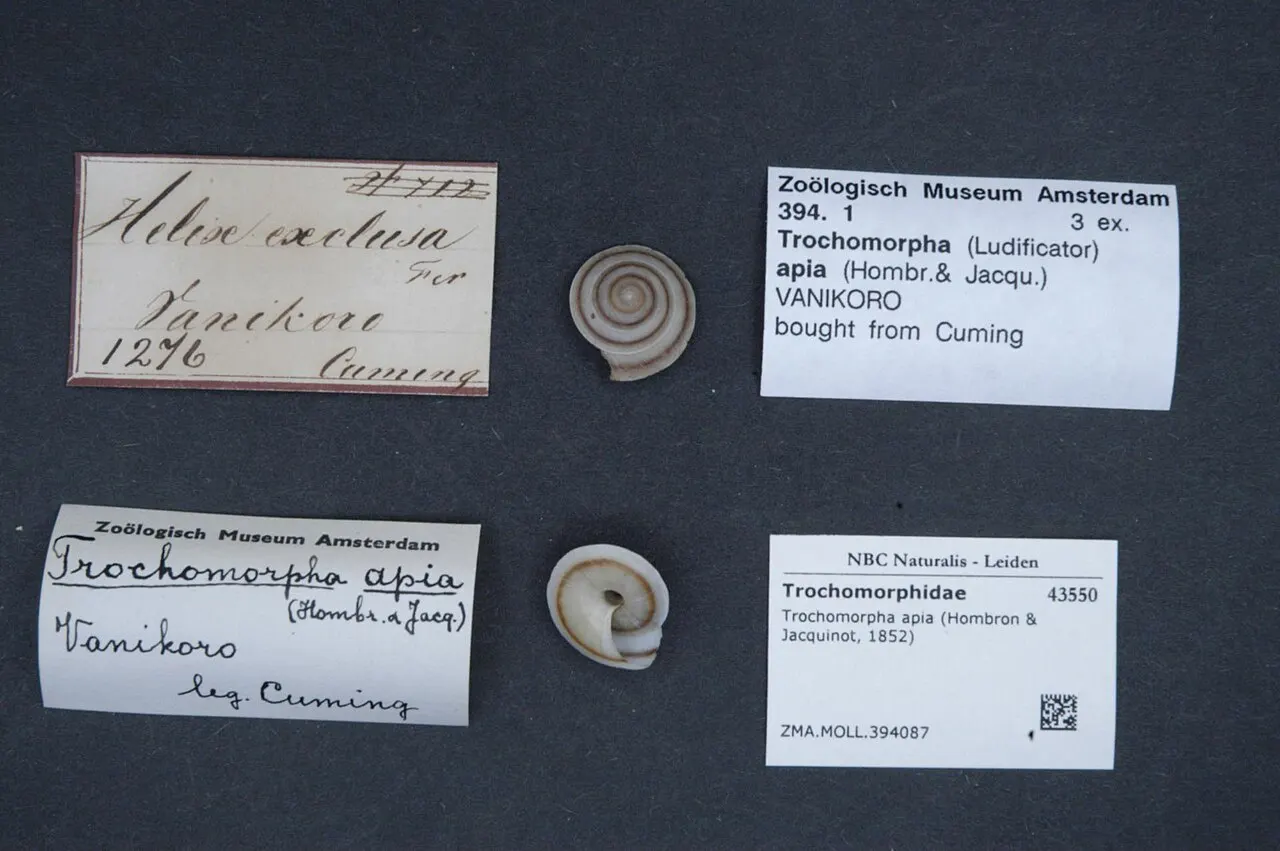
Museums hold shells. The Paris natural history museum has a syntype, one of the specimens the original name was based on, and Harvard's Museum of Comparative Zoology holds dry shells collected on Tutuila, the main island of American Samoa.
Where it lives
The IUCN lists American Samoa as the only country and marks the species as native and endemic there. Museum specimen records tell a wider story. Of 160 records in the Global Biodiversity Information Facility (GBIF), 47 are from Samoa, 42 from American Samoa, 17 from Vanuatu (some labelled with the old name New Hebrides), 6 from Fiji and a few from other Pacific countries, mostly with no precise locality.
Some of those labels may reflect misidentified shells or lookalike species, so the true range is unsettled. Specimens collected on Tutuila as recently as August 2023 are held in a US museum collection, which suggests the snail was still found on the island in recent years.
Pins are Wikidata “endemic to” fields. Orange dots, when present, are GBIF occurrence tiles — survey bias included.
The wider picture in Samoa
Little is published on this snail's diet, breeding or numbers. What is documented is the state of Samoan land snails as a group. Robert Cowie's 2001 study in Biological Conservation compared early surveys with fieldwork in 1998 in American Samoa. It found 19 of the previously known native land snail species and 11 of the 12 alien species. Cowie concluded that native snails are declining and that the fauna is turning into a mix of widespread introduced species.
The Bishop Museum's Samoan Snail Project names the spread of alien species as the main pressure on the native snails. That is a general finding for the group, not a result for this species. The project features Trochomorpha apia as one of three highlighted Samoan snails.
Its Red List record
The Endangered rating dates from 1996, when the IUCN's Mollusc Specialist Group assessed it under the older version 2.3 categories, with criterion A2ce. The record lists no population trend, threats or conservation actions, and it hasn't been updated since.
The snail's current condition is uncertain. Field surveys, with its range checked against museum records, would be needed to say how it is faring.
Sources
Written for this catalog in our own words from the sources below, checked against them on 12 November 2026. Population figures are estimates and carry the year they were made. Status and assessment year: IUCN. 2026. The IUCN Red List of Threatened Species. Version 2026-1. iucnredlist.org.




