Critically Endangered
Trachycystis placenta
Trachycystis placenta
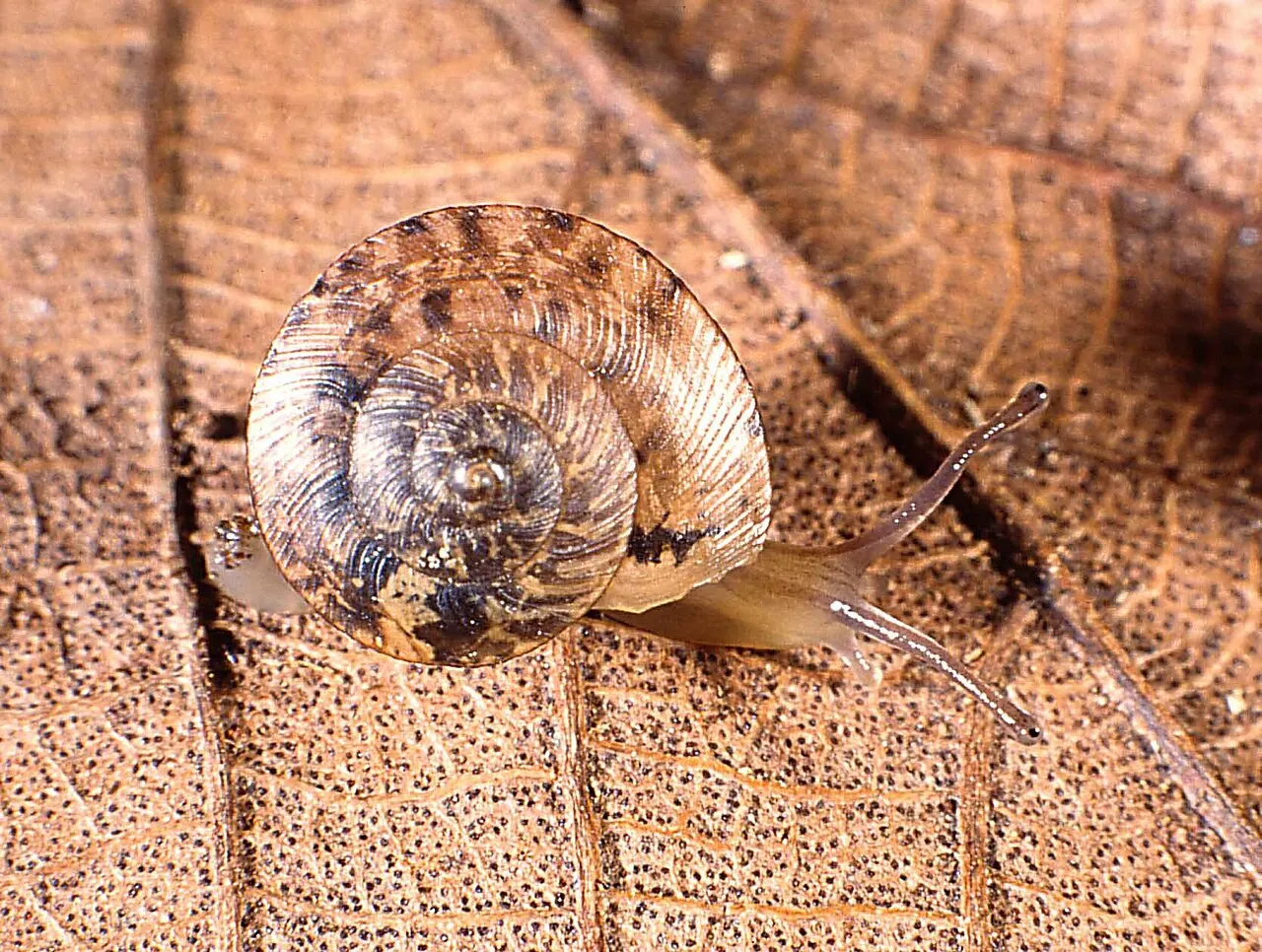
Trachycystis placenta is a very small, air-breathing land snail from the forests of KwaZulu-Natal, South Africa. It was described in 1899 and is rated Critically Endangered by the IUCN, in an assessment dated 2004. Very little has been published about how it lives or how many remain.
What kind of animal it is
This is a very small, air-breathing land snail in the family Charopidae, in the genus Trachycystis, which lists 61 species. Melvill and Ponsonby described it in 1899 under the name Trochomorpha placenta, and the current name comes from later reclassification. No source gives its shell size, diet or behaviour.
Where it lives
The species is endemic to South Africa, and nearly all of its records are from KwaZulu-Natal. The IUCN describes its habitat as subtropical or tropical moist lowland forest.
GBIF holds 26 museum and observation records. Those with a locality come from places such as Durban, Greenwood Park, Umkomaas, Port Shepstone, Richmond and the Nkandla forest. Collectors named on the older specimens include H. C. Burnup and Ponsonby, with dated specimens from 1900 and 1903. Two old labels name Kroonstad and Makhanda (Grahamstown), far from the rest, and it is unclear how reliable those are.
The newest records are from 2003. One specimen from that year was collected from mist-belt forest, under logs and in leaf litter, at about 1,050 m above sea level. Specimens from the Nkandla forest were recorded at 1,000 to 1,070 m, which is higher than a strictly lowland habitat would suggest.
Pins are Wikidata “endemic to” fields. Orange dots, when present, are GBIF occurrence tiles — survey bias included.
Why it is in trouble
The 2004 assessment rates the snail Critically Endangered under criterion B1ab(iii), a category based on a very small range and a continuing decline in habitat quality. Its recorded stresses are conversion and degradation of forest. The assessment dates the threat to the past and describes it as unlikely to return, but gives no scale for the damage.
Its population trend is recorded as unknown. No count or population estimate has been published, and the assessment gives neither a number of locations nor a range area.
What is being done
The assessment lists one conservation action: site and area management, with conservation sites identified over the whole range. It names no recovery plan, captive population or monitoring programme. The assessment is now more than twenty years old, so the present picture may differ from what it describes.
Sources
Written for this catalog in our own words from the sources below, checked against them on 12 November 2026. Population figures are estimates and carry the year they were made. Status and assessment year: IUCN. 2026. The IUCN Red List of Threatened Species. Version 2026-1. iucnredlist.org.




