Endangered
Pineapple sea cucumber
Pineapple sea cucumber
The pineapple sea cucumber (Pineapple sea cucumber), also called the prickly redfish, is a big, spiky, reddish-orange sea cucumber of Indo-Pacific reefs. The IUCN Red List classed it as Endangered in 2013, mainly because it is heavily fished for the dried seafood trade. Countries voted in 2022 to bring its international trade under CITES.
How to recognise it
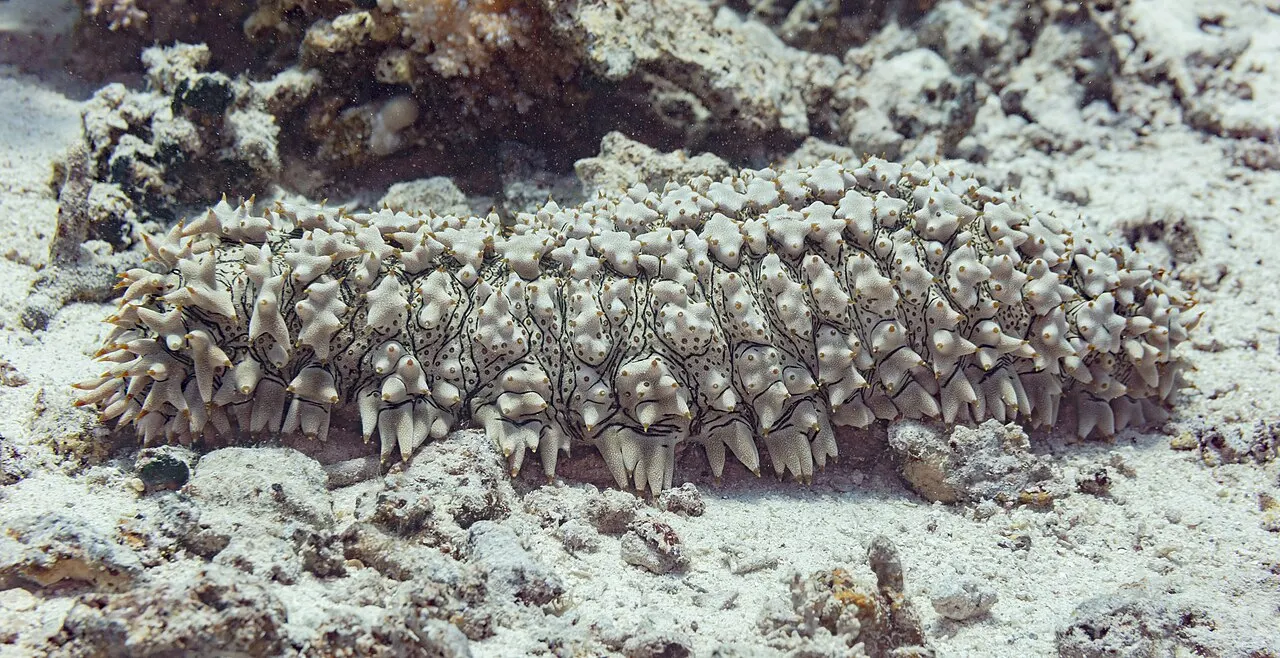
This is one of the largest sea cucumbers. Reported maximum lengths run from about 70 to 80 centimeters (28 to 31 inches), with a common size nearer 45 centimeters, and the biggest animals weigh several kilograms (3 to 7 kilograms, depending on the source). The body is reddish-orange and covered in rows of pointed, star-shaped teats, often darker at the tips, which give it the look of a pineapple. The flat underside carries many large tube feet.
Where it lives
It occurs across tropical Indo-Pacific waters, from the Red Sea and East Africa to Polynesia, including the Maldives, India and Australia. The Red List assessment names more than 50 countries and territories in its range.
It favors clean sandy lagoon floors, reef slopes, passes, rubble and seagrass beds. It is usually found from just below the surface to around 25 or 30 meters, and has been recorded to about 35 meters on outer reefs.
Pins are Wikidata “endemic to” fields. Orange dots, when present, are GBIF occurrence tiles — survey bias included.
How it lives
Pineapple sea cucumbers are sparse. Adults are large and spread out at low densities, and the animal is slow-growing and long-lived. It eats a calcareous green alga, Halimeda, and it is active in daylight. Pearlfish can live inside its body, and small copepods of the genus Nanaspis live on it.
Reproduction is sexual and takes place in the warm season. The species is described as having low fecundity and late maturity, with maturity at roughly 30 centimeters in length. Like other sea cucumbers it churns and recycles the seabed sediment as it feeds.
Why it is in trouble
The cause is harvest. The pineapple sea cucumber is one of the most popular edible sea cucumbers in China and parts of Southeast Asia, and it is sold dried. Its size, slow movement and shallow habitat make it easy for divers to collect by hand. The Red List assessment (criteria A2bd, population decreasing) names large-scale and small-scale harvest as the threats, and records its use for food and medicine, with international trade involved.
In East Africa the animal is described as one of the most valuable species in the region's waters. Illegal harvest has been a long-running problem in Tanzania, where divers have raided a sea cucumber ranch off Mafia Island at night.
What is being done
At the 2022 CITES meeting in Panama City, countries voted 97 to 16, with 15 abstentions, to list three Thelenota species in Appendix II, which means trade must be regulated so it does not threaten survival. The listing was expected to take effect within about 18 months. The Red List assessment also records that a harvest management plan is in place.
Some people are trying ranching. A company off Mafia Island in Tanzania, founded in 2023, runs a 67-hectare open-water ranch where this species is raised among others, and pays guards to patrol against poaching. It is at an early stage.
Sources
Written for this catalog in our own words from the sources below, checked against them on 12 November 2026. Population figures are estimates and carry the year they were made. Status and assessment year: IUCN. 2026. The IUCN Red List of Threatened Species. Version 2026-1. iucnredlist.org.
- IUCN Red List assessment, Pineapple sea cucumber (2013)
- Wikipedia, Pineapple sea cucumber
- SeaLifeBase, Pineapple sea cucumber
- Mitochondrial genome of prickly redfish Pineapple sea cucumber, Mitochondrial DNA Part B (2021)
- Down To Earth, CITES CoP19 lists sea cucumbers as threatened (22 Nov 2022)
- Mongabay, Down on the ranch with Mafia Island free-range sea cucumbers (2025)
- NOAA Fisheries, CITES overview




