Endangered
Thalassothemis marchali
Thalassothemis marchali
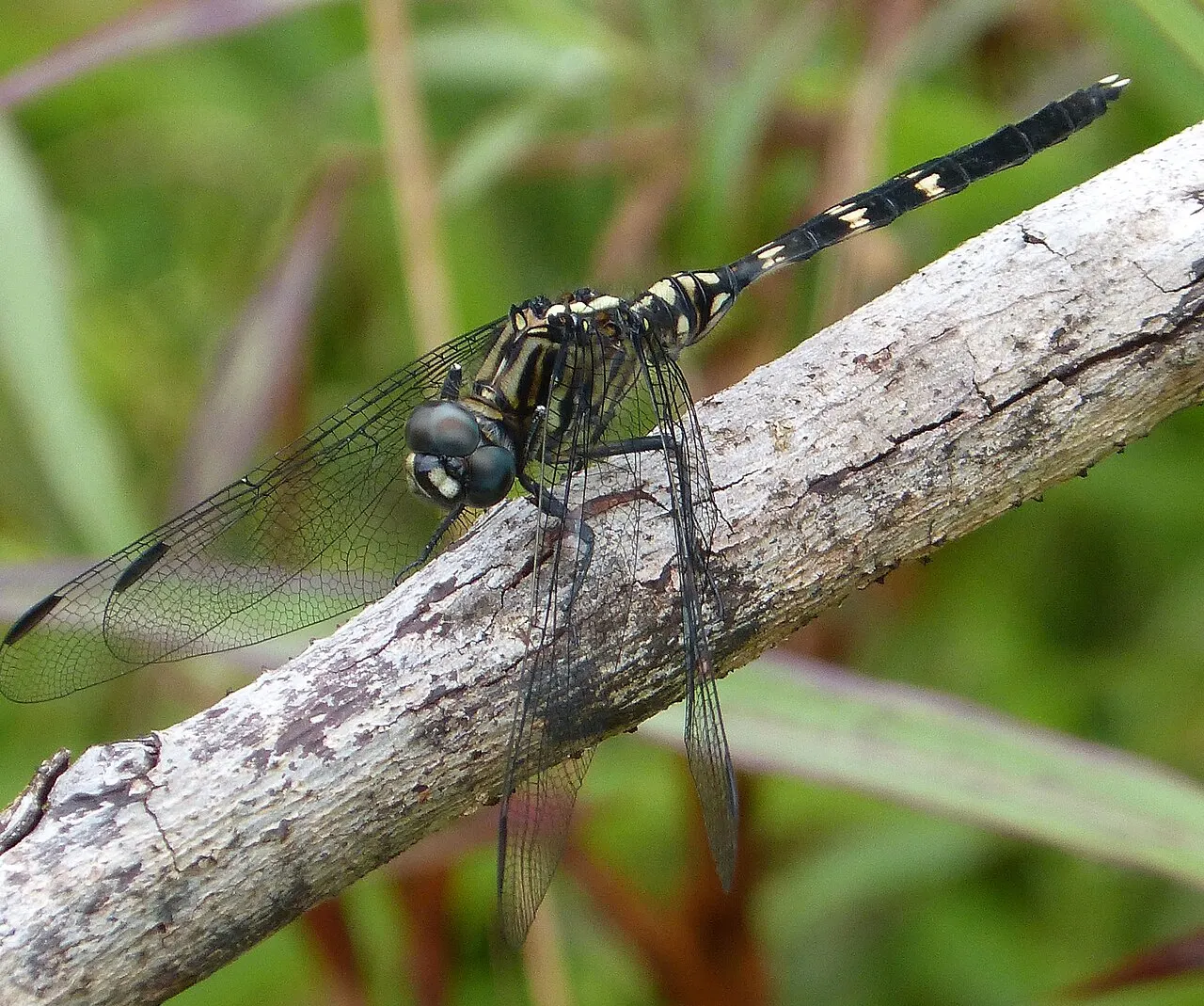
Thalassothemis marchali is a dragonfly found only on the island of Mauritius in the Indian Ocean, where it lives along rocky streams and rivers in and near moist mountain forest. The IUCN Red List rated it Endangered in 2017, with a declining population. It is the only species in its genus.
How to recognise it
To the eye it looks like a typical dropwing, the group of dragonflies in the genus Trithemis. What earned it a genus of its own, Thalassothemis (roughly 'sea libellulid'), is the pattern of veins in its wings. It belongs to the skimmer family, Libellulidae.
Jules Pierre Rambur described it in 1842 as Libellula marchali, and it has since been moved to its own genus.
Where it lives
It is endemic to Mauritius, which means it occurs nowhere else. A 1962 list of the island's dragonflies by Elliot Pinhey marks it as endemic, and a recent field guide to the world's dragonflies describes it as restricted to rocky streams there.
The IUCN lists two habitats: permanent rivers and streams (including waterfalls) and moist tropical montane forest.
Pins are Wikidata “endemic to” fields. Orange dots, when present, are GBIF occurrence tiles — survey bias included.
Where it came from
The same field guide relates it to the dropwings, and in particular to the Dancing Dropwing, a south Asian species that colonises new ponds. Its suggestion is that the ancestor of this dragonfly must have crossed the Indian Ocean, as the Wandering Glider still does each year. The guide adds that the genus may eventually be folded back into Trithemis.
Why it is in trouble
The IUCN assessment records a decreasing population, a small range, and ongoing conversion and degradation of its habitat, meaning the forest and streams it depends on. Its criteria rest on a very restricted extent and area of occurrence.
The assessment lists the cause of the threats as unrecorded and gives no population size. Detailed surveys at individual rivers are not part of the published record the IUCN draws on.
What is being done
The only conservation action the IUCN lists is site and area management.
Sources
Written for this catalog in our own words from the sources below, checked against them on 12 November 2026. Population figures are estimates and carry the year they were made. Status and assessment year: IUCN. 2026. The IUCN Red List of Threatened Species. Version 2026-1. iucnredlist.org.




