Endangered
Taita shrew
Suncus aequatorius
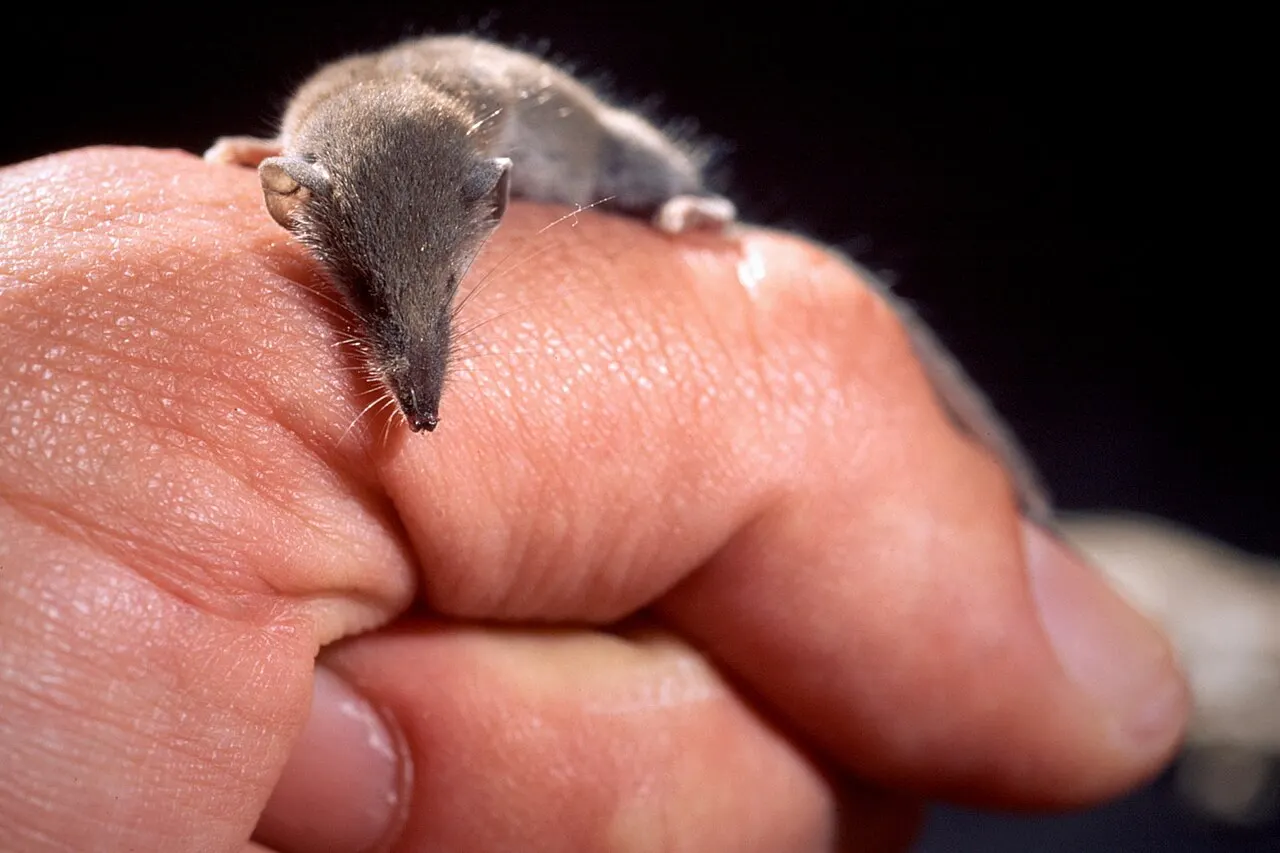
The Taita shrew (Suncus aequatorius) is a white-toothed shrew known from the Taita Hills of southwestern Kenya. It's listed as Endangered on the IUCN Red List (assessed 2016) because its range is tiny and its forest habitat keeps declining. Very little has been published about how it lives.
What it is
The Taita shrew belongs to the white-toothed shrews (family Soricidae, genus Suncus). Edmund Heller described it in 1912 from a specimen collected on the summit of Mt. Sagalla in the Taita Hills, at an altitude recorded as 4,000 ft (about 1,200 m). It was first named Pachyura lixa aequatoria, a form of another shrew, and later treated as its own species. It is also called the Taita dwarf shrew.
Where it lives
It is known from two localities in the Taita Hills, in the Taita-Taveta area of southwestern Kenya. The IUCN assessment gives Kenya as the only country and lists moist montane forest as habitat, at about 1,500 to 1,600 m. It counts between one and five locations and describes the population as severely fragmented. The Mammal Diversity Database marks Tanzania with a question mark, meaning a record there is uncertain.
Pins are Wikidata “endemic to” fields. Orange dots, when present, are GBIF occurrence tiles — survey bias included.
Why it is in trouble
The IUCN lists small-holder and industrial farming as threats, and the Endangered rating rests on the shrew's very limited range and the continuing decline in habitat quality. Its population trend is unknown.
The wider forest picture is poor. The Kenya Forestry Research Institute reported in 2019 that the five main forest fragments (Chawia, Ngangao, Mwambirwa, Fururu and Mbololo) had lost at least 233 ha since 1973, about 23 percent of their cover. That figure covers the forests in general, not this shrew in particular.
What is being done
The IUCN lists site and area protection and site and area management as conservation actions for the species. The Kenya Forestry Research Institute reported in 2019 that it was rehabilitating up to 20 ha in the hills with help from residents and schools, though that effort is aimed at the forest as a whole.
Sources
Written for this catalog in our own words from the sources below, checked against them on 12 November 2026. Population figures are estimates and carry the year they were made. Status and assessment year: IUCN. 2026. The IUCN Red List of Threatened Species. Version 2026-1. iucnredlist.org.




