Endangered
Hay's spring amphipod
Hay's spring amphipod
Hay's spring amphipod (Hay's spring amphipod) is a blind, colorless crustacean about a centimeter long that lives in groundwater seeps along Rock Creek in Washington, D.C., and nowhere else. The IUCN Red List classed it as Endangered in 1996. It is also federally protected in the United States.
How to recognise it
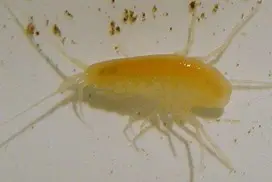
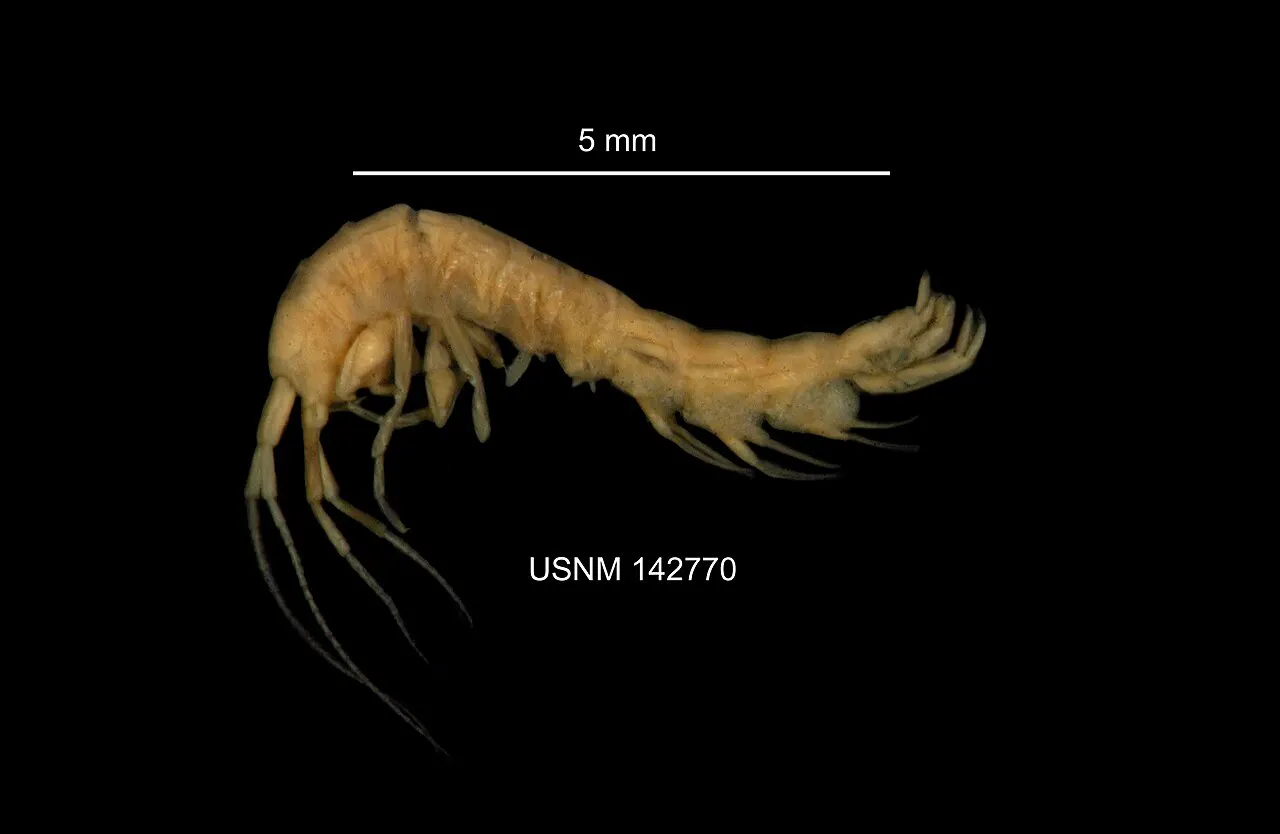
It looks like a tiny shrimp that has lost its color. Living permanently underground, it has no eyes and no pigment. Males average about 9.8 millimeters (0.39 inches) and females about 7.0 millimeters.
That size is easy to overlook, and the animal is hard to find in its hidden habitat. Because of this, researchers have tested water samples for traces of its DNA instead of digging for animals.
Where it lives
The whole known range is about 2.5 miles (4 kilometers) of the lower Rock Creek watershed in the District of Columbia. A 2021 U.S. Fish and Wildlife Service report counted seven living populations, plus one more site where the animal is probably present. It turns up in Rock Creek Park and on the grounds of the National Zoo, where it was first collected in 1938 and described in 1940.
Its home is a shallow, hidden kind of groundwater habitat. Water collects above a clay layer roughly 2 to 20 inches below the forest floor and reaches the surface at small seepage springs, which are wet patches under leaf litter. Some of these show little or no flow for much of the year.
Pins are Wikidata “endemic to” fields. Orange dots, when present, are GBIF occurrence tiles — survey bias included.
How it lives
Very little has been confirmed. Diet is unknown, though related amphipods have been seen eating protozoans, flatworms and plant debris. Females carry eggs in a brood pouch, and juveniles collected in April suggest breeding in early winter to early spring. Most collections have been made in winter and spring, when the springs rise to the surface. In dry spells the animals are thought to burrow down into damper clay. Lifespan is unknown, with 4 to 6 years assumed from other subterranean amphipods.
Why it is in trouble
The lower Rock Creek watershed is heavily developed, with about 40 percent of its surface paved. The amphipod is sensitive to pollution. Federal biologists point to stormwater runoff, aging sewer pipes that can leak, road salt washed into runoff, and the loss of forest that filters and cools the groundwater. More severe storms from climate change could make these problems worse.
Several sites are weak. The 2021 report rated two of the seven sites as high condition, two as moderate and three as low. The original spring, Hay's Spring, has not produced an animal since 1978. A 2017 DNA study led by Matthew Niemiller, published in Conservation Genetics Resources, found the species' DNA at three known springs and one new one, so it may occur in more places than records show.
What is being done
The U.S. Fish and Wildlife Service listed the species as endangered in 1982. Its sites lie within Rock Creek Park, managed by the National Park Service, and the National Zoo, managed by the Smithsonian, and park policies give authority to protect it from threats inside their boundaries. A fence was put up around Hay's Spring in 1982 to stop it being filled with construction debris. A bio-retention project, completed in 2020, aims to improve water quality and quantity at three sites.
Pollution and water-flow changes that start outside the parks are much harder to control. Washington named it the District's official amphipod by law in 2017.
Sources
Written for this catalog in our own words from the sources below, checked against them on 12 November 2026. Population figures are estimates and carry the year they were made. Status and assessment year: IUCN. 2026. The IUCN Red List of Threatened Species. Version 2026-1. iucnredlist.org.
- IUCN Red List assessment, Hay's spring amphipod (1996)
- USFWS species profile, Hay's spring amphipod
- USFWS Biological Report for the Hay's Spring Amphipod (September 2021)
- Chesapeake Bay Program field guide, Hay's spring amphipod
- Phys.org, Researchers sample a DC swamp (2017)
- D.C. Code section 1-166.51
- Wikipedia, Hay's spring amphipod