Critically Endangered
Sturisomatichthys frenatus
Sturisomatichthys frenatus
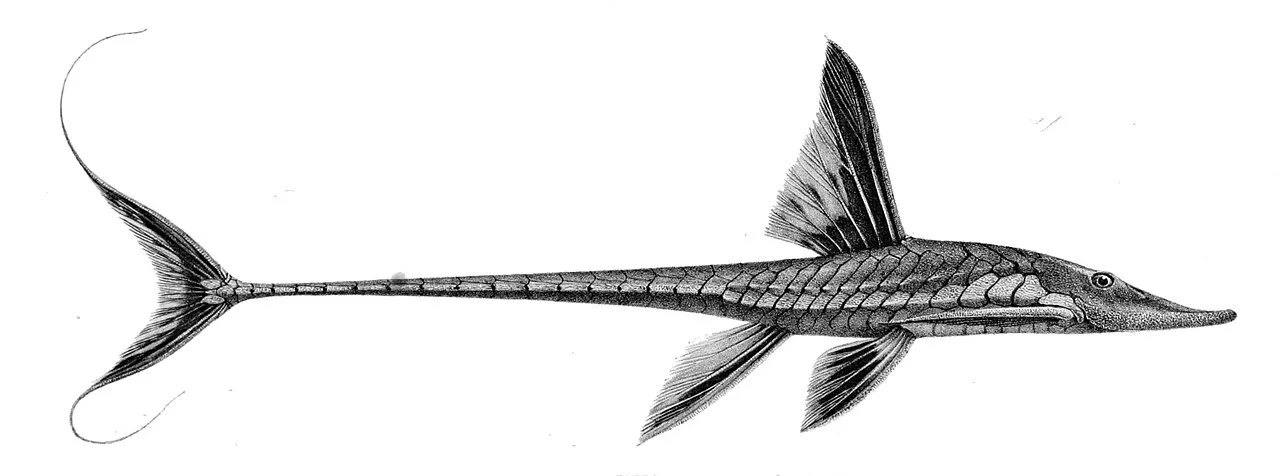
Sturisomatichthys frenatus is a slender mailed catfish from Pacific-slope rivers of north-western Ecuador, in the Santiago-Cayapas system. The IUCN Red List assessed it as Critically Endangered in 2016, based on one location and an area of occupancy of just 9 square kilometres.
How to recognise it
It belongs to the mailed catfishes (Loricariinae), a group with long, narrow, armoured bodies and a sucker mouth. It reaches about 24 cm (9.4 inches) standard length, and a South American catfish database gives about 27 cm total length. It has no adipose fin.
George Boulenger described it in 1902 as Loricaria frenata. It was later called Sturisoma frenatum, before being placed in the genus Sturisomatichthys.
Where it lives
Accounts differ on the range. The IUCN assessment lists only Ecuador and some summaries call it endemic there, while the catfish database also lists Colombia, with the Patía and Telembí rivers in Nariño. The IUCN assessment gives an elevation of 100 to 200 metres and the habitat as permanent rivers and streams.
Recorded rivers include the Tululbí, which flows into the Santiago and then the Cayapas, as well as the Durango and the Cachaví.
Pins are Wikidata “endemic to” fields. Orange dots, when present, are GBIF occurrence tiles — survey bias included.
How it lives
Specifics are scarce. Species in its genus are described as facultative air breathers, though that has not been shown for this one. The catfish database lists it as a plant eater while noting the details are not known, and as a substrate breeder. Whether it has bred in captivity is unknown.
Why it is in trouble
The assessment names agro-industrial farming and seepage from mining, along with threats of unrecorded type, all ongoing. The listed effects are ecosystem conversion and degradation, and the area the fish occupies is still declining.
Scope and severity are recorded as unknown, and no population estimate exists, so the listing rests on the tiny area, the single location and the continuing decline.
What is being done
The assessment says the species occurs in at least one protected area, though no conservation sites have been identified. It calls for research on threats and on population size, distribution and trends. No recovery plan is listed.
Sources
Written for this catalog in our own words from the sources below, checked against them on 12 November 2026. Population figures are estimates and carry the year they were made. Status and assessment year: IUCN. 2026. The IUCN Red List of Threatened Species. Version 2026-1. iucnredlist.org.




