Endangered
Vaillant's chocolate gourami
Vaillant's chocolate gourami
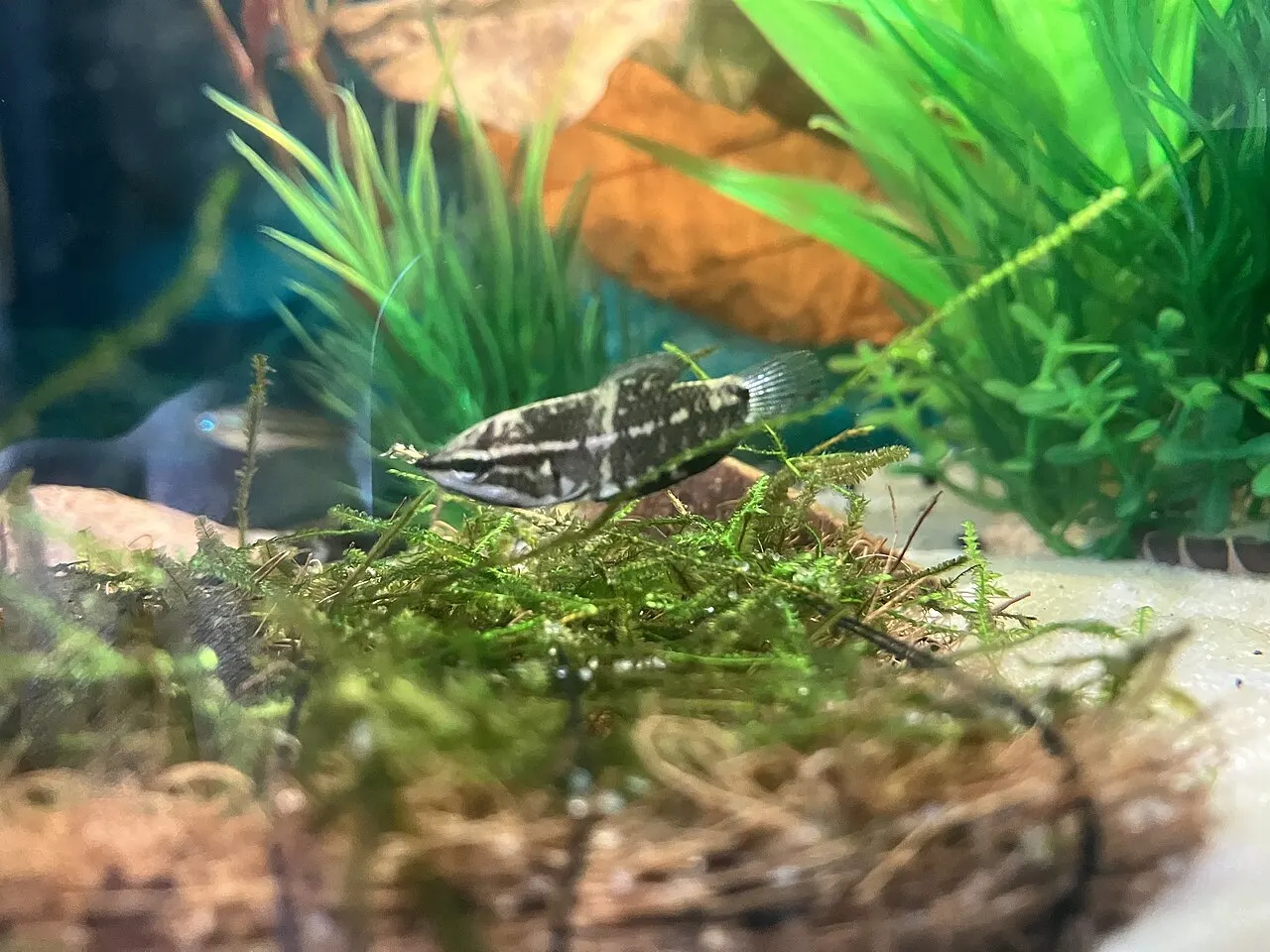
Vaillant's chocolate gourami, sold in the aquarium trade as the samurai gourami, is a small fish from the blackwater swamps and streams of the Kapuas basin in West Kalimantan, Borneo. The IUCN Red List classed it as Endangered in 2019, with a decreasing population and a small range.
How to recognise it
It is a slim fish, about 5.5 to 6 cm in standard length. Males and females look quite different. Females show alternating red and green vertical bars that deepen during spawning, while males stay duller and brownish, with white lines. Juveniles are brown with white markings.
The lower jaw gives the sexes away too. In females it is straight and the head is a bit more pointed. In males the throat skin is stretchy, so the jaw looks slightly rounded. The brown colouring helps it pass for a dead leaf among leaf litter.
Besides Vaillant's chocolate gourami and samurai gourami, it is sometimes called the samurai zebra gourami. The aquarium site SeriouslyFish calls the samurai names misleading.
Where it lives
It is known mainly from the Kapuas River drainage of West Kalimantan, including the Danau Sentarum lake system, and appears to occur nowhere else. The Red List counts three locations and an extent of occurrence of about 940 square kilometres.
The habitat is blackwater, stained dark brown by tannins and humic compounds from rotting leaves. A measurement at the type locality, a village just south of Danau Sentarum National Park, gave a pH of 5.3, and peat swamp water can drop to pH 3 to 4. The fish are usually found in pairs in small creeks and drainage channels littered with wood and leaves, in peat swamps and streams.
Pins are Wikidata “endemic to” fields. Orange dots, when present, are GBIF occurrence tiles — survey bias included.
How it lives
It feeds on small animals such as water fleas and worms, and reportedly also on some plant and algae matter. It can also breathe air when it needs to. Camouflage is its main defence against visually hunting fish such as Belontia hasselti and Nandus nebulosus, which share its habitat.
The male is a mouthbrooder. The female usually starts courtship and lays about 10 to 40 eggs, which the male gathers into his mouth. In aquariums he carries the eggs and young for roughly 7 to 20 days and then releases around 10 to 40 free-swimming young.
Why it is in trouble
The Red List links the decline to agro-industrial farming and plantations, and to harvest, both small-scale collecting and large-scale unintended catch. Aquarium sources add illegal gold mining, deforestation and exotic species, with pressure rising since the late 1990s. Land conversion for farming and oil palm and the draining of peat also damage the peat swamp forests around Danau Sentarum.
The assessment records the habitat area as still declining. The fish is also in demand with aquarists, which adds collecting pressure.
What is being done
The assessment lists resource and habitat protection, site protection, harvest management and awareness work as the actions needed. Specialist aquarists keep and breed the species.
Sources
Written for this catalog in our own words from the sources below, checked against them on 12 November 2026. Population figures are estimates and carry the year they were made. Status and assessment year: IUCN. 2026. The IUCN Red List of Threatened Species. Version 2026-1. iucnredlist.org.




