Endangered
Small-toothed Fruit Bat
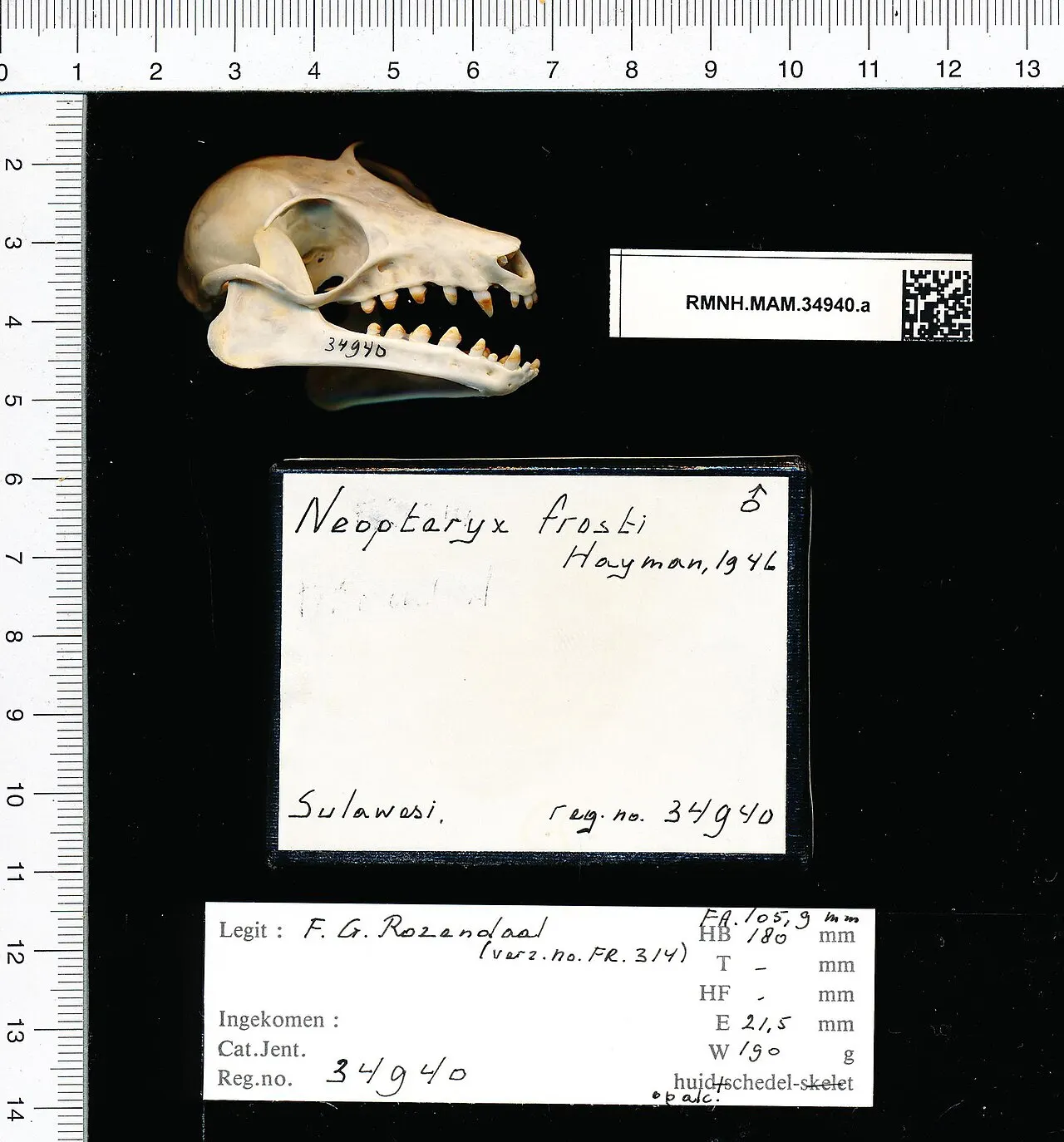
Neopteryx frosti
The small-toothed fruit bat (Neopteryx frosti) is a large fruit bat found only on the Indonesian island of Sulawesi, where it is known from just two localities. The IUCN Red List rated it Endangered in 2016, with a small, fragmented and declining population. It is the only species in its genus.
What kind of bat it is
Neopteryx frosti is a megabat in the family Pteropodidae, the Old World fruit bats and flying foxes. Robert William Hayman described both the genus and the species in 1946. The type specimen came from Tamalanti in West Sulawesi, at about 1,006 m (3,300 feet). No other species has been placed in Neopteryx.
It is a hefty bat. Museum measurements published in 1988 give a forearm length of about 105 to 111 mm for adults, and a weight of 190 g for an adult male and 250 g for a pregnant female.
Where it lives
It is endemic to Sulawesi, and the IUCN counts only two locations. Its habitat is listed as moist lowland forest of the tropical and subtropical zone. Its roosting, diet and breeding are poorly documented.
The record is patchy. One database of recently extinct and rediscovered species reportedly gives a last sighting in 1939 and a rediscovery in 1985, which fits a bat that is rarely seen.
Pins are Wikidata “endemic to” fields. Orange dots, when present, are GBIF occurrence tiles — survey bias included.
Why it is in trouble
The 2016 assessment, under criterion C1, gives a population estimate of 2,000 to 2,500 animals and describes it as severely fragmented and still declining. It uses a generation length of 6 years.
The threats the IUCN records are clearing of forest by small-holder farming, and hunting. The bat is taken for human food, for subsistence and on a national scale. Each of the three listed threats is scored as low impact, but together they act on a species with very few animals and very few places left.
What is being done
The IUCN notes that conservation sites have been identified over the species' entire range. The assessment calls for site and area management and for harvest management, and it lists research needs on population size, distribution and trends, life history, threats and hunting.
Sources
Written for this catalog in our own words from the sources below, checked against them on 12 November 2026. Population figures are estimates and carry the year they were made. Status and assessment year: IUCN. 2026. The IUCN Red List of Threatened Species. Version 2026-1. iucnredlist.org.




