Endangered
Slender Chub
Erimystax cahni
The slender chub (Erimystax cahni) is a small minnow found only in the Clinch and Powell rivers of Tennessee and Virginia, with an old record from the Holston. The IUCN Red List rated it Endangered in 2013. It hasn't been seen alive in decades, and one conservation hatchery group thinks it may be extinct.
How to recognise it
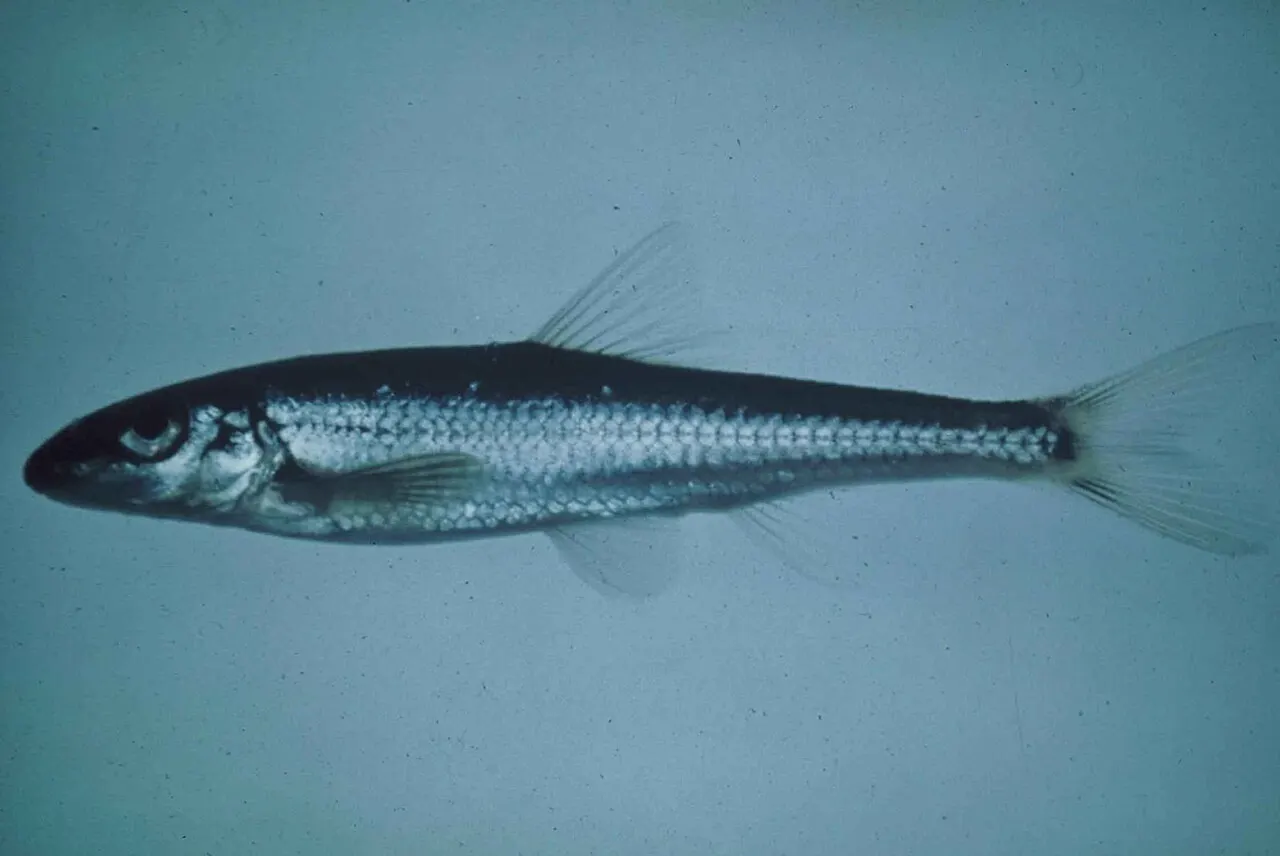
It's a slim, elongated minnow with a long snout and a mouth set on the underside of the head, with small barbels at the corners. The dorsal fin starts above, or just behind, the base of the pelvic fins. A small black spot sits above and another below the lateral line, though a dark side stripe can partly hide them.
Fish seen in Virginia reached about 3.75 inches (9.5 cm). Lifespan there was up to 4 years.
Where it lives
The slender chub is native to the upper Tennessee River system. Virginia's wildlife agency describes its range as the smallest of any freshwater minnow in North America. The IUCN assessment lists the United States as the only country.
It favours swift current over clean gravel shoals in medium to large rivers. It has reportedly disappeared from the Holston River, where it was last recorded in 1941.
Pins are Wikidata “endemic to” fields. Orange dots, when present, are GBIF occurrence tiles — survey bias included.
How it lives
Insect larvae make up most of the diet, especially mayflies, caddisflies and midges. Spawning takes place in spring, in April and May according to Virginia's wildlife agency.
The species is not migratory, according to the IUCN assessment.
Why it is in trouble
The IUCN assessment lists dams, surface water abstraction, mining and quarrying, and one threat of unrecorded type as ongoing, each scored as low impact but affecting most of the range. A 2024 U.S. Geological Survey report links the decline to habitat degradation from surface mining, agriculture, dams and urban development.
The IUCN records the population as decreasing. Virginia's wildlife agency notes the fish needs clean, unimpaired water.
Is it still there
Conservation Fisheries, a Tennessee group that tried to find fish for breeding, monitored for the species in 2000 to 2002, 2004 to 2008 and 2011 to 2012. It never held any in its hatchery because it couldn't find them in the wild, and it states that the species is thought to be extinct. The fish has reportedly not been definitively seen since the 1990s, partly for lack of targeted surveys.
A 2024 USGS report by Paine, Rogers and Rosenberger tested water for environmental DNA at 43 sites in the Clinch and Powell rivers. Slender chub DNA turned up at only a few sites, in both rivers. Paine and colleagues say they cannot confirm the species is present, because the signal could come from a hybrid's DNA. They suggest that agencies use the results to target searches by snorkeling and to pick possible restoration sites.
What is being done
The slender chub has been federally listed as threatened in the United States since 1977 and is also threatened under Virginia law. The IUCN records a recovery plan in place, and lists site protection, habitat restoration and species recovery among the actions. Virginia's wildlife agency says it is illegal to target the species by angling, or to harass, harm or take it.
Sources
Written for this catalog in our own words from the sources below, checked against them on 12 November 2026. Population figures are estimates and carry the year they were made. Status and assessment year: IUCN. 2026. The IUCN Red List of Threatened Species. Version 2026-1. iucnredlist.org.




