Endangered
Spotted skiffia
Skiffia multipunctata
The spotted skiffia (Skiffia multipunctata) is a small live-bearing fish from the highland streams, springs and ponds of west-central Mexico, in Jalisco and Michoacan. It has lost most of its range, and the IUCN listed it as Endangered in 2019. It is also kept and bred by aquarists.
How to recognise it
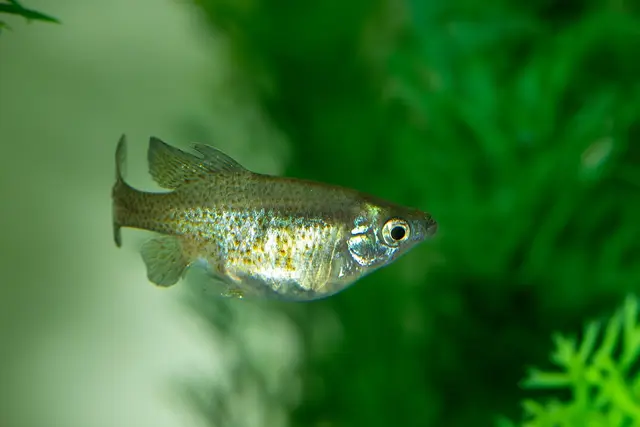
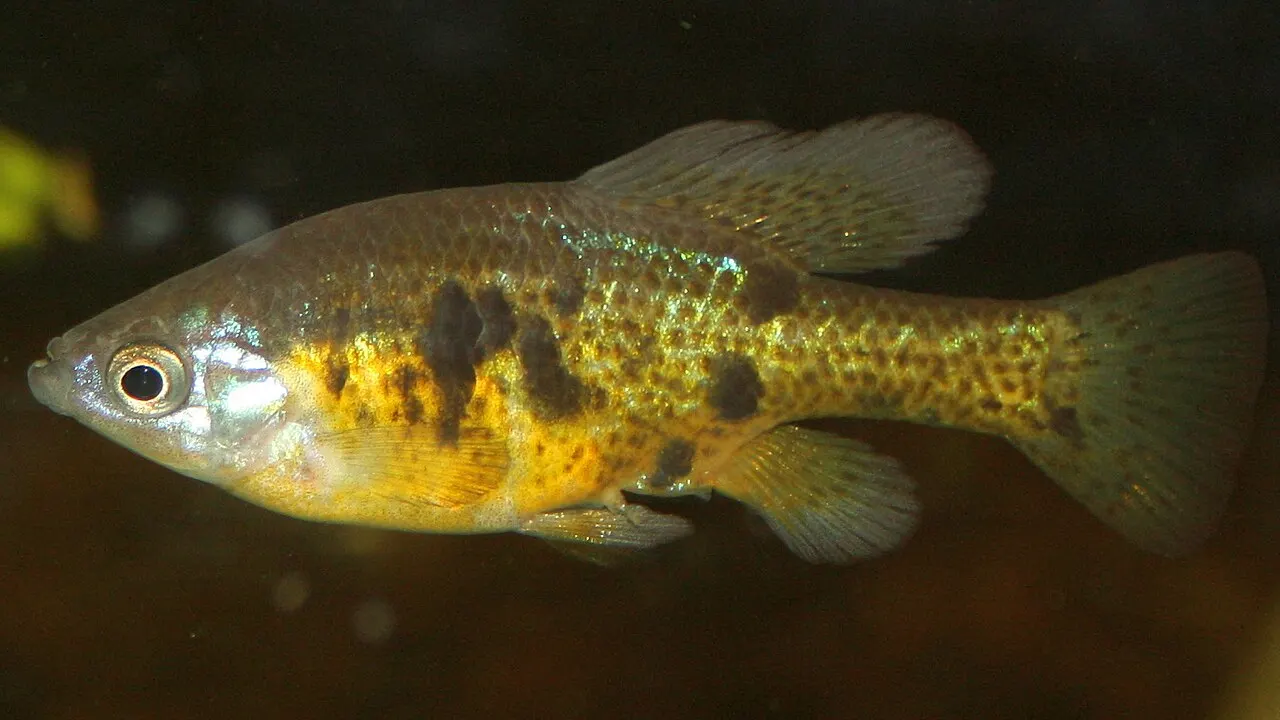
A small member of the splitfin family (Goodeidae). Females grow to about 6 cm and are silver to grayish brown. Males are slightly smaller and vary more, with a silver or grayish-brown base marked by yellow and orange patches. Breeding males show large dark blotches on the flanks.
Like other goodeids it bears live young. Males have no gonopodium, the rod-like anal fin used by guppies and many other livebearers, and instead line up their genital opening with the female's. Gestation takes 6 to 8 weeks depending on temperature, and aquarium keepers report broods of usually 10 to 15 fry, occasionally up to 20.
Where it lives
The species is restricted to Mexico. It was historically found in the lower Lerma River drainage and neighboring basins, in Jalisco and Michoacan, and the Red List puts its present range at roughly 1,550 to 1,750 m above sea level. It uses permanent rivers and streams, freshwater springs and small marshy pools, reportedly in shallow water under a meter deep with little current, sheltering around the roots of Taxodium trees where they grow.
The French collector Leon Diguet took specimens from ditches and channels in what is now Parque Agua Azul in Guadalajara around 1899. The fish later vanished from that city. Its extent of occurrence is now estimated at 290 to 1,400 square kilometers, and its area of occupancy at only 16 to 128 square kilometers, across 1 to 2 locations.
Pins are Wikidata “endemic to” fields. Orange dots, when present, are GBIF occurrence tiles — survey bias included.
How it lives
Wild fish reportedly graze on algae and the film of tiny organisms growing on submerged roots. In aquariums they are fairly peaceful, though they nip the fins of long-finned tankmates. Aquarists keep them with at least two females to each male.
Why it is in trouble
The Red List assessment estimates an 85% reduction in the population in the past, based on direct observation and the loss of habitat, and records a continuing decline in its range, extent and number of locations. Threats listed include run-off and nutrient pollution, sewage, pesticides and herbicides, sediment, small dams, recreation, and water being drawn from streams for homes and farms. Two named species are also listed as threats. Reportedly the population in Camecuaro National Park has disappeared, with introduced largemouth bass blamed.
An aquarium-magazine article quoted the ichthyologist J. Lyons as saying the fish survived at 6 of its 14 historically known sites. The only healthy population is reported to survive in the Duero River drainage, where channel straightening and water diversion are concerns.
What is being done
The Red List records that the fish is held in captivity, and lists invasive species control, site management, habitat protection and awareness work as conservation actions. Fish Ark Mexico, a project launched in 1997 at the aquatic biology lab of the University of Michoacan in Morelia, was set up out of fear for several splitfin species. In June 2026 Mexico News Daily reported that a Guadalajara official said the city had created a new lagoon at Parque Agua Azul, to be stocked with spotted skiffia with help from biologists in Morelia.
Sources
Written for this catalog in our own words from the sources below, checked against them on 12 November 2026. Population figures are estimates and carry the year they were made. Status and assessment year: IUCN. 2026. The IUCN Red List of Threatened Species. Version 2026-1. iucnredlist.org.