Endangered
Hungarian birch mouse
Sicista trizona
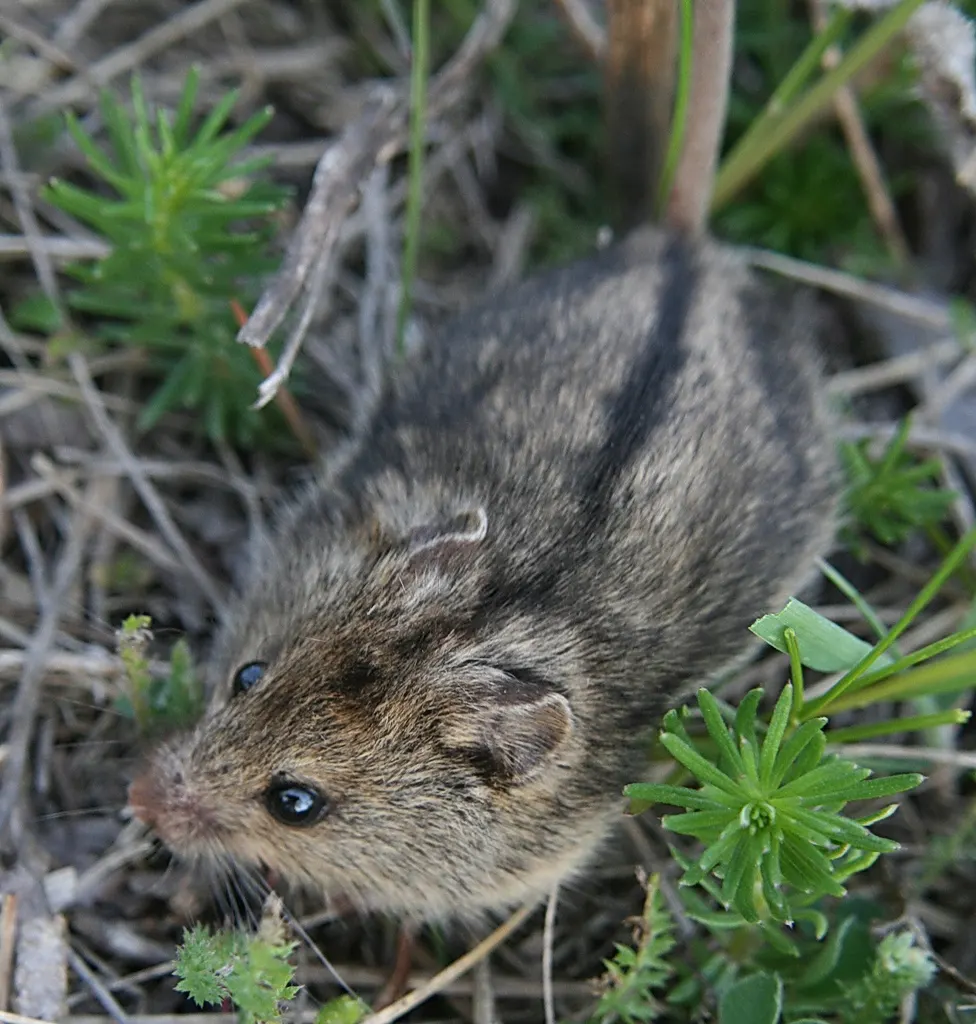
The Hungarian birch mouse, Sicista trizona, is a tiny nocturnal rodent that survives in just two places: a steppe reserve in north-eastern Hungary and parts of Transylvania in Romania. It was assessed as Endangered in 2024, after decades in which almost no living animal was recorded.
A species of its own
This birch mouse (family Sminthidae) was described to science by Imre Frivaldszky in 1865 and was long treated as a subspecies of the southern birch mouse. A 2016 study by Cserkész, Rusin and Sramkó found enough genetic and anatomical difference to treat it as a species of its own. The same work separated the Romanian population as the subspecies Sicista trizona transylvanica, while the Hungarian animals are Sicista trizona trizona.
Where it lives
It once ranged across the Pannonian Basin, including most of Hungary and parts of Austria, Slovakia and Serbia. It is now thought to be gone from Austria and probably from Slovakia and Serbia. The Red List counts just two locations, between 80 and 620 m above sea level, with an extent of occurrence of about 3,443 square km and an occupied area of about 84 square km.
In Hungary the animals cling on in the Borsodi Mezőség protected area. In Romania they are known from several sites in Cluj County.
Pins are Wikidata “endemic to” fields. Orange dots, when present, are GBIF occurrence tiles — survey bias included.
How it lives
Birch mice need steppe grassland that is left alone or only lightly grazed. In Hungary they do best in remnant patches of tall weeds such as thistles inside grazed pasture, and they also turn up, at lower density, in saline meadows, wormwood and fescue steppe, and abandoned fields. Transylvanian animals have been found on shrubby slopes that are also grazed.
A 2022 study in Mammal Research by Cserkész, Kiss and Sramkó ran trail cameras on the Pannonian steppe in spring and summer from 2019 to 2022. It never recorded the species by day. Animals were active at dawn and at night, even at around minus 6 degrees C, and activity peaked in early May, the mating season.
Why it is in trouble
Its tall-grass habitat has been squeezed by modern farming. Mechanised mowing of big areas reduces plant variety and leaves the ground unsuitable, and overgrazing by sheep is a worry in Transylvania. The Red List links the decline to small-holder farming and grazing, and lists the population as decreasing, with both its range and occupied area still shrinking.
Records had dried up well before the modern era. The last living Hungarian animal was caught in 1926, and until 2000 the animals were known only from skeletal remains in owl pellets. Then on 21 June 2006 a live one was trapped in the Borsodi Mezőség, and 42 more were caught that year. The Transylvanian population was reportedly rediscovered in 2014.
What is being done
Part of its range lies inside protected areas, though the Red List notes that conservation sites cover only part of it. The assessment records that a recovery plan exists and that the species is held in captive breeding as insurance.
Sources
Written for this catalog in our own words from the sources below, checked against them on 12 November 2026. Population figures are estimates and carry the year they were made. Status and assessment year: IUCN. 2026. The IUCN Red List of Threatened Species. Version 2026-1. iucnredlist.org.
- IUCN Red List assessment
- Hungarian birch mouse (Wikipedia)
- Rediscovery of Sicista subtilis trizona in Hungary (2008 paper record)
- Cserkész, Kiss and Sramkó 2022, Mammal Research (University of Debrecen repository record)
- Crossref record, Cserkész, Kiss and Sramkó 2022
- Recently Extinct Species, Sicista trizona




