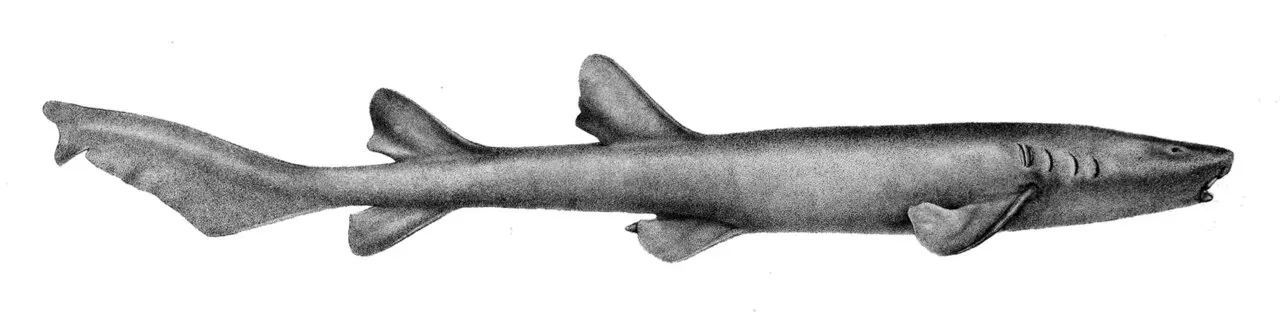
Critically Endangered
Short-tail nurse shark
Pseudoginglymostoma brevicaudatum
The short-tail nurse shark (Pseudoginglymostoma brevicaudatum) is a small, reef-dwelling shark of the western Indian Ocean, reaching about 75 cm. It's the only member of its genus. The IUCN Red List rated it Critically Endangered in 2019 because reef fisheries are thought to have cut its numbers sharply.
How to recognise it
It's a small, bottom-dwelling shark in the nurse shark family (Ginglymostomatidae) and the only species in its genus. Günther described it in 1867. The maximum recorded length is about 75 cm.
Where it lives
The IUCN assessment lists Madagascar, Kenya and Tanzania as places where it is present, and Mauritius and the Seychelles as uncertain. It lives close to the seabed on coral reefs and over sandy and muddy bottoms of the continental shelf and around islands.
In 2021 a team led by the Wildlife Conservation Society reported the shark from Mozambique in the journal Marine Biodiversity. Records came from underwater video surveys in 2019, photographs of catches by shore anglers, and a specimen collected in 1967. The find stretched the known range about 2,200 km south of Tanzania and about 1,100 km west of Madagascar. One record came from Ponta do Ouro Partial Marine Reserve.
Pins are Wikidata “endemic to” fields. Orange dots, when present, are GBIF occurrence tiles — survey bias included.
How it lives
Little is known about its life in the wild. One public aquarium describes it as eating small fish, shellfish and crabs, while other accounts say its natural diet hasn't been established.
In a 2024 feeding trial at Clearwater Marine Aquarium, which then held two of these sharks, mussels and krill drew the most interest. The sharks reportedly carried mussels, cracked the shells and left the meat. Captive sharks have laid eggs, which sets the species apart from other members of its family.
The Nausicaa aquarium in France also reports that it can survive for several hours out of water, waiting out low tide on an exposed reef.
Why it is in trouble
The shark is tied closely to coral reefs, so it suffers from coastal fishing and reef degradation. The IUCN assessment lists harvest as the threat, both targeted and accidental, by small and large operations, and records a decreasing trend. A decline of more than 80 percent over 30 years is suspected.
What is being done
Protection is thin. According to the Wildlife Conservation Society, no species recovery plans exist, and harvest regulation is limited to a listing on Kenya's threatened and protected species list.
The 2021 Mozambique study warned that the shark's range there may span much of the country's unprotected reef. It called for legal protection, better monitoring and management to cut both targeted and accidental catch.
Sources
Written for this catalog in our own words from the sources below, checked against them on 12 November 2026. Population figures are estimates and carry the year they were made. Status and assessment year: IUCN. 2026. The IUCN Red List of Threatened Species. Version 2026-1. iucnredlist.org.




