Endangered
Seram bandicoot
Rhynchomeles prattorum
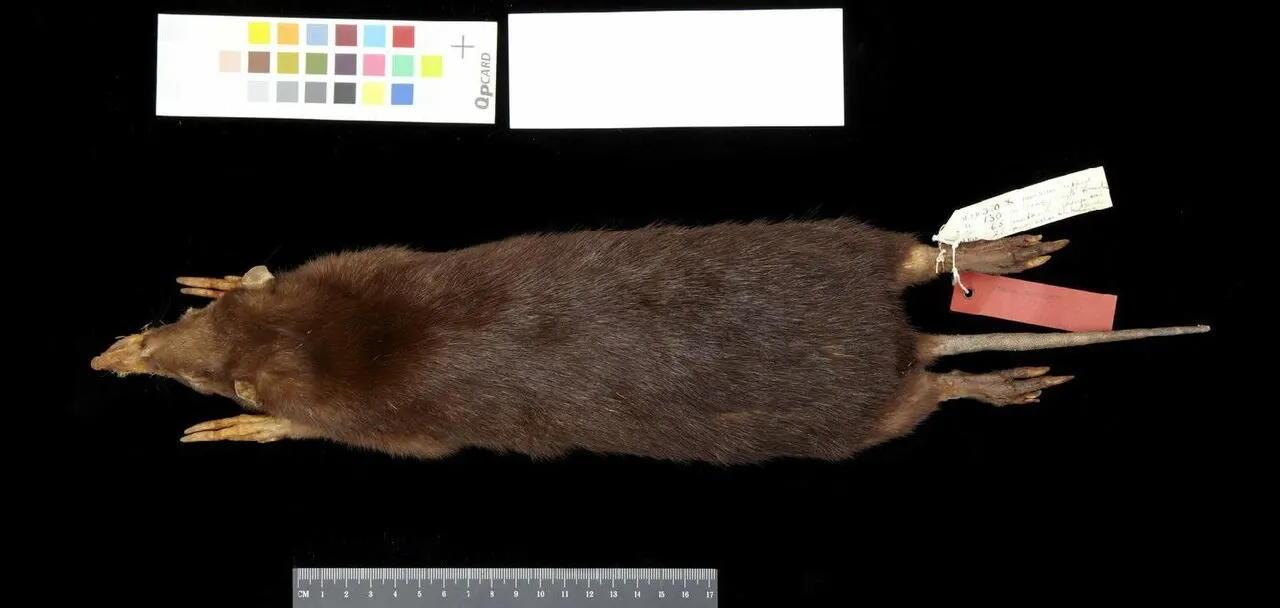
The Seram bandicoot (Rhynchomeles prattorum) is a little-known marsupial found only on Seram island in Indonesia. It is the sole member of its genus and is listed as Endangered by the IUCN (assessed 2016). Science knows it from seven specimens collected in 1920, and almost nothing is recorded about its life.
A mystery marsupial
The Seram bandicoot, also called the Seram Island long-nosed bandicoot, belongs to the order Peramelemorphia, the bandicoots and bilbies. It is the only species in its genus, Rhynchomeles, placed in the family Peramelidae. In the Manusela language it is called mabaya, and the Nuaulu name is imanona.
Oldfield Thomas described it in 1920 from seven specimens collected on Seram by the brothers Charles, Felix and Joseph Pratt, and named it for them. Those specimens remain the basis of what is known about the species.
Where it lives
The specimens came from tropical upper montane forest in what is now Manusela National Park, and one was taken at 1,800 m. The IUCN gives the same elevation, counts a single location, and lists the habitat as subtropical or tropical moist montane forest. The species is endemic to Indonesia.
The wider region has reportedly not been surveyed for the species. A 2017 University of Edinburgh PhD thesis set out to detect it on Seram, using camera traps and DNA from carrion-feeding flies. Its abstract reports DNA of cuscuses and other mammals but does not say the bandicoot was detected.
Pins are Wikidata “endemic to” fields. Orange dots, when present, are GBIF occurrence tiles — survey bias included.
Why it is in trouble
The IUCN lists the species as Endangered because its known range is tiny (an extent of occurrence of 232 km2) and its habitat is still declining. The population trend is recorded as unknown, and no population size is given. Shifting agriculture is the named threat. Clearing of lower-altitude forest near where the animals were collected is also reported as a danger, and introduced pigs, dogs and other feral animals could cause declines.
Its diet, behaviour and breeding have not been documented in the sources available, so conservation planning has little to go on.
What is being done
The IUCN records that conservation sites have been identified over the species' entire known range, and lists site and area management as a conservation action. Research priorities named in the assessment are population size and trends, life history and ecology, threats and the effects of actions taken.
Sources
Written for this catalog in our own words from the sources below, checked against them on 12 November 2026. Population figures are estimates and carry the year they were made. Status and assessment year: IUCN. 2026. The IUCN Red List of Threatened Species. Version 2026-1. iucnredlist.org.




