Endangered
Salinas chub
Gila modesta
The Salinas chub (Gila modesta), known in Mexico as the carpita de Saltillo, is a small freshwater fish found only in spring-fed streams near Saltillo in Coahuila, and now mainly in one stream. The IUCN Red List rated it Endangered in 2019, and recent counts suggest very few remain.
How to recognise it
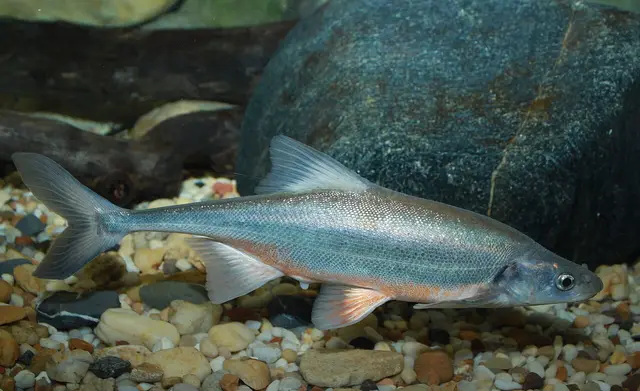
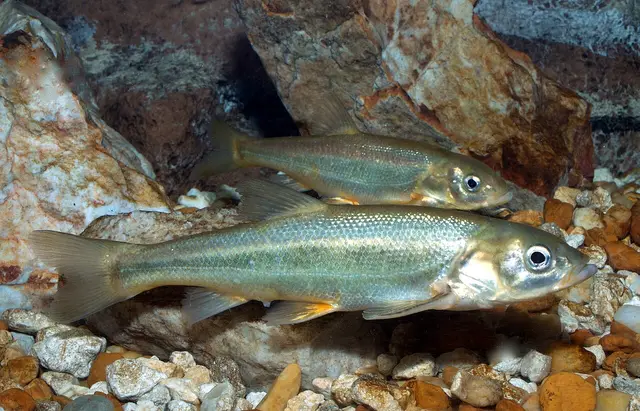
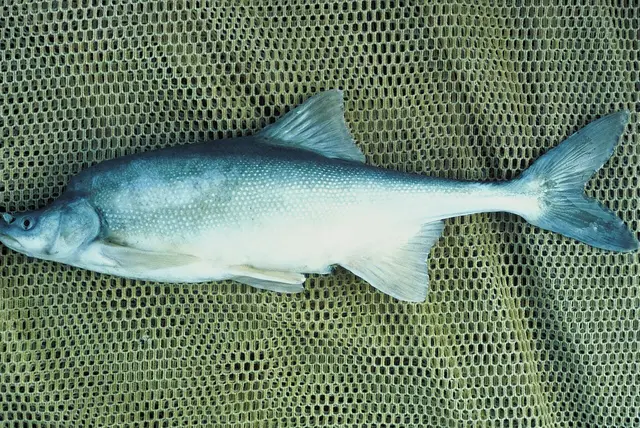
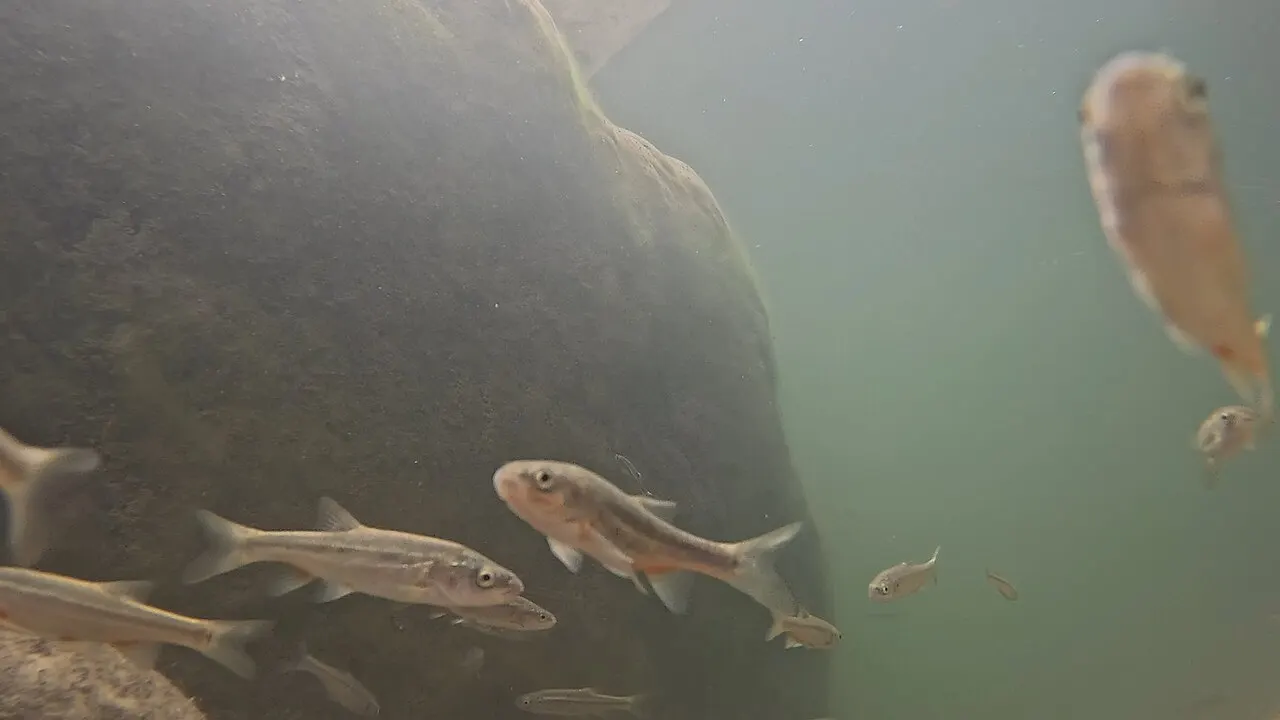
It's a slender, minnow-like fish, at most about 10 cm in standard length according to one description, though a 2023 Mexican press report gives 10 to 25 cm. The body is brown or gray with darker sides and two well-defined lateral bands. In the breeding season males develop reddish colour at the base of the paired fins and on the lower cheeks.
It belongs to the genus Gila, in the minnow family Leuciscidae, and was first described by Samuel Garman in 1881.
Where it lives
The species is endemic to Mexico, in the headwaters of the Salinas river system in the San Juan basin, near Saltillo. The IUCN assessment lists Coahuila and Nuevo Leon, estimates its area of occupancy at only 12 to 20 square km, and counts two locations, with the population severely fragmented.
It prefers clear, cool, spring-fed water with moderate current, muddy or clay bottoms, riparian willows and watercress, and beds of Chara and other algae. It was once common in springs and streams around the Saltillo valley, including Buenavista and La Torre. A February 2008 survey found no fish at several valley sites, and a 2023 press report says the Los Chorros stream, in Arteaga, is now its only known remaining home.
Pins are Wikidata “endemic to” fields. Orange dots, when present, are GBIF occurrence tiles — survey bias included.
How many are left
Numbers have fallen sharply. Around the year 2000, Los Chorros was estimated to hold 3,000 to 4,000 fish. Counts in 2015 to 2017 found 500 to 700, a drop reported as about 82 percent over 17 years. The 2019 IUCN assessment gives a wider estimate of 500 to 2,500 and describes the trend as decreasing, with extreme fluctuations.
A study by the Universidad Juarez del Estado de Durango with the conservation group Profauna and the national forestry research institute INIFAP, reported in July 2025, recorded 131 fish across seven sites in Los Chorros.
Why it is in trouble
Water is the central problem. A 2008 study cited in a 2023 press report found that about 99.5 percent of the stream's water was channeled away, leaving the natural bed nearly dry. The IUCN assessment lists agricultural water abstraction and small dams among the causes, plus roads, erosion, nutrient loads and recreation.
The stream also runs beside a busy highway. Arteaga civil protection recorded 702 accidents on 10 km of Highway 57 between 2016 and 2022, and spills have reached the water. A March 2022 spill of about 50,000 litres of petroleum oil killed at least 450 chubs, according to press reports, and a tanker spill of 10,000 litres of toluene in 1998 cleared life from about 3 km of stream.
Introduced species add to the pressure. A July 2008 catch was 97.5 percent non-native fish and only 1.5 percent Salinas chub. Red crayfish, native to Texas and Louisiana, compete for food and eat eggs and young.
What is being done
The species occurs in a protected area, and the IUCN lists habitat restoration, invasive species control, site management, captive breeding and reintroduction as needed actions. Mexico lists it as endangered under NOM-059-SEMARNAT-2010.
Profauna has been negotiating agreements with landowners at Los Chorros and controlling invasive plants and crayfish. In July 2025 it described a planned project costing about 500,000 pesos, mostly for fencing and other infrastructure, to keep livestock and visitors out of breeding areas and to trap and relocate invaders. It was still at the planning stage, with no fixed budget.
Sources
Written for this catalog in our own words from the sources below, checked against them on 12 November 2026. Population figures are estimates and carry the year they were made. Status and assessment year: IUCN. 2026. The IUCN Red List of Threatened Species. Version 2026-1. iucnredlist.org.
- IUCN Red List assessment (Valdes Gonzales and colleagues, 2019)
- IUCN Red List API record for the assessment
- Salinas chub (encyclopedia entry)
- Gila modesta (Spanish encyclopedia entry)
- Semanario Vanguardia, La Carpita de Saltillo se muere (8 May 2023)
- Vanguardia, 500 mil pesos para conservar carpita saltillense (19 July 2025)