Endangered
Ryukyu long-tailed giant rat
Diplothrix legata
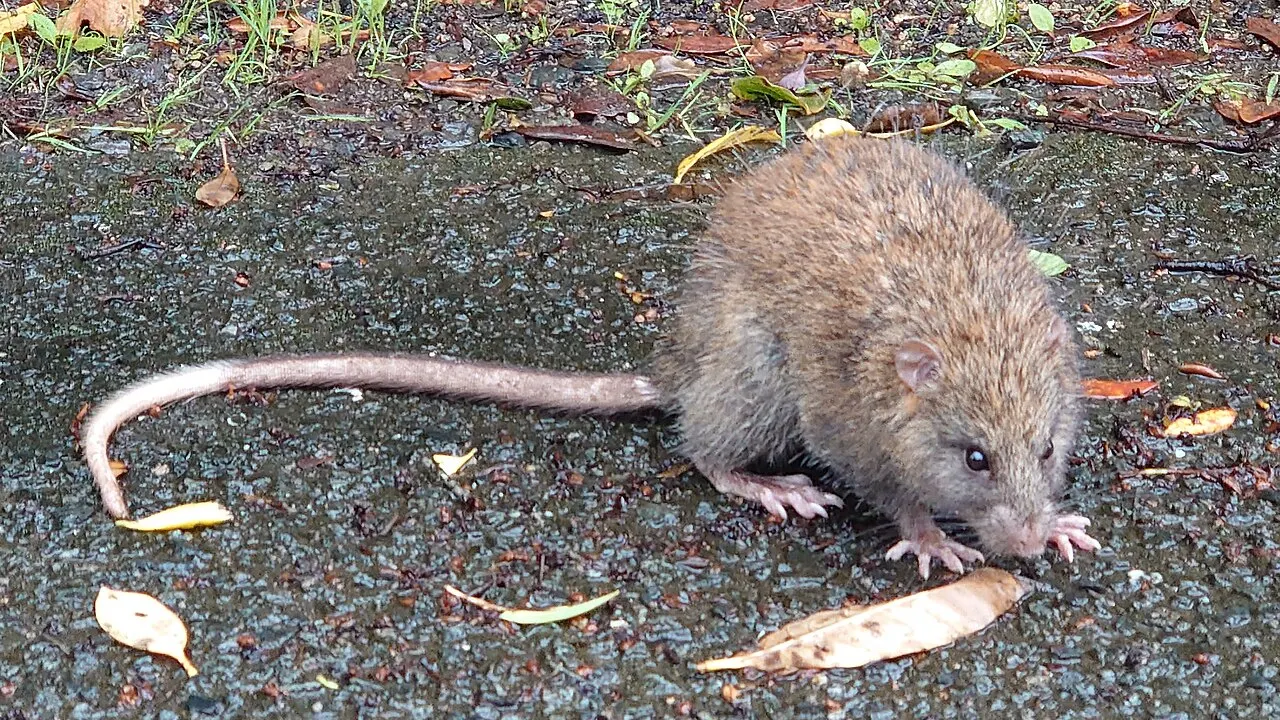
The Ryukyu long-furred rat (Diplothrix legata), also called the Ryukyu long-tailed giant rat, is a big tree-dwelling rodent found only on three Japanese islands: Amami-Oshima, Tokunoshima and Okinawa. The IUCN assessed it as Endangered in 2025. It is the only living member of its genus.
How to recognise it
For a rat, this is a heavyweight. A study of road-killed animals on Okinawa found adult males averaging 587 g and adult females 570 g, with a mean total body length of about 620 mm in males and 590 mm in females. The coat is yellowish brown, with long bristle hairs over 50 mm on the back. Juveniles have silky gray fur on the trunk, and subadults keep a gray patch on the lower back. Males and females look alike.
It is nocturnal and spends much of its time in trees.
Where it lives
The species is native only to the central Ryukyu Islands of Japan. It lives in temperate forest, including natural forests of chinquapin and oak, and the Red List records it at about 300 to 400 m on three islands, with a population it calls severely fragmented. The estimated extent of occurrence is about 4,900 square kilometers. On Okinawa it has been studied in the Yambaru district in the north of the island.
Pins are Wikidata “endemic to” fields. Orange dots, when present, are GBIF occurrence tiles — survey bias included.
How it lives
It eats a mixed diet that includes chinquapin seeds and insects. A 2025 study in Mammal Study that examined tooth wear in road-killed rats found it eats soft foods like fruit, slugs and eggs in summer and hard foods like seeds and acorns in winter. It has also been suggested that it may help spread forest seeds on islands that lack other typical seed dispersers.
Studies of road-killed animals on Okinawa, published in 2015, indicate a mating season from about September to February. Litters were estimated at 2 to 12 young, averaging about 6, from a small sample of four females. Habu pit vipers reportedly prey heavily on newborns.
Why it is in trouble
The Red List links the decline to forest degradation and to predation by named animal species, and records a decreasing population trend and continuing decline in the area of habitat. The population size has not been estimated. Researchers on Okinawa name deforestation and predation by feral dogs, cats and introduced mongooses as the main threats, and report that many animals are killed by vehicles.
What is being done
It occurs in at least one protected area, and the Red List lists site protection, site management and control of invasive or problematic species as conservation actions. The Okinawa researchers say their findings on breeding are meant to support conservation both in the wild and in captivity.
Sources
Written for this catalog in our own words from the sources below, checked against them on 12 November 2026. Population figures are estimates and carry the year they were made. Status and assessment year: IUCN. 2026. The IUCN Red List of Threatened Species. Version 2026-1. iucnredlist.org.




