Critically Endangered
Purple bean
Villosa perpurpurea
The purple bean (Villosa perpurpurea) is a small freshwater mussel from a few streams in the upper Tennessee River system in Virginia and Tennessee. The IUCN Red List rated it Critically Endangered in 2000, and it has been federally listed as endangered in the United States since 1997.
How to recognise it
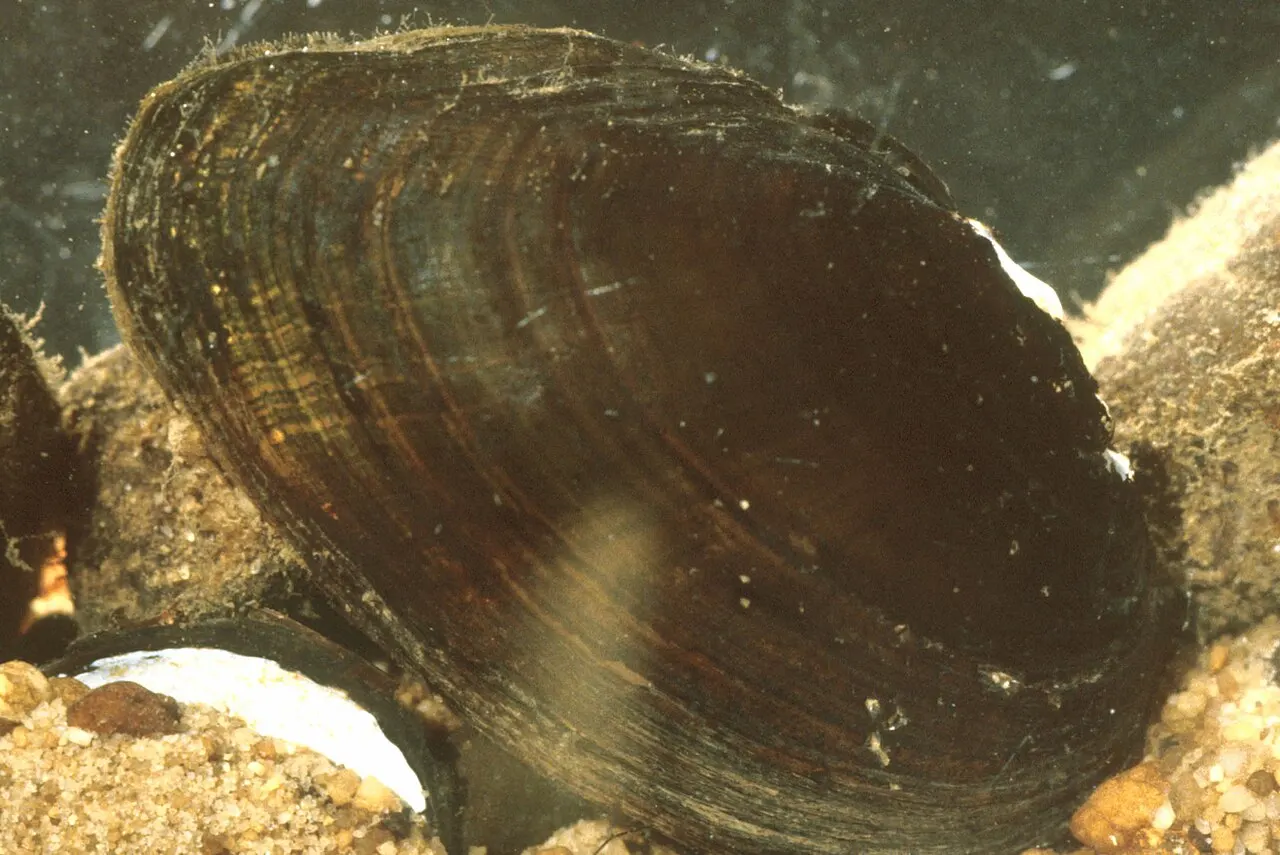
The shell is small to medium in size. Outside it is dark brown to black with fine green rays. Inside it is usually purple, though the colour can fade to pink or nearly white, and in dead shells it often fades to white. It looks a lot like the Cumberland bean (Villosa trabalis), but the purple bean's shell is thinner and more compressed, with less pronounced features.
Inner colour has been the main way to tell the two species apart for over a century. A 2016 genetic study by Lane, Hallerman and Jones found that colour is unreliable in the Tennessee River basin, where the inner shell ranges from white to dark purple. Its DNA results grouped purple beans and the Tennessee-basin Cumberland beans together, apart from Cumberland beans in the Cumberland River basin, so how the two are named may change.
Where it lives
Historically the purple bean lived in the upper Tennessee River basin in Tennessee and Virginia. Reservoirs wiped out its populations in the lower Clinch, Powell and Holston rivers. When it was federally listed in 1997, three populations were known, in the upper Clinch River basin in Virginia (including Copper Creek and Indian Creek), the Obed and Emory river system in Tennessee, and Beech Creek in Tennessee.
It lives in headwater streams up to medium-sized rivers, mainly in moderate to fast riffles with sand, gravel and cobble. It rarely occurs in pools or still water.
Pins are Wikidata “endemic to” fields. Orange dots, when present, are GBIF occurrence tiles — survey bias included.
How it lives
Adults sit in the stream bed and filter food from the water. Like related mussels, it has a modified flap of mantle tissue that mimics prey such as insect larvae, which draws in fish. Its larvae are parasites on fish, and greenside darters, fantail darters and sculpins are confirmed suitable hosts. Larvae transform in 11 to 25 days, and females carrying larvae have been found in January, which suggests a long breeding season.
Why it is in trouble
Reservoir building, coal mining, poor land use and pollution from diffuse sources drove the decline. The surviving populations are small and isolated, so a single toxic spill can do serious damage. A 1998 chemical spill in the Clinch River reportedly killed at least 52 purple beans, and five mine tailings pond spills are reported between 1995 and 1999. The U.S. Fish and Wildlife Service also raised predation by muskrats, raccoons and mink as a concern for such small groups.
No exact population figure exists. One undated summary says numbers are in the hundreds and declining. The Emory River population has been reassessed since 2011 and found to be larger than previously thought.
What is being done
Recovery priorities include protecting remaining habitat from dredging, dewatering, pollution and new reservoirs, ending commercial harvest, and monitoring numbers and breeding. Virginia Tech's Freshwater Mollusk Conservation Center and Virginia's Aquatic Wildlife Conservation Center have propagated purple beans for release in Virginia since 2002. The 2016 study says propagation and reintroduction are likely needed for the species to survive.
Sources
Written for this catalog in our own words from the sources below, checked against them on 12 November 2026. Population figures are estimates and carry the year they were made. Status and assessment year: IUCN. 2026. The IUCN Red List of Threatened Species. Version 2026-1. iucnredlist.org.




