Critically Endangered
Pungu
Pungu maclareni
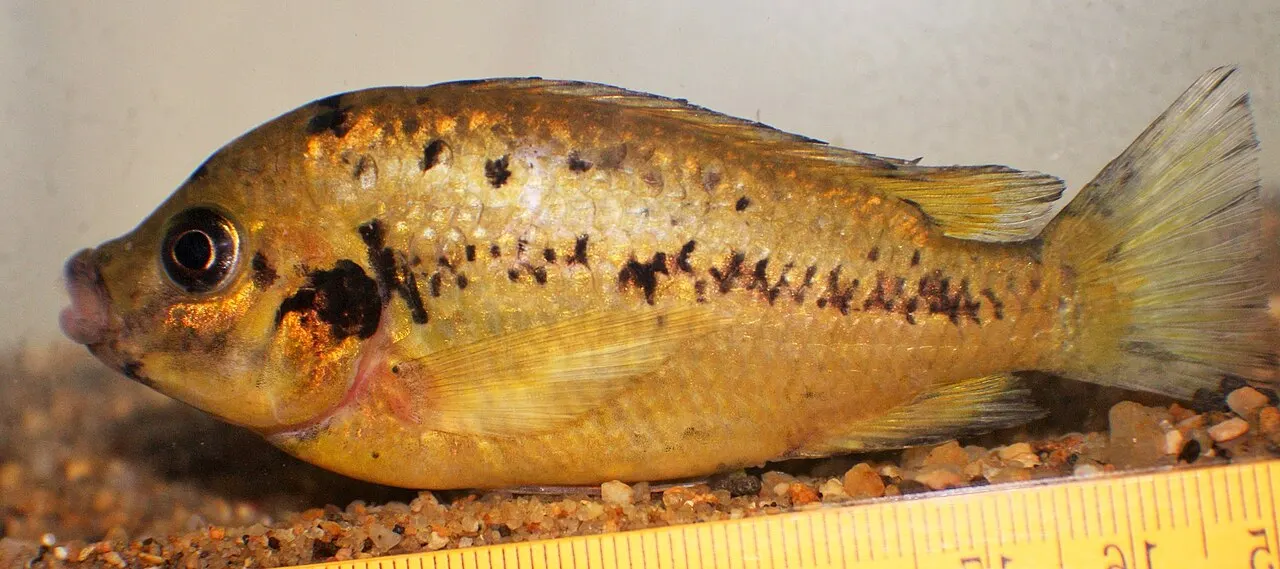
The pungu is a small yellow and black cichlid fish found in one place on Earth, the crater lake Barombi Mbo in Cameroon. The IUCN Red List has rated it Critically Endangered since its 2009 assessment. It is a sponge eater, which is rare among fish.
How to recognise it
The pungu is a modest-sized fish, reaching about 10 cm in standard length (body length without the tail fin). Both males and females are yellow and black, which one aquarium profile calls unique among cichlids. Telling the sexes apart is difficult, and keepers rely on behaviour or on examining the vent.
It is the only known species in its genus, Pungu. The genus name comes from the local Barombi word for the fish. The species was first described in 1962 by the ichthyologist Ethelwynn Trewavas under another genus name, Barombia, and the species name honours P.I.R. MacLaren, a fisheries officer in Nigeria who collected specimens, including the type, and who died in 1957. Later work places it inside the tilapia-like genus Sarotherodon.
Where it lives
Barombi Mbo is a volcanic crater lake in western Cameroon, near the town of Kumba. It is roughly 2 km across and about 300 m above sea level, with a maximum depth of around 111 m. Water below about 40 m holds almost no oxygen, so fish live in the upper layers.
The pungu keeps to the shallows, mostly 1 to 3 m down, and the IUCN lists a lower depth limit of 4 m. Its whole known range is a tiny strip of shoreline. The IUCN gives its extent of occurrence as 4.53 square kilometres and counts it as a single location.
Pins are Wikidata “endemic to” fields. Orange dots, when present, are GBIF occurrence tiles — survey bias included.
How it lives
Few fish eat sponges, and the pungu is one of them. Enlarged jaw muscles and small teeth let it tear pieces off freshwater sponges. A 2021 preprint by Galvez and colleagues, using stomach contents, found about 20 percent sponge in the spongivore's stomachs. FishBase adds that it mainly eats benthic insect larvae, with diatoms and plant material eaten at times.
It is a maternal mouthbrooder, meaning the female carries the eggs and young in her mouth. It has been bred in aquariums, though little has been published on how it breeds in the wild.
The lake is a famous place for cichlid evolution. Eleven cichlid species live nowhere else, among them the pungu and species of the related genera Konia, Myaka and Stomatepia, which are also threatened.
Why it is in trouble
A single small lake is a fragile address. The IUCN lists ongoing threats from surface and groundwater being drawn off for agriculture and from small-scale harvesting of fish, and it records the population trend as decreasing. Pollution and sediment washing in from human activity are also reported as main concerns.
Kumba reportedly draws its water supply from the lake, and one aquarium profile also lists deforestation, non-native species and overfishing as pressures. The lake's carbon dioxide risk has been raised too, though studies suggest it does not carry a dangerous gas load.
What is being done
Barombi Mbo was designated a Ramsar wetland of international importance on 8 October 2006, and commercial fishing in the lake is prohibited. The IUCN lists resource and habitat protection as the relevant action. No recovery programme aimed at the pungu itself has been found, and its Red List assessment dates from 2009.
Sources
Written for this catalog in our own words from the sources below, checked against them on 12 November 2026. Population figures are estimates and carry the year they were made. Status and assessment year: IUCN. 2026. The IUCN Red List of Threatened Species. Version 2026-1. iucnredlist.org.




