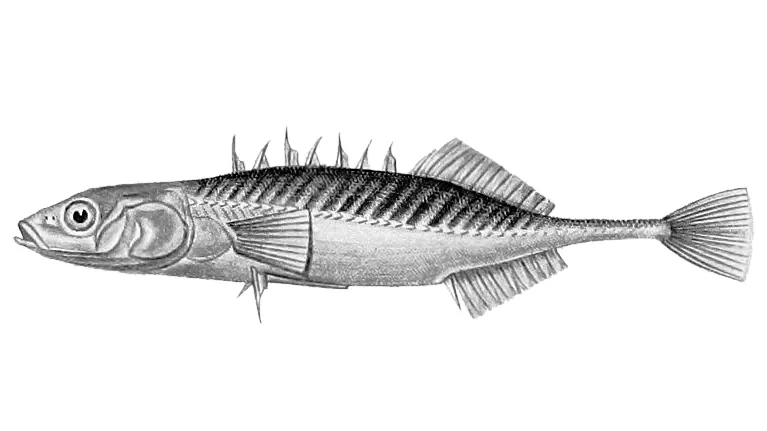
Endangered
Pungitius stenurus
Pungitius stenurus
Pungitius stenurus is a small freshwater stickleback from northern China, reportedly known only from one large lake on the Inner Mongolia plateau. The IUCN classed it as Endangered in 2015 because it lives in one place where the water has been changing. Very little has been published about its life.
What it is
This is a ninespine-type stickleback in the genus Pungitius (the name means "one that pricks"), family Gasterosteidae. It was described by the Russian zoologist Kessler in 1876, originally as Gasterosteus stenurus, from Dalai Nor.
It has no common name. It is a freshwater fish that lives near the bottom and through the water column. The male builds, guards and aerates the nest where the eggs are laid, a habit FishBase records for the species and that is shared across sticklebacks.
Where it lives
The IUCN gives one location for the species, in Nei Mongol (Inner Mongolia) in China, and lists permanent freshwater lakes of more than 8 hectares as its habitat. Dalai Nor is another name for Hulun Lake, about 93 km long and 32 km wide, which a 2025 paper in Frontiers in Microbiology describes as the largest lake in northern China.
FishBase gives a wider range of northern China and Mongolia. The IUCN, however, treats the species as limited to the one location. It estimates that 91 to 100 percent of the population is inside a protected area.
Pins are Wikidata “endemic to” fields. Orange dots, when present, are GBIF occurrence tiles — survey bias included.
Why it is in trouble
The IUCN rates the threats as drought, which has affected the whole population in the past and is likely to return, and nutrient loads, an ongoing problem. It records a continuing decline in the area the fish occupies, but the population trend is unknown and no population size has been estimated.
Studies of Hulun Lake do not cover this fish, but they describe the setting. The lake sits in a dry region, with average rainfall of about 235 mm a year and ice cover for around six months. Water levels have fallen since 1970 and show a general downward trend after 2000. Nitrogen and phosphorus have crept upward, and fishing harvests dropped sharply after 2000, which the researchers link to eutrophication changing the lake's food web.
What is being done
The IUCN recommends habitat protection, habitat and natural process restoration, and awareness work. It records that conservation sites have been identified across the whole range, and that research is needed on threats, ecology, population trends and habitat trends. The species is not included in any international legislation or trade controls, and no recent education or awareness programme is recorded.
Sources
Written for this catalog in our own words from the sources below, checked against them on 12 November 2026. Population figures are estimates and carry the year they were made. Status and assessment year: IUCN. 2026. The IUCN Red List of Threatened Species. Version 2026-1. iucnredlist.org.




