Endangered
Ptychochromis oligacanthus
Ptychochromis oligacanthus
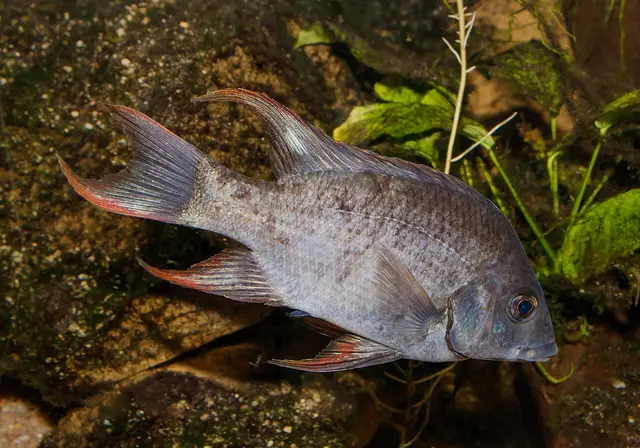
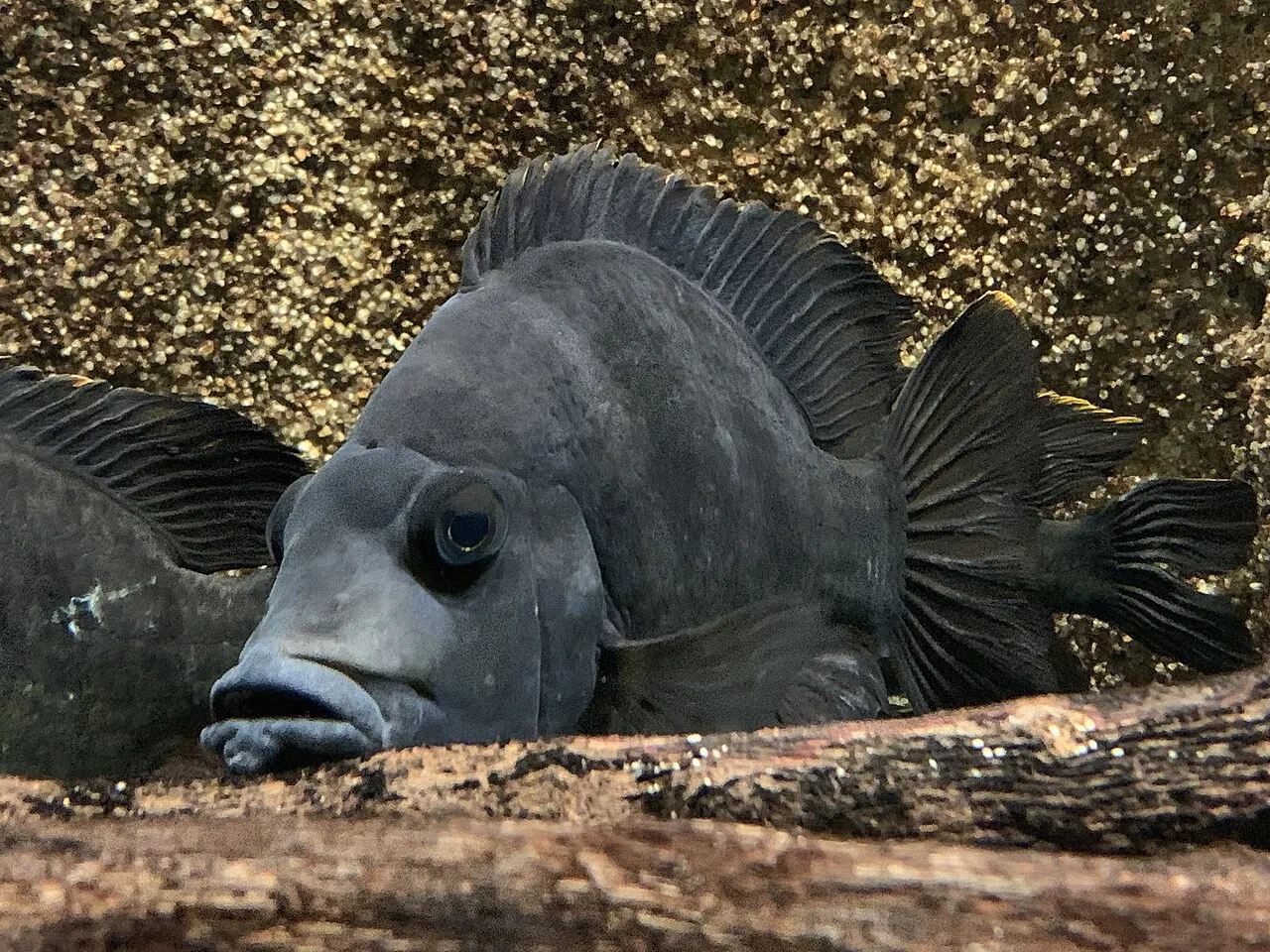
The Nosy Be cichlid (Ptychochromis oligacanthus) is a spotted, silvery freshwater fish from north-western Madagascar and the crater lakes of Nosy Be. The IUCN Red List assessed it as Endangered in 2016, with a decreasing, fragmented population. A few European zoos and private keepers now breed it as a safeguard.
How to recognise it
It's a laterally flattened, high-backed cichlid, silver to grey-blue, with large dark spots scattered along the flanks. The spots vary in strength from fish to fish. In breeding males the anal and dorsal fins turn reddish.
Males reach about 20 cm according to a 2022 husbandry guide from Citizen Conservation, and females often stay a little smaller. Other references give a maximum of 25 cm, so the size depends on the source. Pieter Bleeker described the species in 1868 as Tilapia oligacanthus, from the crater lake Lac Ampombilava on Nosy Be.
Where it lives
The whole range is only about 3,500 square km. It lives in rivers, streams, pools and marshes on the north-western mainland, from the Sambirano River north to the Andranomaloto River, and in the crater lakes of the island of Nosy Be. The Red List counts 10 to 15 locations.
The Nosy Be waters are mostly clear and still in good shape, and the crater lakes there are now part of a protected area. Many mainland rivers and lakes are turbid. Within its small range the fish isn't rare.
Pins are Wikidata “endemic to” fields. Orange dots, when present, are GBIF occurrence tiles — survey bias included.
Why it is in trouble
Deforestation is the biggest problem. Citizen Conservation puts Madagascar's forest loss at more than 90% of the original cover, and the resulting erosion washes silt into rivers and lakes. Irrigation could draw water off, fish are caught for food, and introduced species compete with or prey on the cichlid.
The Red List describes the population as severely fragmented, with a continuing decline in habitat area. Citizen Conservation adds that there is no genetic exchange between groups. The species had been rated Least Concern in 2004, before the 2016 Endangered assessment. No population total is given.
What is being done
The species occurs in at least one protected area, and site management and habitat protection are the conservation actions the Red List records for it. Cologne Zoo has kept it since 2020 and reports successful breeding there, and the Aquarium de la Porte Doree in Paris also holds it, according to the Zootierliste database as cited by Citizen Conservation.
Citizen Conservation, a German network, has set up a breeding programme that includes private keepers, and lists goals of 16 breeders and 192 animals. Keepers describe the fish as easy to keep but aggressive toward its own kind, and advise groups of about 8 adults in a tank at least 1.5 m long and 500 litres.
Sources
Written for this catalog in our own words from the sources below, checked against them on 12 November 2026. Population figures are estimates and carry the year they were made. Status and assessment year: IUCN. 2026. The IUCN Red List of Threatened Species. Version 2026-1. iucnredlist.org.