Endangered
Pseudorasbora pumila
Pseudorasbora pumila
Pseudorasbora pumila, the Shinai topmouth gudgeon or moroco, is a small freshwater fish found only in northern Honshu, Japan, mostly in ponds and marshes. The IUCN Red List rates it Endangered (assessed 2019), and Japan's own list ranks it Critically Endangered. Introduced predators and a close relative are pushing it out.
How to recognise it
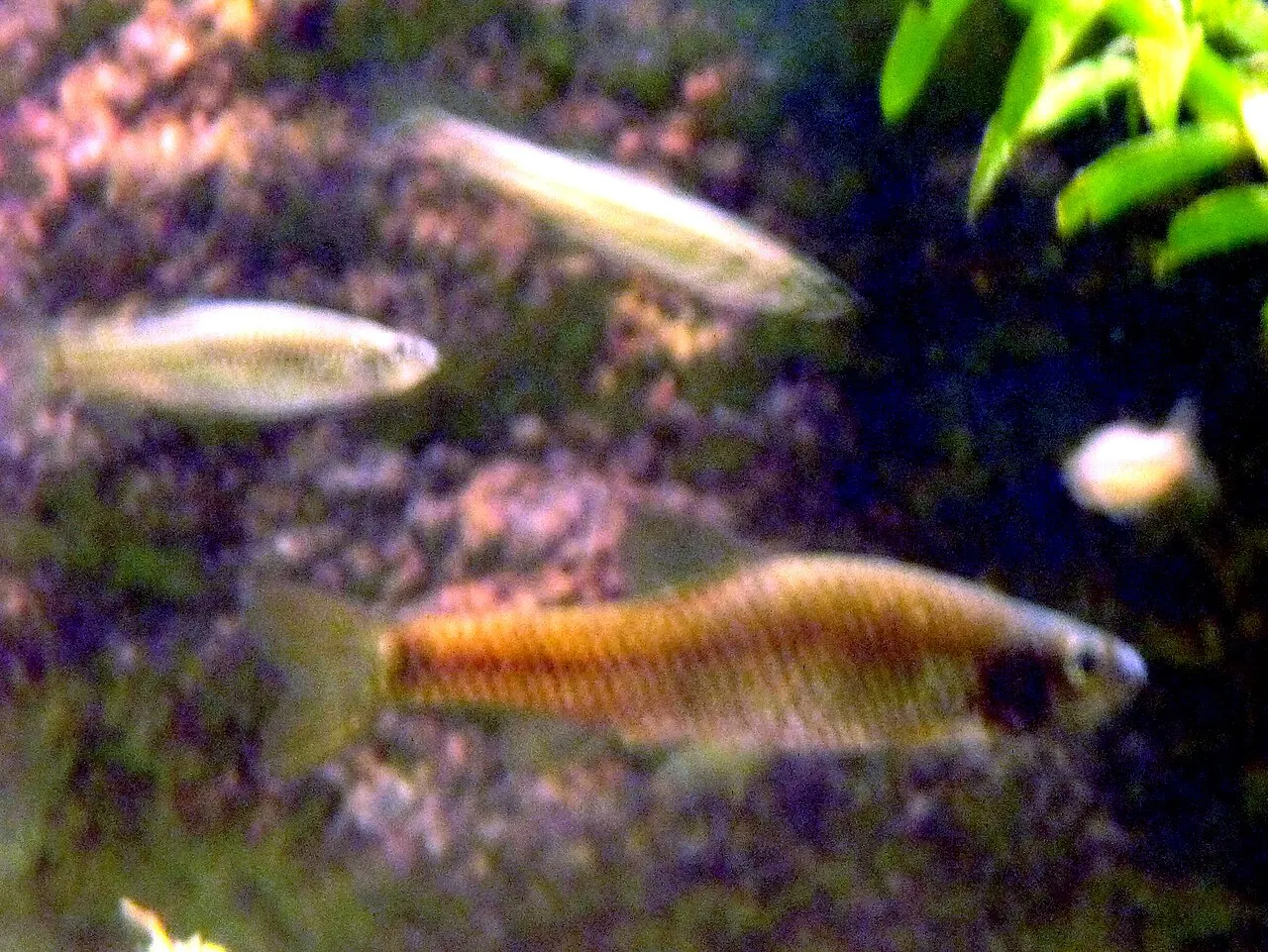
It is a small member of the gudgeon family, Gobionidae, described in 1930 by Miyadi. Males reach about 8 cm in total length and females about 7 cm. It is stockier than its close relative the motsugo (Pseudorasbora parva), its lateral line is incomplete, and dark vertical bars run along its sides.
The Japanese name, shinai-motsugo, comes from Shinai Marsh in Miyagi Prefecture, where the species was first collected.
Where it lives
The fish lives in small, permanent freshwater marshes and pools of under 8 hectares. It still occurs in Aomori, Akita, Iwate, Nagano, Niigata, Fukushima, Miyagi and Yamagata prefectures, but it is considered extinct in Ibaraki, Kanagawa, Saitama, Gunma, Chiba, Tokyo and Tochigi. In the Kanto region it was nearly gone by the 1940s.
The IUCN counts about 20 locations and calls the population severely fragmented and still declining. Its extent of occurrence is put at 60,094 square kilometres, but the area it actually occupies is estimated at only 112 to 500 square kilometres.
Shinai Marsh itself was drained for farmland, and the fish was not recorded in Miyagi for a long time afterwards. A survey in September 1993 found it again in a farm pond at Katsurazawa in Kashimadai.
Pins are Wikidata “endemic to” fields. Orange dots, when present, are GBIF occurrence tiles — survey bias included.
How it lives
It is omnivorous, eating small animals and plants such as algae growing on surfaces. Spawning depends on a suitable surface, and lab work in the early 2000s found that larger males won spawning sites more often. In both this fish and the motsugo, individuals strongly preferred mates of their own kind.
Why it is in trouble
Introduced largemouth bass, bluegill and red swamp crayfish reportedly prey on it, and the IUCN names introduced species among its threats, and also lists small-holder farming and other changes to wetlands among the threats.
The motsugo is a second problem. A 2003 to 2004 Japanese research project led by Akira Goto at Hokkaido University studied lakes and ponds in Hokkaido and the Tohoku region where the Shinai topmouth gudgeon was the only species before the 1950s. The motsugo had either displaced it or the two now coexisted. Hybrids, including later-generation hybrids, turned up at Lake Konuma and Junsai. Where spawning surfaces are scarce, the study concluded, hybridisation could lead to the native fish being replaced, because it loses female gametes.
What is being done
The IUCN assessment records invasive species control, site protection and management, education programmes, captive breeding, and at least one successful reintroduction. A volunteer non-profit in Osaki works to restore natural breeding conditions and to remove largemouth bass and crayfish. Nagano Prefecture designated the fish a rare wild species in 2006.
Sources
Written for this catalog in our own words from the sources below, checked against them on 12 November 2026. Population figures are estimates and carry the year they were made. Status and assessment year: IUCN. 2026. The IUCN Red List of Threatened Species. Version 2026-1. iucnredlist.org.




