Critically Endangered
Protosticta rozendalorum
Protosticta rozendalorum
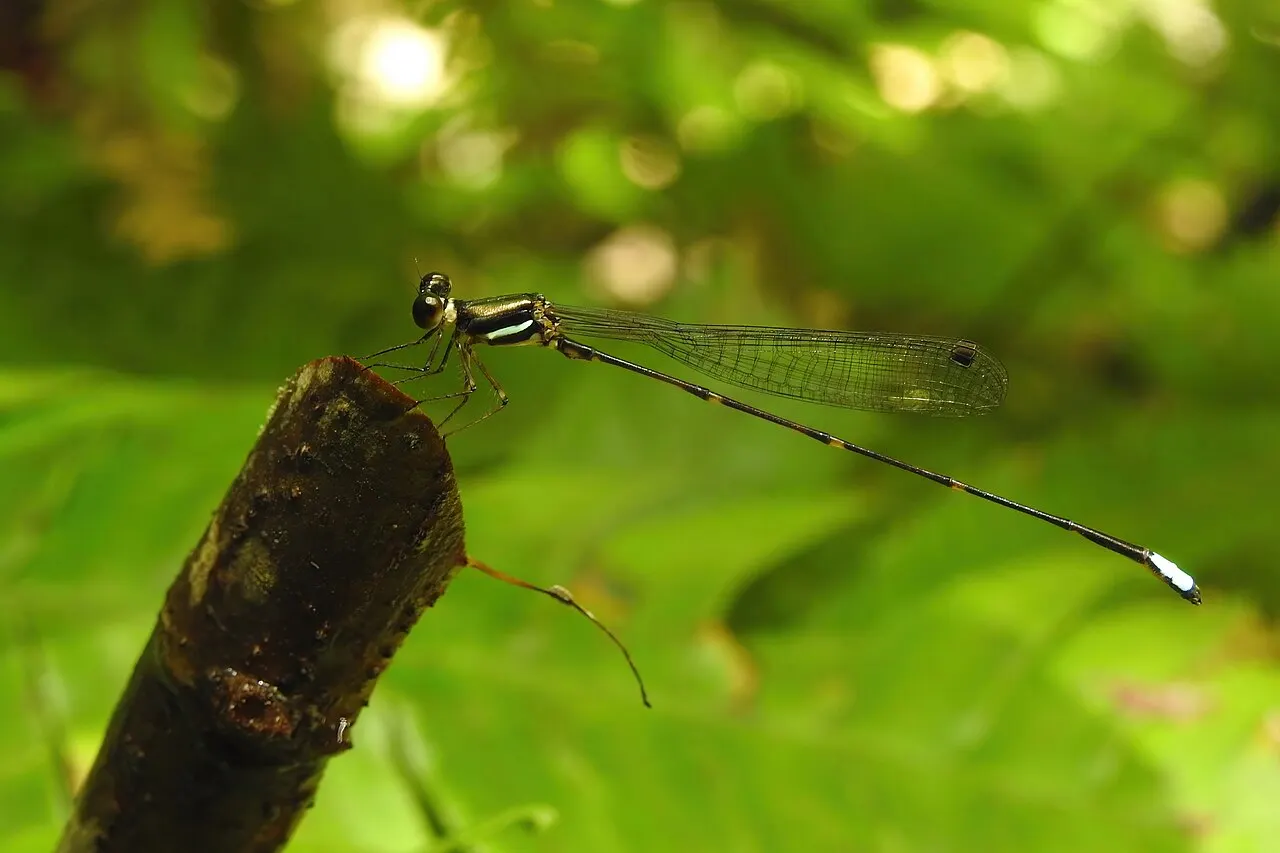
Protosticta rozendalorum is a shadowdamsel, one of the narrow-winged damselflies of shaded forest streams, recorded only from Sangihe Island north of Sulawesi, Indonesia. The IUCN Red List assessed it as Critically Endangered in 2009. It has no common name in the IUCN record, and few records exist.
What kind of damselfly it is
Shadowdamsels (family Platystictidae) are slender insects with narrow wings and long, thin abdomens, found mostly around shaded streams in tropical forests of Asia and Central and South America. The genus Protosticta has more than 50 described species. Many shadowdamsels are known from a single locality or a very restricted range, and this one fits that pattern.
Jan van Tol described it in 2000. The type material came from a 1985 collecting trip on Sangihe by F.G. Rozendaal, who gathered other Sangihe endemics on the same trip, among them Libellago manganitu and Celebophlebia carolinae.
Where it lives
The IUCN assessment lists two 1985 records, both by Rozendaal: a series from the north-west slope of Gunung Sahendaruman, near Liwung, and a single male from riverine gardens and plantations at Manganitu. Both are on Sangihe Island. The GBIF database holds seven records in all, including a 2024 observation on iNaturalist logged only as North Sulawesi province, so its exact site is not clear.
The IUCN counts two locations, at roughly 600 to 650 m elevation, and gives the extent of its range as somewhere between 1 and 99 square km. It lists permanent streams and moist lowland forest as its habitat. The Sahendaruman collecting site was primary forest and forest edge with a trickle and a small stream.
Pins are Wikidata “endemic to” fields. Orange dots, when present, are GBIF occurrence tiles — survey bias included.
Why it is in trouble
The IUCN rates the population as decreasing and names degradation of the ecosystem as the threat. Very little else is published about the species itself, and no population size estimate exists. The IUCN says the island's forest has largely been cleared and that the habitat left is probably under 10 square km. A 2018 paper on Sangihe dragonflies presumed the streams still hold the species, but it cited no survey.
The wider picture is bleak. Conservation groups say more than 99 percent of Sangihe's original forest has been replaced by coconut, pepper, nutmeg and clove plantations. A Key Biodiversity Areas factsheet for Gunung Sahendaruman puts forest at about 32 percent of the site, and lists small-holder farming, grazing, subsistence logging, small dams and water management among ongoing pressures. A gold mining concession also overlaps the mountain's bird habitat, although a January 2023 court ruling found its environmental permit invalid.
What is being done
The IUCN assessment records the species in at least one protected area and lists site management and habitat restoration as the actions needed. It adds that fieldwork is needed to learn whether the protected habitat is large enough. The Key Biodiversity Areas factsheet, however, reports no protected-area coverage for Gunung Sahendaruman, so the two sources don't agree.
Nothing is aimed at this damselfly directly. Rainforest Trust and the Indonesian group Burung Indonesia are backing a proposal to designate 7,756 acres of the mountain as an Area of High Biodiversity Value, mainly for four Critically Endangered birds. The damselfly was collected on the same mountain, so any such protection could help it, but no one has checked.
Sources
Written for this catalog in our own words from the sources below, checked against them on 12 November 2026. Population figures are estimates and carry the year they were made. Status and assessment year: IUCN. 2026. The IUCN Red List of Threatened Species. Version 2026-1. iucnredlist.org.
- IUCN Red List assessment, Protosticta rozendalorum (2009)
- GBIF occurrence records, Protosticta rozendalorum
- Van Tol and Guenther 2018, Rhinocypha sangihensis (Odonatologica 47(3), Zenodo)
- Platystictidae (encyclopedia entry)
- Protosticta (encyclopedia entry)
- Key Biodiversity Areas factsheet, Gunung Sahendaruman
- Rainforest Trust, Ascend the Volcano




