Critically Endangered
Prairie Sphinx Moth
Euproserpinus wiesti
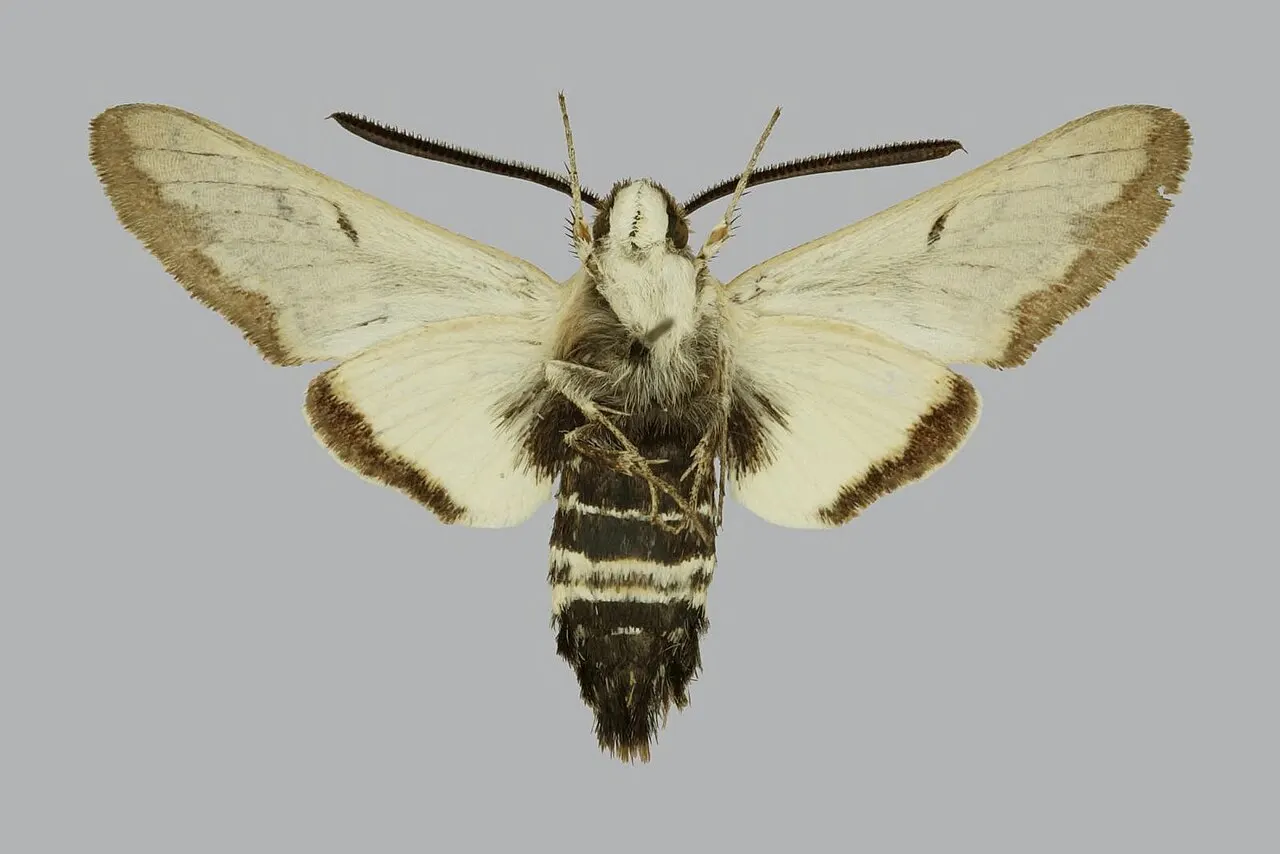
The prairie sphinx moth, also called Wiest's primrose sphinx (Euproserpinus wiesti), is a small day-flying hawkmoth of the western United States, found on sandy ground in dry country. The IUCN listed it as Critically Endangered in 1996. Its life is poorly documented and few sites are known.
How to recognise it
This is one of the smaller sphinx moths, with a wingspan of 32 to 49 mm. Unlike the large, dusk-flying hawkmoths most people know, it flies in daylight and visits flowers for nectar. Adults are on the wing in May and June, with one generation a year.
Where it lives
Sperry described the species in 1939, and its type locality is Kelsey, Colorado. The moth is restricted to the western United States, where it is reported from sand washes and prairie blow-outs, meaning patches of open, wind-scoured sand. The Red List assessment, from 1996, records only the United States as its range. Few detailed range records are available, and the exact distribution remains poorly known.
Pins are Wikidata “endemic to” fields. Orange dots, when present, are GBIF occurrence tiles — survey bias included.
How it lives
Caterpillars have been recorded feeding on prairie evening primrose (Oenothera latifolia), a member of the evening primrose family. Little else about its life cycle has been written down.
Its close relatives show how specialised these moths can be. The genus Euproserpinus has three species. A 1981 study by Paul Tuskes and John Emmel of the California species, E. euterpe, found that it flies in southern California from late February to early April and that its caterpillars feed on a primrose in the genus Camissonia. The third species, E. phaeton, was the most commonly collected of the three at that time.
Why it is in trouble
The 1996 Red List entry gives the category and the United States as the range, but lists no detailed threats or population figures. There is no newer global assessment in the Red List record, so how the moth is doing today is not well known. Fresh surveys would be needed to learn its current range and numbers.
Sources
Written for this catalog in our own words from the sources below, checked against them on 12 November 2026. Population figures are estimates and carry the year they were made. Status and assessment year: IUCN. 2026. The IUCN Red List of Threatened Species. Version 2026-1. iucnredlist.org.




