Endangered
Popoche Chub
Algansea popoche
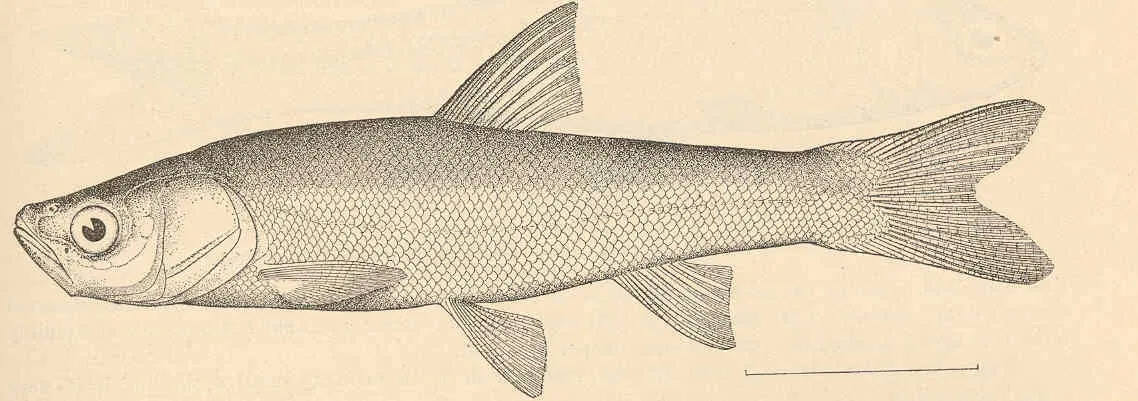
The popoche chub (Algansea popoche) is a freshwater minnow of west-central Mexico, recorded from the Lake Chapala area and the wider Lerma river system. The IUCN Red List rated it Endangered, in an assessment published in 2019. It reaches about 23 cm, is reportedly omnivorous, and is declining.
How to recognise it
It's a fairly large member of its genus, reaching up to about 23 cm (9 in). It belongs to the family Leuciscidae, the shiners, daces and minnows. David Starr Jordan and John Otterbein Snyder described it in 1899, originally under the name Xystrosus popoche.
It's reportedly omnivorous, taking a mix of plant and animal food. FishBase estimates its trophic level at 2.9, which fits a diet with a large plant share. Several related Algansea chubs live in the same region.
Where it lives
The IUCN assessment lists the fish as native and resident in two Mexican states, Jalisco and Michoacán, and as endemic to Mexico. Its habitat is permanent rivers and streams. The assessment gives an estimated extent of occurrence of 1,100 square kilometres and counts two to three locations.
Descriptions of its range differ. One account places it in Lake Chapala and nearby stretches of connected rivers in Jalisco, while FishBase calls it endemic to the Lerma river basin. The exact set of waters it still occupies is unclear.
Pins are Wikidata “endemic to” fields. Orange dots, when present, are GBIF occurrence tiles — survey bias included.
Why it is in trouble
The Red List treats the population as decreasing, with its range continuing to shrink. The assessment names three ongoing pressures across the whole of its range: large-scale harvest, small-scale or subsistence harvest, and surface water taken for agriculture. The stresses listed are ecosystem degradation and species mortality.
The fish isn't generally considered a food fish, yet harvest is still listed as a threat. It can be locally numerous even though the species as a whole is threatened. FishBase also points to a 1998 study by Lyons and colleagues documenting declines of freshwater fishes in west-central Mexico.
What is being done
The fish occurs in at least one protected area. The assessment lists habitat restoration, site management and captive breeding among the conservation actions relevant to it, but no specific breeding or restoration programme for the popoche chub has been described.
Sources
Written for this catalog in our own words from the sources below, checked against them on 12 November 2026. Population figures are estimates and carry the year they were made. Status and assessment year: IUCN. 2026. The IUCN Red List of Threatened Species. Version 2026-1. iucnredlist.org.




