Endangered
Podolsk mole rat
Spalax zemni
The Podolsk mole rat (Spalax zemni), also called the Podolian blind mole-rat, is a burrowing rodent living in the steppe and farmland of western and central Ukraine. It was rated Endangered by the IUCN Red List in 2024, mainly because cultivation and development have shrunk and broken up its grassland home.
How to recognise it
You'll almost never see one, since it spends its life underground. It's a stocky, tailless rodent with a head and body 200 to 310 mm long and a weight of 370 to 570 g. The coat is slate gray with reddish trim, and the head is paler gray, sometimes with white stripes or spots.
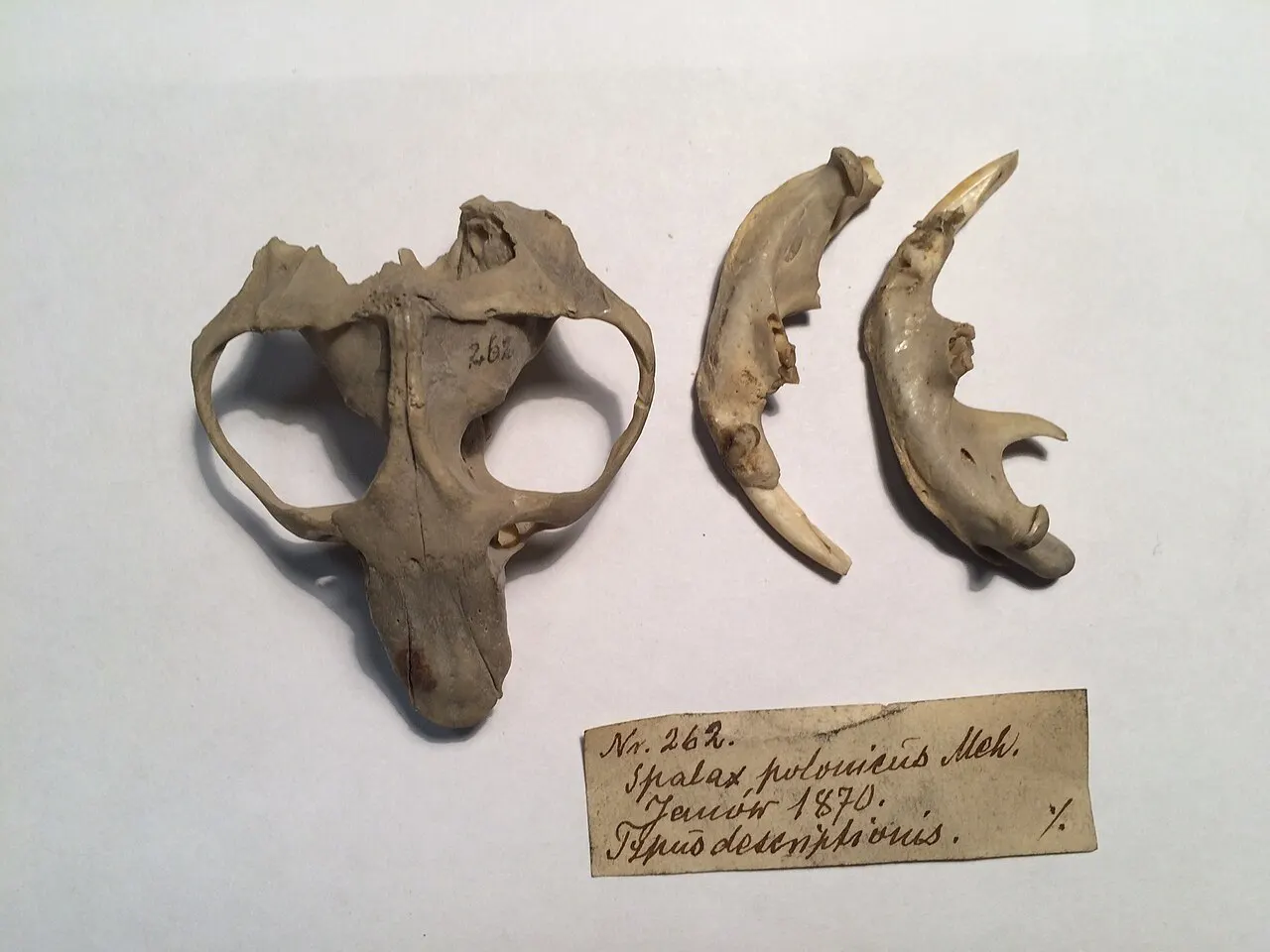
The species was described in 1777 under the name Glis zemni, and the type locality is in the Ternopil region of Ukraine. A synonym, Spalax polonicus, is sometimes met in older literature.
Where it lives
The IUCN lists it as endemic to Ukraine. Its range runs between the Dniester and Dnieper rivers and south to the Black Sea coast, and one reference also places the range's edge in southeastern Poland. Its best habitat is undisturbed steppe, usually on sandy soils, but it also turns up on roadsides, in forest belts, on farmland and on old military firing ranges. The IUCN assessment lists temperate grassland, temperate forest and arable land, at elevations from 10 to 350 m.
The range looks wide on a map. The IUCN puts the extent of occurrence at about 125,000 square km and does not class the population as severely fragmented, but another reference calls it highly fragmented and suggests the true occupied area is much smaller. The two views don't match, and no population count settles it.
Pins are Wikidata “endemic to” fields. Orange dots, when present, are GBIF occurrence tiles — survey bias included.
How it lives
Each animal digs its own tunnel system on two levels. Feeding tunnels run just under the surface, 13 to 21 cm down, and can stretch from about 10 m in a young animal's burrow to 210 m in a mature one. Deeper chambers lie 90 to 275 cm down and include one or two nest chambers, three to five food stores and latrines, joined to the upper level by 2 to 6 vertical shafts. The earth pushed out forms mounds 30 to 67 cm across and 10 to 23 cm high.
It feeds on plants including alfalfa, chicory and field bindweed, and the seedlings of trees such as oak, mulberry and acacia. It stays active through winter. Steppe and European polecats and the long-legged buzzard are known predators.
Why it is in trouble
Steppe has shrunk as land was plowed and built over, and the mole rat has been considered rare since the late 1800s. The IUCN lists housing and urban growth among the threats, along with persecution and control, and military activity and war. The 2024 assessment rates the population trend as unknown, though it estimates a past reduction of about 50 percent, based on a decline in range and habitat quality.
The IUCN says the effect of the war in Ukraine on the species is not known.
What is being done
Protection is thin. The IUCN reports that only 1 to 10 percent of the population lies inside protected areas, and that there is no recovery plan or monitoring scheme in place. Recovery, reintroduction in the northern and western parts of the range, captive breeding and site protection are listed as actions needed.
Sources
Written for this catalog in our own words from the sources below, checked against them on 12 November 2026. Population figures are estimates and carry the year they were made. Status and assessment year: IUCN. 2026. The IUCN Red List of Threatened Species. Version 2026-1. iucnredlist.org.