Critically Endangered
Poblana ferdebueni
Poblana ferdebueni
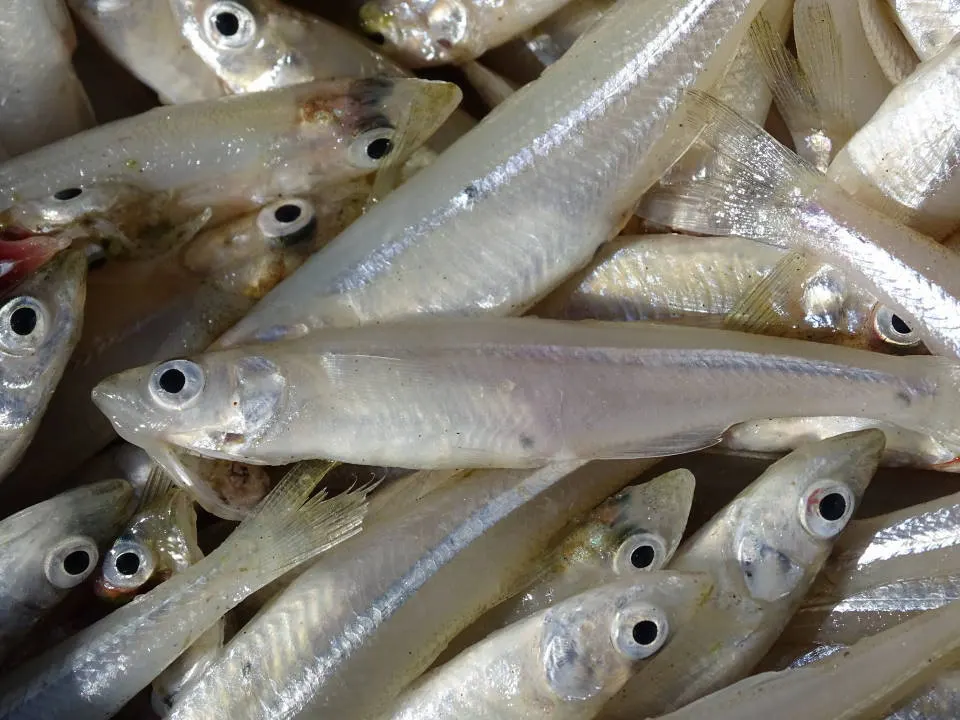
The Chignahuapan silverside (Poblana ferdebueni) is a small freshwater fish known only from the high-altitude lake and streams around Chignahuapan, in Puebla, Mexico. The IUCN Red List assessed it as Critically Endangered in 2019, with a shrinking population in a single location.
How to recognise it
It's a neotropical silverside, an open-water fish in the family Atherinopsidae. No size has been published for this species specifically. Fish of its genus, Poblana, are small and don't exceed about 8 cm in standard length, but that is a genus-level figure.
Poblana has four species, listed as threatened and each limited to a single lake in Mexico's Oriental Basin. The differences between them are slight at the genetic level. Some researchers treat them all as forms of the Alchichica silverside, and some place the group inside the larger silverside genus Chirostoma.
Where it lives
Aurelio Solorzano Preciado and Irma Lopez-Guerrero described the species in 1965 from the Laguna de Almoloya, part of Chignahuapan Lake in Puebla State. The name honours Fernando de Buen y Lozano (1895 to 1962), a Spanish ichthyologist who had proposed the genus.
The Red List counts one location, at about 2,395 m above sea level. Its listed habitats are seasonal lakes of more than 8 hectares, plus seasonal and permanent streams. FishBase describes it as a freshwater fish of open water.
Pins are Wikidata “endemic to” fields. Orange dots, when present, are GBIF occurrence tiles — survey bias included.
Why it is in trouble
The Red List describes a decreasing population and a habitat that is still shrinking. The ongoing pressures it lists are nutrient loads in the water, soil erosion and silting, and water taken from surface sources for agriculture. An unspecified species is also listed as a threat.
Everything the fish needs sits in one small area, so changes to the water there can affect the whole known population.
What is being done
Very little is on record. The 2019 assessment notes no recovery plan, no systematic monitoring scheme, no protected area covering its habitat, no captive population and no international legislation or trade controls. Its population size has not been published.
Sources
Written for this catalog in our own words from the sources below, checked against them on 12 November 2026. Population figures are estimates and carry the year they were made. Status and assessment year: IUCN. 2026. The IUCN Red List of Threatened Species. Version 2026-1. iucnredlist.org.




