Critically Endangered
Planorbidella depressa
Planorbidella depressa
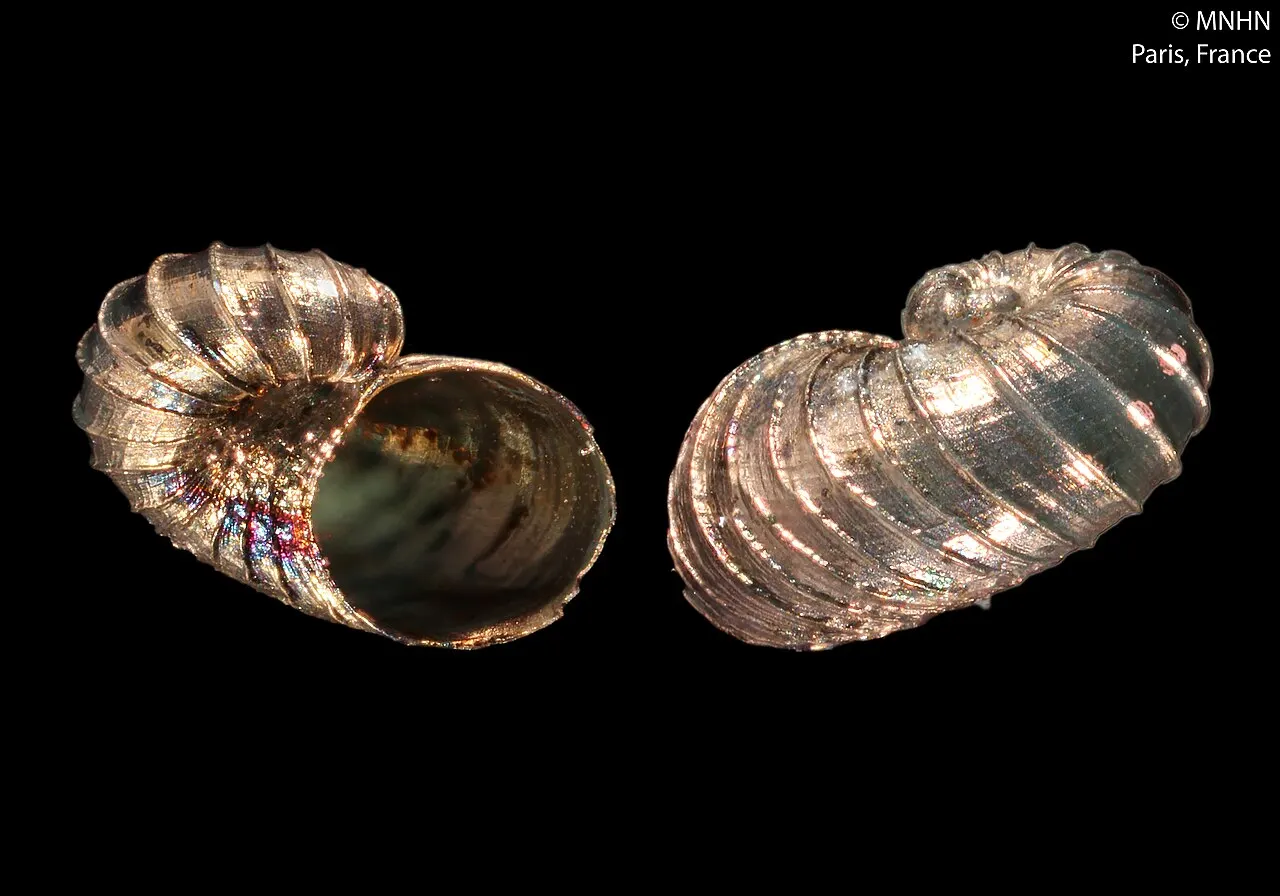
Planorbidella depressa is a tiny sea snail of the deep seafloor in the Lau Basin, off Tonga in the western Pacific. The IUCN Red List assessed it as Critically Endangered in 2021. It is known from a single vent field about 1,900 metres down, and seabed mining is a possible future threat.
How to recognise it
This is a very small animal. The shell reportedly reaches about 1.6 mm in length, so specialists identify it under a microscope rather than by eye. It belongs to the Neomphalidae, a family of limpets and snails that live at hydrothermal vents and includes about 10 living species in six genera.
The species was named in 1993 by the malacologists Anders Warén and Philippe Bouchet, in a long paper in the journal Zoologica Scripta on gastropods from hydrothermal vents and hydrocarbon seeps. Little about its anatomy or appearance has been written up beyond that original description.
Where it lives
The IUCN lists it from Tonga alone and treats it as endemic there. It is known from one vent field, Hine Hina in the Lau Basin, a seafloor spreading zone between Tonga and Fiji. The field has active black smokers and areas of diffuse venting at about 1,900 metres, and the snail is present over a small area of it.
Vent fields in the Tongan part of the Lau Basin stretch for more than 200 km along the Eastern Lau Spreading Center and Valu Fa Ridge. A 2018 decade-long survey in Frontiers in Marine Science studied vent sites between about 1,890 and 2,718 metres deep, where snails and mussels that host symbiotic bacteria dominated the visible animal cover. That study did not report this species.
Only remotely operated vehicles have sampled the population, and at that depth the IUCN considers its status hard to judge.
Pins are Wikidata “endemic to” fields. Orange dots, when present, are GBIF occurrence tiles — survey bias included.
Why it is in trouble
Its rating rests on how little ground it occupies. The 2021 assessment gave the population trend as unknown and no population size. It placed the species in the highest threat category under criteria B1ab(iii)+2ab(iii), which cover a restricted range at a single location with a projected loss of habitat quality.
The threat it names is mining and quarrying, expected in the future and potentially affecting a majority of the species (50 to 90 percent). It lists ecosystem degradation, disturbance and deaths of animals as the likely effects. Seafloor massive sulfide deposits form at vents. The Tongan government has granted exploratory mining licences in the Lau Basin, and the assessors judged that licences at or next to the site support a projected decline in habitat quality. They also noted that sediment plumes from mining could drift 60 to 70 km and smother nearby seabed communities.
The 2018 survey found that vent sulfide builds slowly. From deposition rates it estimated about 22 years for one chimney and about 40 years for another to reach the size they had in 2016, so vent structures disturbed by mining could take decades to re-form. The IUCN added that the rating would likely drop if Tonga adopted a moratorium on deep-sea mining.
What is being done
Very little is in place yet. The assessors recorded no recovery plan, no systematic monitoring scheme and no protected area covering the species, and no conservation actions at any vent field in Tonga's waters. They called for national and international legislation to protect deep-sea habitats and resources, and for research on how mining disturbance would affect the population and whether the snail lives at other vent sites in the western Pacific.
Sources
Written for this catalog in our own words from the sources below, checked against them on 12 November 2026. Population figures are estimates and carry the year they were made. Status and assessment year: IUCN. 2026. The IUCN Red List of Threatened Species. Version 2026-1. iucnredlist.org.




