Endangered
Pike Asp
Aspiolucius esocinus
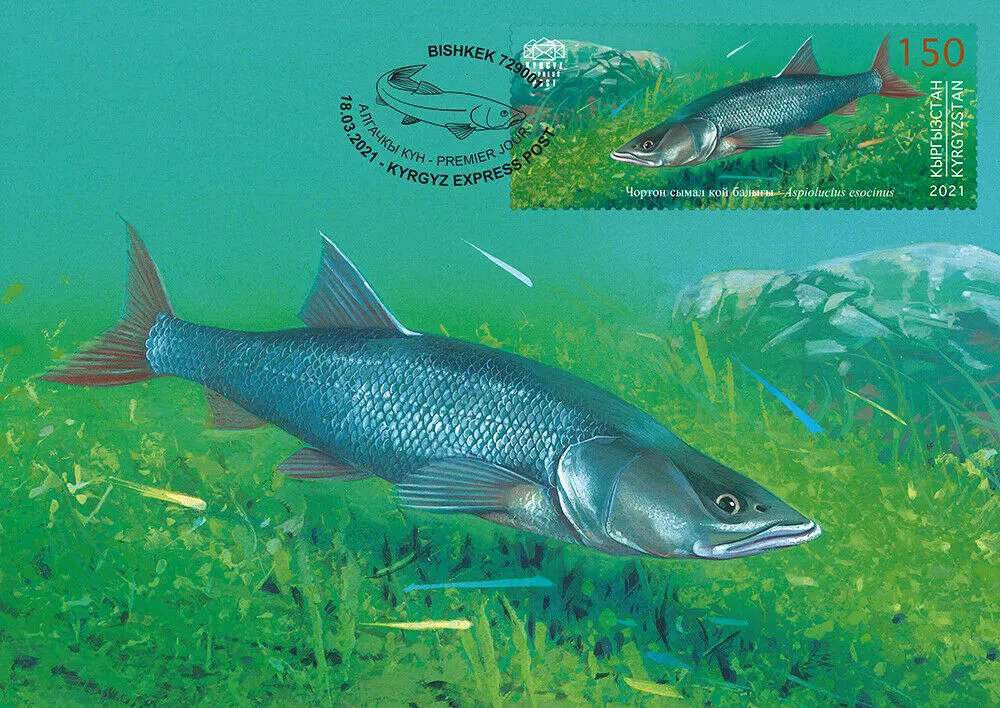
The pike asp (Aspiolucius esocinus) is a long, fish-eating minnow from the big rivers of Central Asia. It was reportedly common until the 1980s. The IUCN Red List rated it Endangered in 2020, with the population decreasing and only two subpopulations recorded.
How to recognise it
It's a predator that reaches about 50 cm in total length. FishBase classes it as feeding on other fish, at a trophic level of 4.5, which is near the top of a river food chain.
Kessler first described it in 1874 as Aspius esocinus, from the Syr Darya and Amu Darya. It was later moved to a genus of its own, Aspiolucius, and remains its only member.
Where it lives
The pike asp belongs to the Aral Sea basin. It is recorded from the Amu Darya and Syr Darya rivers and occasionally from lakes in Tajikistan, Kyrgyzstan, Turkmenistan and Uzbekistan, and Eschmeyer's Catalog of Fishes also lists Afghanistan. FishBase says it prefers river channels and is rarely found in lakes.
The IUCN habitats include permanent rivers and large lakes, plus canals, ditches and reservoirs. It lists Kazakhstan among range countries, though some references call the fish extinct there. The IUCN assessment treats it as not a migrant, while FishBase calls it potamodromous, meaning it moves within fresh water.
Pins are Wikidata “endemic to” fields. Orange dots, when present, are GBIF occurrence tiles — survey bias included.
Why it is in trouble
After a long period as a common fish, numbers reportedly dropped quickly from the 1980s. The 2020 assessment estimates a past reduction of about 50 percent, based on an abundance index. It puts the extent of occurrence at roughly 22,000 sq km and the area actually occupied at about 620 sq km, with two subpopulations that are both still declining. One generation is put at about 10 years.
The threats listed are large and small dams, water taken from rivers for farming, small-scale harvest for food, and herbicides and pesticides. FishBase rates the species as having low resilience, needing 4.5 to 14 years to double its numbers, and as highly vulnerable to fishing.
What is being done
The IUCN lists site protection, restoration of river habitat and captive breeding as needed actions, and records no conservation measures in place at the time of the assessment. FishBase notes that the species has not been evaluated under CITES or CMS.
Sources
Written for this catalog in our own words from the sources below, checked against them on 12 November 2026. Population figures are estimates and carry the year they were made. Status and assessment year: IUCN. 2026. The IUCN Red List of Threatened Species. Version 2026-1. iucnredlist.org.




