Endangered
Phymorhynchus carinatus
Phymorhynchus carinatus
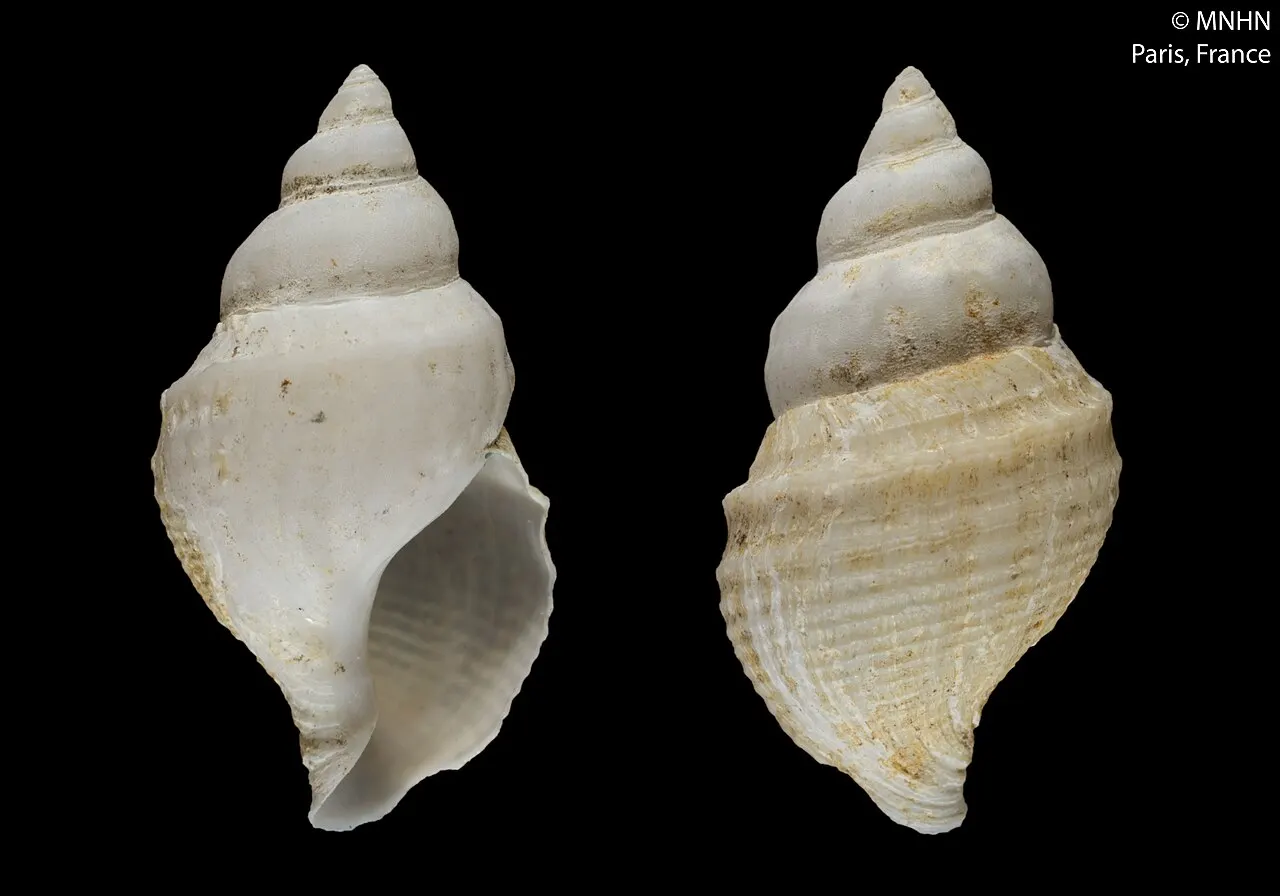
Phymorhynchus carinatus is a small deep-sea snail, with a shell up to about 15 mm long, recorded from hydrothermal vents on the Mid-Atlantic Ridge near the Logatchev field. The IUCN Red List assessed it as Endangered in 2020 because its known range is tiny and mining is a threat.
What it is
This is a sea snail in the family Raphitomidae, part of the superfamily that includes the cone snails. It was described in 2001 by Anders Warén and Philippe Bouchet, in a large study of snails and monoplacophorans from hydrothermal vents and seeps. The shell reaches about 15 mm, and the type specimen is kept at the Paris natural history museum. Little else about its appearance or biology has been published.
Where it lives
A catalogue of vent animals lists the species from a vent on the Mid-Atlantic Ridge at 14°45′N, 44°59′W, in 3,040 m of water, which is the area of the Logatchev hydrothermal field, one of the best studied vent areas on the ridge. The IUCN assessment gives a depth range of 3,040 to 4,080 m and counts three locations.
It estimates the area where the snail occurs at only 12 square kilometres, inside a broader range of about 1,734 square kilometres. Vents are small, scattered patches of seabed warmed and enriched by mineral-laden fluid, so a vent animal's real range is often far smaller than the stretch of ridge it sits on.
Pins are Wikidata “endemic to” fields. Orange dots, when present, are GBIF occurrence tiles — survey bias included.
How it lives
The biology of this particular species is not documented. At Logatchev the vent community includes the mussel Bathymodiolus puteoserpentis and the shrimp Rimicaris exoculata. A 2007 survey by remotely operated vehicle reported that predatory snails of the genus Phymorhynchus had become up to ten times denser at one site, Irina-2, than in a 1997 visit. The survey counted the snails as a group, so it gives no figures for P. carinatus alone.
Why it is in trouble
The 2020 assessment, under criteria B1ab(iii)+2ab(iii), rests on the very small range and the ongoing threat from mining and quarrying of the seabed, which it rates as affecting the majority of the population (50 to 90 percent). The population trend is listed as unknown, and there is no population estimate.
The assessment records that the species is not inside any protected area, has no recovery plan, and is not monitored systematically.
What is being done
Nothing species-specific is in place. The assessment names international-level action and protection of the habitat and its resources as the conservation measures needed, along with research on population size and trends, life history and ecology, and habitat trends.
Sources
Written for this catalog in our own words from the sources below, checked against them on 12 November 2026. Population figures are estimates and carry the year they were made. Status and assessment year: IUCN. 2026. The IUCN Red List of Threatened Species. Version 2026-1. iucnredlist.org.




