Endangered
Aegean minnow
Aegean minnow
The Aegean minnow is a tiny freshwater fish known from the lower Strymon drainage and nearby streams of northeastern Greece. The IUCN Red List rated it Endangered in 2024. It lives in cold, clear, spring-fed streams and farmland canals, where drought, water abstraction and pollution threaten it.
How to recognise it
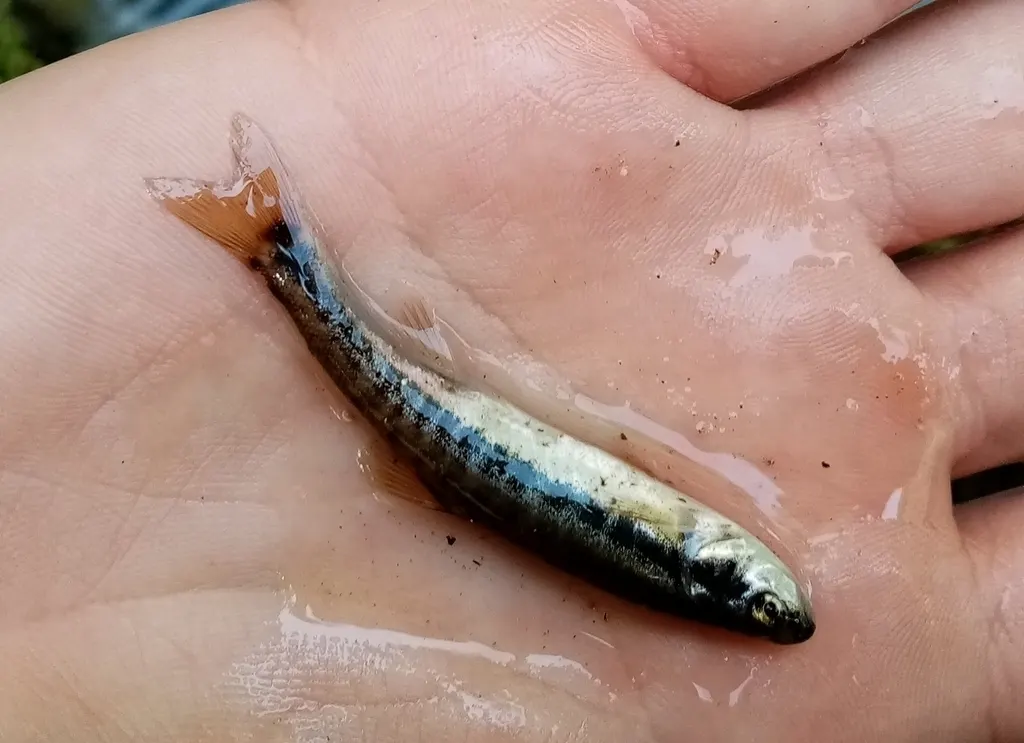
This is a small minnow, reaching roughly 4 to 5 cm in standard length (sources give 4.2 and 4.8 cm as the maximum). Among the European minnows of its genus it is told apart by having no scales on the breast or only small patches of them, and by an anal fin that usually starts in front of the base of the last dorsal fin ray.
Where it lives
The species was described in 2007 by the Swiss fish specialist Maurice Kottelat, who was sorting out what had been treated as one widespread common minnow. The type locality is a set of canals near Kalambaki, about 14 km south of Drama, in the Angitis part of the Strymon system.
It occurs in the Angitis and neighbouring Marmaras rivers. A 2019 conference study by Sanda and colleagues, using genetic data from minnows in five Greek basins, found three lineages in Greece and placed the Strymon and Marmaras minnows in this species. Minnows from the Filiouris basin to the east were closest to a Bulgarian species, and those from the Loudias and Aliakmon basins to the west closest to a western Balkan one. FishBase suggests Loudias and Filiouris fish might belong here, so the exact range is still being settled.
The IUCN gives an extent of occurrence of about 1,649 square km, four locations and two subpopulations. Its habitat list covers permanent streams, irrigation channels, canals and drainage ditches.
Pins are Wikidata “endemic to” fields. Orange dots, when present, are GBIF occurrence tiles — survey bias included.
How it lives
It favours shallow water among dense plants, in small spring-fed creeks and in canals through farmland, and it is most abundant in small streams with clear, cold water. The IUCN describes it as a year-round congregating fish that does not migrate. Diet and breeding have not been documented.
Why it is in trouble
The streams and canals it lives in run through cultivated land. The IUCN lists drought, water taken from streams and from groundwater for irrigation, silt, nutrient pollution, pesticides and herbicides, sewage and other changes to the water system as threats, and records a continuing decline in habitat. The population trend is unknown, and no count of fish exists.
What is being done
The species occurs in at least one protected area. Beyond that, the IUCN records no recovery plan, no monitoring scheme and no captive stock, and lists no conservation actions. The 2019 genetic study concluded that the conservation status and management of Greek minnows should be re-evaluated.
Sources
Written for this catalog in our own words from the sources below, checked against them on 12 November 2026. Population figures are estimates and carry the year they were made. Status and assessment year: IUCN. 2026. The IUCN Red List of Threatened Species. Version 2026-1. iucnredlist.org.




