Critically Endangered
Pegias fabula
Pegias fabula
The littlewing pearlymussel is a tiny freshwater mussel from cool, clear streams in the southern Appalachians and Cumberland Plateau of the eastern United States. It is rated Critically Endangered on the IUCN Red List (assessed 2012), with a decreasing population, and it survives in only a handful of small streams.
How to recognise it
This is one of the smallest freshwater mussels in North America. Adults rarely pass 35 to 38 millimetres, about 1.5 inches.
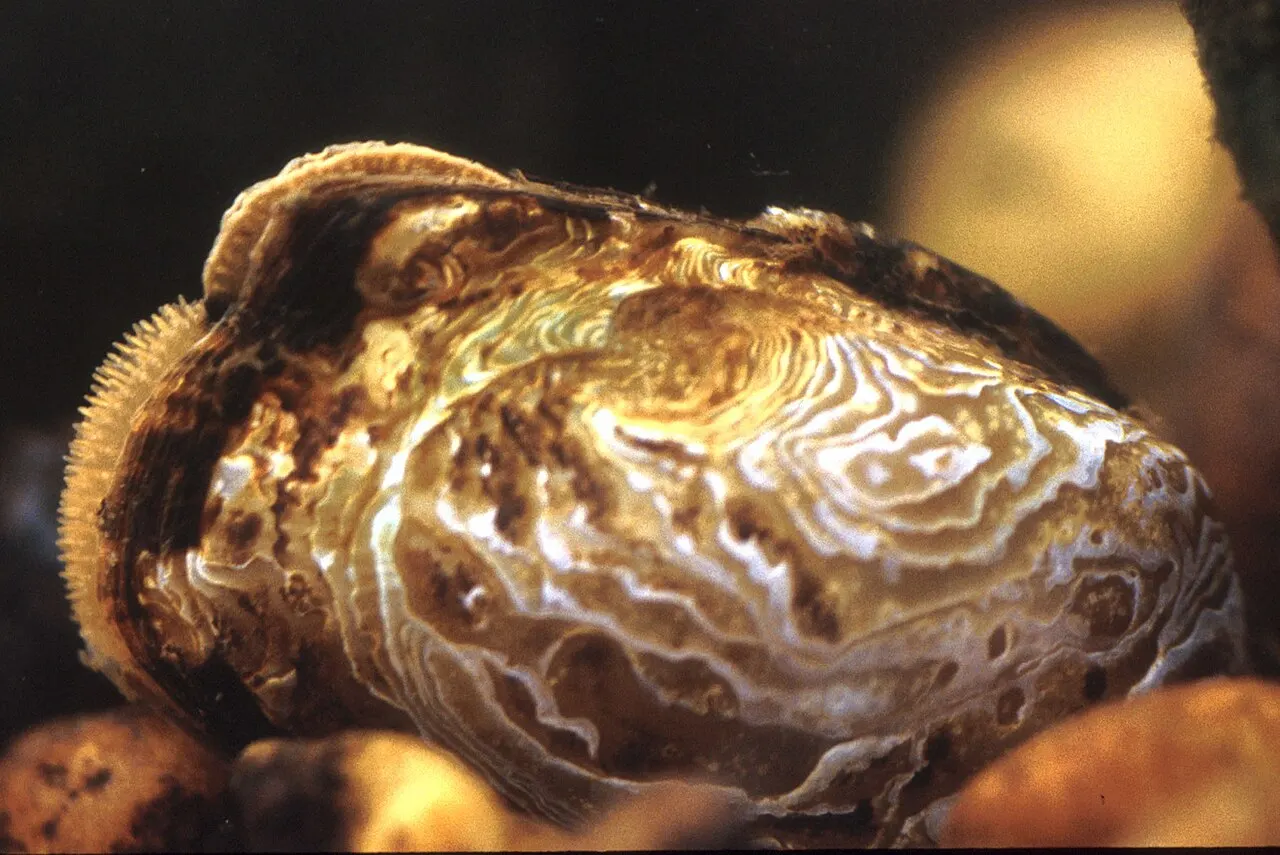
When the thin outer skin is intact, the shell is light green or dark yellowish brown with dark rays. It is often worn away, leaving a chalky, ashy white surface. Inside, the shell is whitish near the front edge and salmon or flesh coloured in the cavity under the beak.
Where it lives
It once lived in small to medium tributaries of the Tennessee and Cumberland river systems, with records from Alabama, Tennessee, Kentucky, Virginia and North Carolina. Accounts of the old range differ, from 24 stream reaches to at least 27 tributaries, but they agree that many are gone. The species is believed to have disappeared from Alabama entirely.
Today it is known from roughly 6 to 20 populations, depending on the source, and reportedly most hold fewer than 500 animals. A 1986 survey of 55 historic and potential sites found only 17 live mussels. North Carolina's original population was lost, but a new one turned up in the Little Tennessee River in 1990. Horse Lick Creek in Kentucky is thought to hold the healthiest population.
Pins are Wikidata “endemic to” fields. Orange dots, when present, are GBIF occurrence tiles — survey bias included.
How it lives
The littlewing likes cool, clear, fast-flowing headwater streams. It has been found where pools meet riffles, under large flat rocks, and in gravel beside beds of water willow.
Like other freshwater mussels, its larvae (glochidia) must clamp onto the gills of a fish to develop. Greenside darters and emerald redline darters are reported hosts, and banded sculpins and redline darters may also serve, judging from field observations. Females hold larvae from mid-summer through the following spring, and gravid females have been found in September and October. Some mussels live 50 years or more.
Why it is in trouble
Poor water quality is the central problem, especially waste and runoff from coal mining and coal washing, along with farm runoff and sewage. Silt smothers the mussel beds and can clog the feeding siphons, and toxic chemical releases have been blamed for several population losses. The IUCN assessment also lists dams, housing and commercial development, oil spills and quarrying as pressures.
Rarity may partly reflect how hard the animal is to find. It is small, its shell is often eroded, it lives in tributaries, and it is near the surface only briefly. Even so, the IUCN records a decreasing population.
What is being done
The species was federally listed as endangered in 1988, and a recovery plan followed in 1989. Its goal is 13 viable populations, reached by protecting existing ones and finding or creating new ones. Part of the Horse Lick Creek watershed lies in Daniel Boone National Forest, and the creek is one of Kentucky's Outstanding Resource Waters. Kentucky, Tennessee and Virginia require a permit to collect freshwater mussels. The IUCN lists species recovery, captive breeding, site protection and habitat restoration among the conservation actions.
Sources
Written for this catalog in our own words from the sources below, checked against them on 12 November 2026. Population figures are estimates and carry the year they were made. Status and assessment year: IUCN. 2026. The IUCN Red List of Threatened Species. Version 2026-1. iucnredlist.org.




