Endangered
Peckoltia compta
Peckoltia compta
The leopard frog pleco (Peckoltia compta) is a small armoured catfish from the Tapajós river basin in Pará, Brazil. The IUCN Red List rated it Endangered in 2022, with a decreasing population, mainly because dams are changing the rivers it lives in. Hobbyists know it as L-134.
How to recognise it
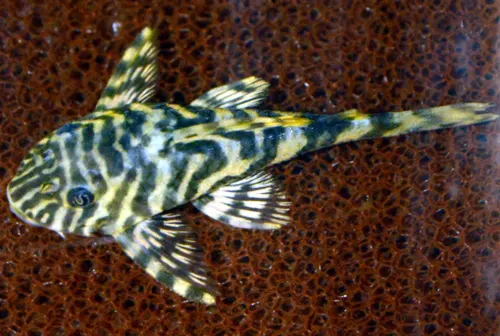
It's a suckermouth catfish in the family Loricariidae, and a small one: it reportedly reaches a standard length of about 6.2 cm (2.4 in). What sets it apart is its pattern. Large dark bars cross the body, and thick dark stripes run along the snout and head.
The scientists who described it in 2010 picked out one feature as diagnostic. Each dark head stripe has a pale line inside it, running from the snout tip to the front edge of the eye. The closest match in colour is Peckoltia vittata, but that fish looks mottled and lacks the pale lines. The species name compta comes from a Latin word for 'adorned'.
Where it lives
Peckoltia compta is known from the Tapajós basin in the Brazilian state of Pará. The 2010 description, published in the journal Zootaxa, gives the Tapajós drainage in Pará as the type locality.
The IUCN assessment lists permanent rivers and streams as its habitat, and Brazil as the only country.
Pins are Wikidata “endemic to” fields. Orange dots, when present, are GBIF occurrence tiles — survey bias included.
Why it is in trouble
The Red List assessment names large dams and small dams as the main threats, and gives the population trend as decreasing. Its listing under criterion A3c rests on a projected population reduction tied to habitat decline. The assessment uses a generation length of 5.5 years.
The Tapajós has long been a target for hydropower. A 2016 report in Mongabay described plans for up to seven dams on the river and its tributaries, including the large São Luiz do Tapajós project, which would flood a stretch of rocky rapids. Independent scientists criticised the project's environmental impact study for misidentified fish, species listed twice and others left out, and the study listed fewer fish species for the basin than the conservation agency ICMBio recorded. Licensing for that project was on hold when the report appeared.
A third pressure is small-scale harvest, which the assessment rates as a low-impact threat like the dams. The IUCN records use as a pet or display animal, and the fish is known to hobbyists as the leopard frog pleco or by its L-number, L-134.
What is being done
The 2022 assessment calls for site and area protection, resource and habitat protection, and site and area management. No conservation measures were recorded as being in place when it was written.
Sources
Written for this catalog in our own words from the sources below, checked against them on 12 November 2026. Population figures are estimates and carry the year they were made. Status and assessment year: IUCN. 2026. The IUCN Red List of Threatened Species. Version 2026-1. iucnredlist.org.




