Endangered
Pale fork-marked lemur
Phaner pallescens
The pale fork-marked lemur (Phaner pallescens), also called the western fork-marked lemur, is a small nocturnal primate that feeds mostly on tree gum in the dry forests of western Madagascar. The IUCN Red List rated it Endangered in 2020, and its forests are being cleared and burned.
How to recognise it
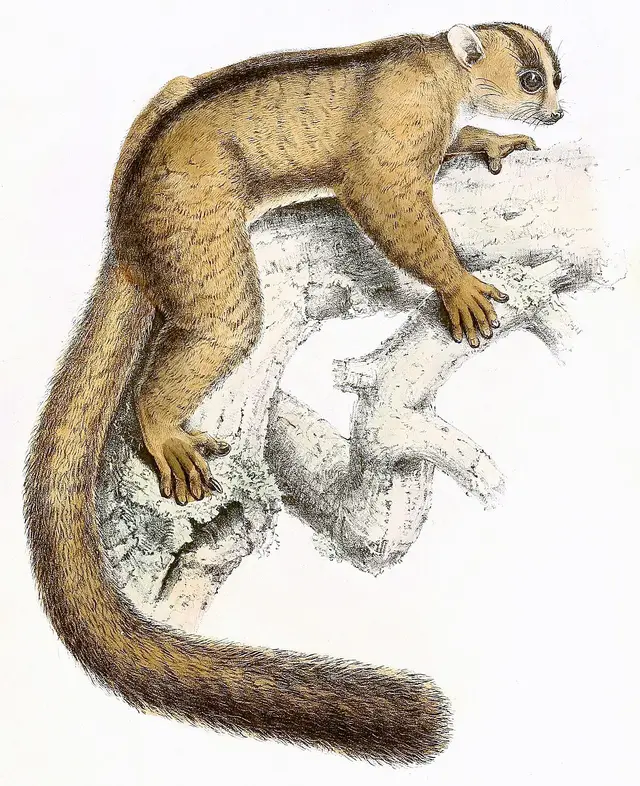
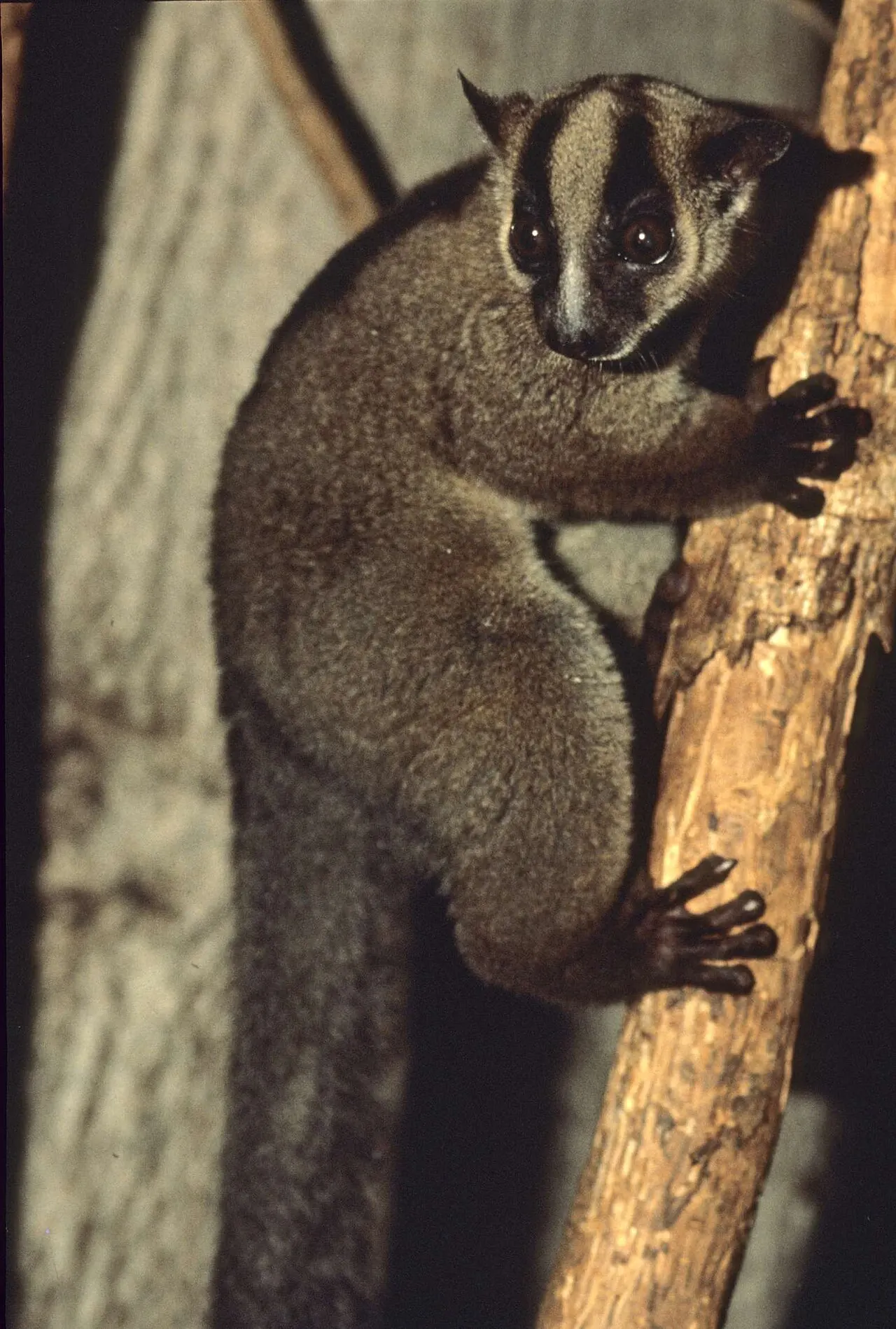
It is a small, long-tailed lemur, with a head and body about 23 to 29 cm long and a tail of roughly 29 to 37 cm. It weighs about 300 to 500 g and is reportedly the smallest of the fork-marked lemurs. The fur is pale with a silvery sheen, lighter on the belly and darker on the hands and feet. Dark stripes fork from the nose, which gives the group its name.
Where it lives
It is found only in western Madagascar, in patches of dry forest from south of the Fiherenana River north to the Soalala region, the largest range of any fork-marked lemur. The IUCN puts its extent of occurrence at about 185,900 square km and lists tropical dry forest and plantations as habitat, from sea level to about 800 m.
It was long treated as a subspecies of the Masoala fork-marked lemur (Phaner furcifer) and was raised to a full species in 2001.
Pins are Wikidata “endemic to” fields. Orange dots, when present, are GBIF occurrence tiles — survey bias included.
How it lives
Around 85 percent of its foraging time goes to tree sap and gum, with insects, fruit, flowers and nectar as extras. It gouges gum with a comb of long, narrow, forward-pointing lower front teeth and reaches it with a long tongue. It is active at night, usually 3 to 4 m up in the trees.
Pairs hold territories of roughly 3 to 10 hectares, but partners spend only about 20 percent of their waking time within 25 m of each other. Females are dominant and get first access to feeding sites. Mating is in October and November, with births from January to early March, and a female averages about one birth every three years. Captive animals live to around 12 years.
Why it is in trouble
Forest loss is the driver. The IUCN lists shifting agriculture, smallholder farming and grazing, mining and quarrying, and more frequent fires as threats. Charcoal production and illegal logging are also cited by the New England Primate Conservancy. Generation length is about 7 years, and the IUCN assessment estimates a decline of around 50 percent over the past three generations, with a similar fall projected ahead.
What is being done
The lemur is listed on CITES Appendix I, which bars international commercial trade. It occurs in protected areas that include Tsingy de Bemaraha, Kirindy Mitea National Park and Andranomena Special Reserve. The IUCN lists site management and livelihood alternatives for local people among the conservation actions.
Sources
Written for this catalog in our own words from the sources below, checked against them on 12 November 2026. Population figures are estimates and carry the year they were made. Status and assessment year: IUCN. 2026. The IUCN Red List of Threatened Species. Version 2026-1. iucnredlist.org.