Endangered
Palaemnema chiriquita
Palaemnema chiriquita
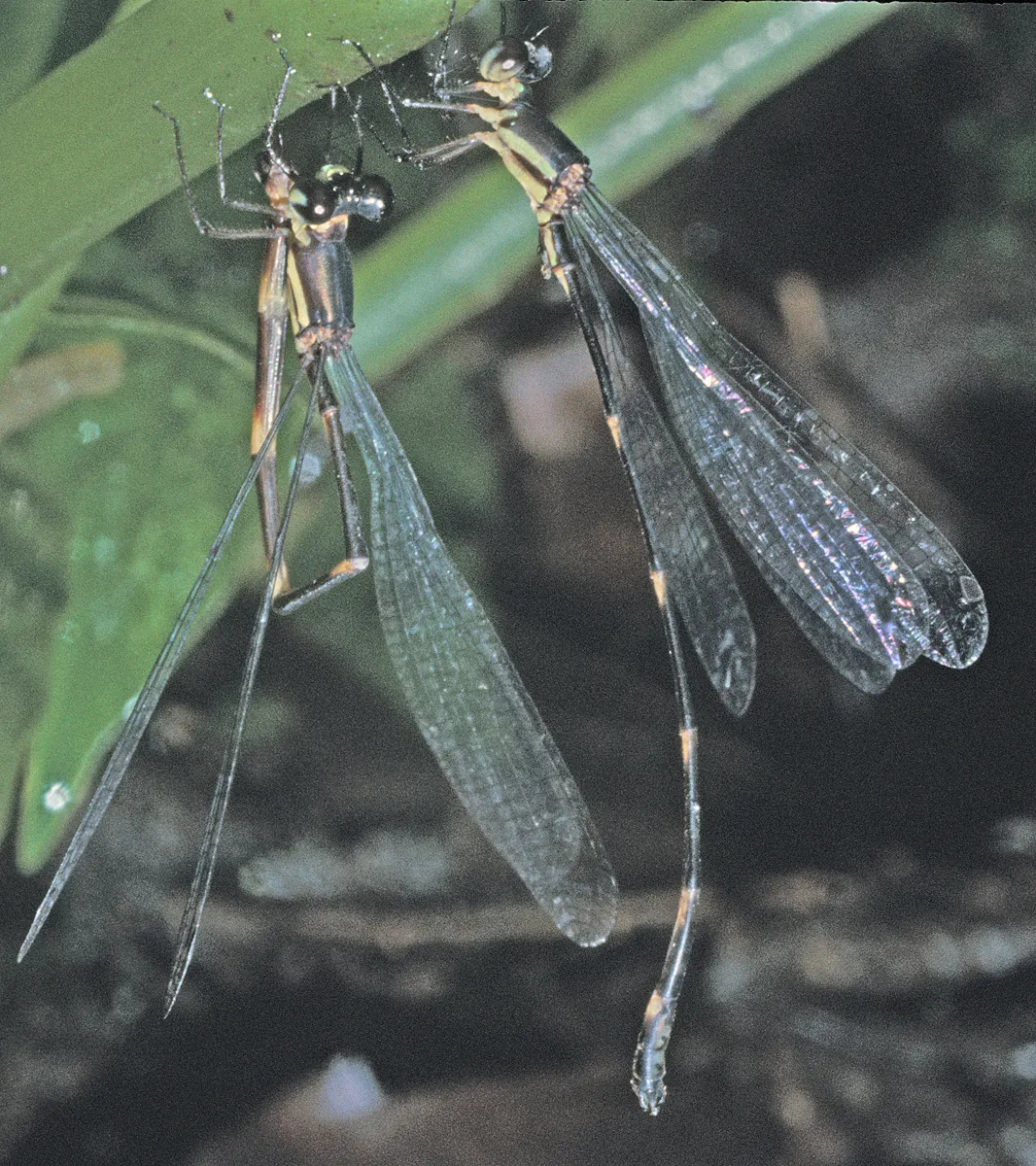
Palaemnema chiriquita is a slender shadowdamsel, a type of damselfly, found only in Costa Rica. It lives along forest rivers and streams in moist lowland forest. The IUCN Red List assessed it as Endangered in 2006, and its population trend is unknown. Calvert described it in 1931.
What it is
Palaemnema chiriquita belongs to the Platystictidae, the shadowdamsels, a family of delicate, slender-bodied damselflies of tropical forests. The IUCN lists the English name Chiriquita shadowdamsel. Calvert gave the species its scientific name in 1931.
Palaemnema is the only shadowdamsel genus in Costa Rica. A guide to the damselflies of the Monteverde area gives the genus about a dozen species in the country, several of them still unnamed. The guide covers the genus as a whole and does not mention P. chiriquita, so the species' own colour pattern is not described here.
Where it lives
The species is endemic to Costa Rica, meaning it has not been recorded anywhere else. The IUCN lists two habitats: permanent rivers and streams, including waterfalls, and subtropical or tropical moist lowland forest.
For Costa Rican Palaemnema in general (not studied specifically for this species), the Monteverde guide says adults stay in the understory within about 5 to 30 m of forest streams, from tiny trickles to moderate, fast rivers. They perch quietly with folded wings a few centimetres above the ground on dead twigs and stems, and when disturbed usually fly up and settle again a metre or two off the ground.
Pins are Wikidata “endemic to” fields. Orange dots, when present, are GBIF occurrence tiles — survey bias included.
Why it is in trouble
The 2006 assessment applies criterion B1ab(iii), which covers species with a small range and an ongoing decline in habitat quality. The stress named is degradation of its ecosystem, and the IUCN lists the cause as unrecorded.
The assessment records the population trend as unknown, and no population estimate is given. The assessment is now close to twenty years old.
What is being done
The IUCN records that the species occurs in at least one protected area. No specific conservation actions are listed in the assessment.
Sources
Written for this catalog in our own words from the sources below, checked against them on 12 November 2026. Population figures are estimates and carry the year they were made. Status and assessment year: IUCN. 2026. The IUCN Red List of Threatened Species. Version 2026-1. iucnredlist.org.




