Endangered
Painted rocksnail
Leptoxis taeniata
The painted rocksnail is a small freshwater snail from the Coosa River system in Alabama. The IUCN lists it as Endangered (2012, under the name Leptoxis taeniata), and it has been Threatened under the US Endangered Species Act since 1998. It is the only known survivor of 15 rocksnails once found in the Coosa drainage.
How to recognise it
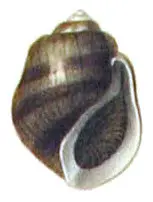
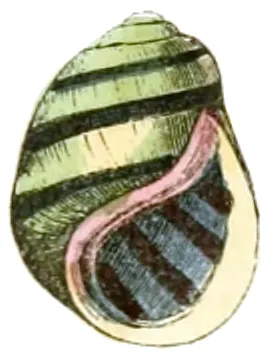
This is a small to medium rocksnail, about 19 mm long, with a subglobose to oval shell. The colour runs from yellowish to olive-brown, and most shells carry four dark bands. Some have no bands at all, and others have bands broken into squares or oblongs.
It breathes with a gill and closes its shell with a trapdoor-like cover called an operculum. It belongs to the Pleuroceridae, a family of river snails.
Its scientific name is unsettled. The Red List and the US Fish and Wildlife Service use Leptoxis taeniata, but a 2017 ZooKeys study by Whelan and colleagues concluded that the name was misapplied. It found that L. coosaensis, described by Lea in 1861, is the oldest available name for the painted rocksnail, and that L. taeniata is a synonym of L. picta.
Where it lives
Older accounts placed the painted rocksnail in the Coosa, Alabama and Cahaba rivers. The 2017 study narrowed that. It restricted the true range to the Coosa River above the Fall Line at Wetumpka, Alabama, plus tributaries such as Choccolocco, Buxahatchee, Talladega and Terrapin creeks, and treated Alabama and Cahaba river records as misidentifications.
Today it survives in four separate populations: Choccolocco Creek, Buxahatchee and Watson creeks, Ohatchee Creek, and the tailwaters below Logan Martin Dam on the Coosa. The Red List assessment counts 3 locations and an extent of occurrence of 100 to 1,000 square kilometres, and records a continuing decline in that extent.
Pins are Wikidata “endemic to” fields. Orange dots, when present, are GBIF occurrence tiles — survey bias included.
How it lives
Rocksnails cling to cobble, gravel and other hard surfaces in strong current over shoals and riffles. The painted rocksnail scrapes algae and the film of detritus that coats the stones. Adults move very little, and females probably glue their eggs to rocks in the same places.
Lifespan is unknown. Adults likely live less than two years, judging by a similar species in the Tennessee River.
Why it is in trouble
The Red List assessment names dams and the removal of surface water as the threats, and it estimates a past decline of about 90 percent. Reservoirs flood the shoals rocksnails need. Slow, impounded water lets silt settle and can lower dissolved oxygen, which can affect feeding, breathing and reproduction.
The 2017 study found that in the main channel of the Coosa the snail has declined by more than 95 percent and now holds less than 10 km of a historical stretch of about 317 km. It is believed to be gone from four of the eight tributaries where it was recorded. The study called the 90 percent loss figure from the 1998 US listing conservative.
What is being done
The snail has been listed as Threatened under the US Endangered Species Act since October 1998. The Red List assessment records captive breeding, reintroduction, site management, habitat protection and education among the actions for the species. The Tennessee Aquarium Research Institute reportedly set up captive populations, with releases of hatchery-raised snails planned for 2005.
The 2017 study says reintroductions should stay inside the true historical range, so recovery planning has to look again at the Coosa tributaries for suitable release sites.
Sources
Written for this catalog in our own words from the sources below, checked against them on 12 November 2026. Population figures are estimates and carry the year they were made. Status and assessment year: IUCN. 2026. The IUCN Red List of Threatened Species. Version 2026-1. iucnredlist.org.